On this page
- What does a 2,000-calorie day look like?
- Breakfast: oats, yogurt and banana — about 511 calories
- Lunch: chicken rice bowl — about 573 calories
- Snack: apple and almonds — about 238 calories
- Dinner: salmon, potatoes and carrots — about 682 calories
- Why 2,000 calories can look like different amounts of food
- Is 2,000 calories the right amount for you?
- Simple swaps and adjustments
- How to track your own version
- Frequently asked questions
- Can I lose weight eating 2,000 calories a day?
- How much protein is in this day?
- Do I need to eat three meals and a snack?
- What drinks are included?
- Does every day need to equal exactly 2,000 calories?
- Nutrition sources and calculation method
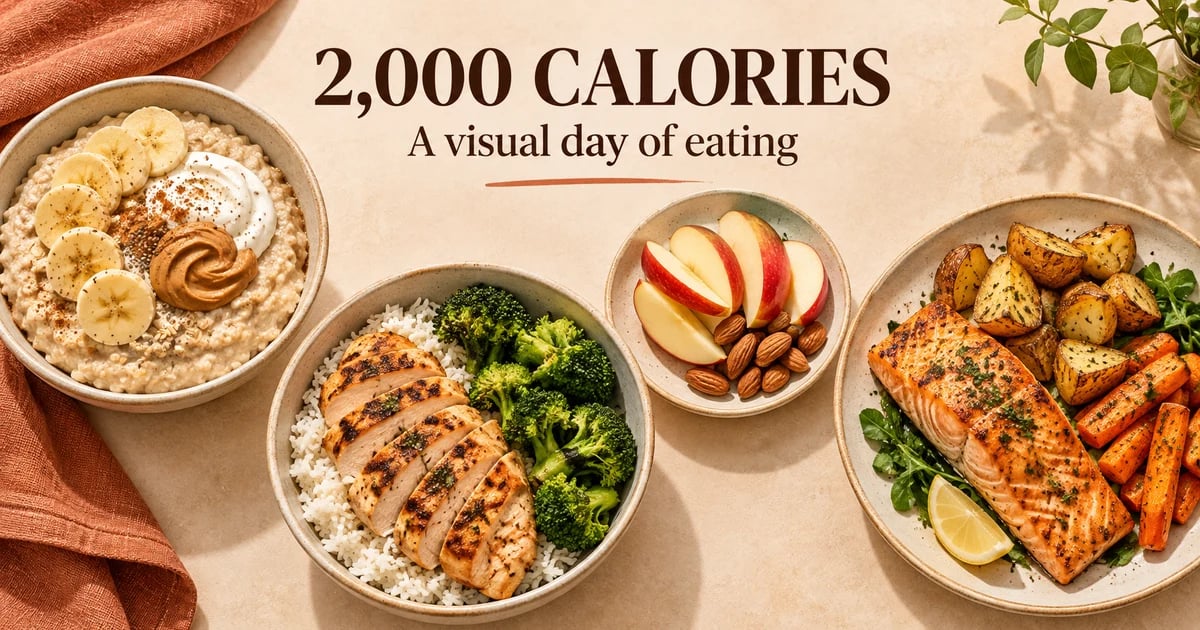
About 2,000 calories can look like a bowl of oats with yogurt and banana, chicken with rice and broccoli, an apple with almonds, and salmon with potatoes and carrots. Three meals and a snack, with the cooking oil counted too.
The example below adds up to 2,004 calories, using USDA reference values for the stated portions. It includes about 122g protein and 33g fiber. Those numbers describe this menu; they are not targets everyone needs to hit.
Think of this as a way to turn an abstract daily number into food you can picture. You can change the foods, divide them into more meals, or move the snack to a time that suits you.
Nutrition references checked November 2, 2026 against USDA FoodData Central's SR Legacy dataset. Values are reference averages, not measurements of your food. Calories are calculated before rounding. The featured image is AI-generated, and the plate drawings below are schematic; use the tables for portion weights.
What does a 2,000-calorie day look like?
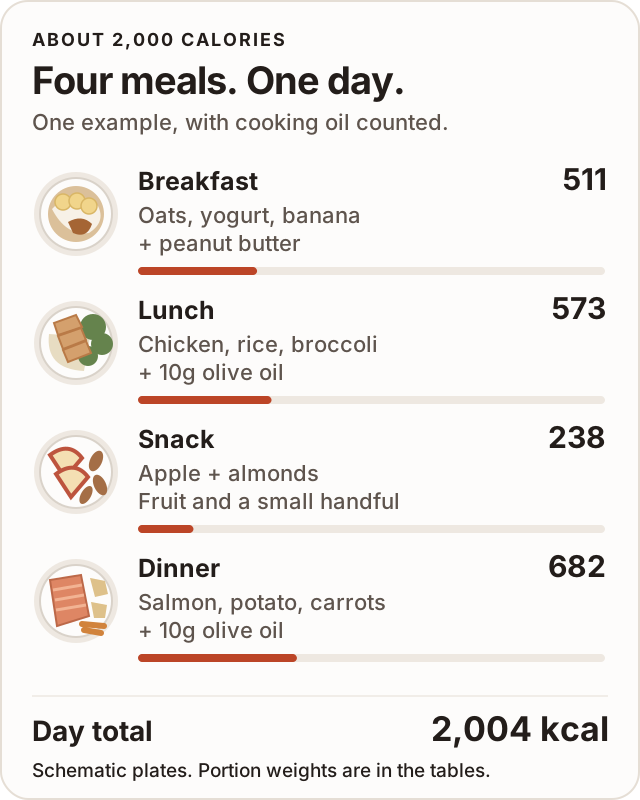
| Meal | What is on the plate | Calories |
|---|---|---|
| Breakfast | Oats, Greek yogurt, banana and peanut butter | 511 |
| Lunch | Chicken, rice, broccoli and olive oil | 573 |
| Snack | Apple and almonds | 238 |
| Dinner | Salmon, potatoes, carrots and olive oil | 682 |
| Day total | Three meals and a snack | 2,004 |
The meals do not need to contain equal calories. In this example, dinner is the largest meal. If you prefer a bigger breakfast, move some food earlier rather than treating this split as a rule.
Breakfast: oats, yogurt and banana — about 511 calories
Cook the oats in water, then add the yogurt, sliced banana and peanut butter. You can also prepare the oats ahead and eat them chilled. The 60g refers to dry oats, not the finished bowl's weight.
| Ingredient | Amount to use | Calories |
|---|---|---|
| Rolled oats, dry | 60g; roughly 3/4 cup | 227 |
| Plain nonfat Greek yogurt | 170g; one small container in this reference | 100 |
| Banana, peeled | 100g; roughly one small banana | 89 |
| Smooth peanut butter | 16g; roughly 1 level tablespoon | 94 |
Meal total: 511 calories · about 30g protein.
This is a useful breakfast to save in your tracker because the ingredients are easy to repeat. Check your yogurt and peanut butter labels: a flavored yogurt, a different fat content, or a larger spoonful changes the result. Our Greek yogurt guide explains how much products can differ.
The water used to cook the oats adds weight without adding calories. Milk, honey or extra toppings need their own entries. The meal total is calculated before rounding, so the rounded ingredient rows can differ from it by one calorie.
Lunch: chicken rice bowl — about 573 calories
Use cooked rice and skinless cooked chicken, add the broccoli, and use the measured olive oil as dressing or as your portion's share of cooking oil.
| Ingredient | Amount to use | Calories |
|---|---|---|
| Chicken breast, roasted, meat only | 120g cooked; about 4.2 oz | 198 |
| White long-grain rice | 180g cooked; roughly 1 1/8 cups | 234 |
| Broccoli, boiled and drained | 150g cooked | 53 |
| Olive oil | 10g; a little over 2 teaspoons | 88 |
Meal total: 573 calories · about 46g protein.
The rice amount is 180g after cooking. Weighing 180g dry rice would produce a different, much larger meal. The same principle applies to the chicken: use a cooked entry with a cooked weight. See the chicken breast nutrition guide for the distinction.
Season to taste. If you add a sweet glaze, mayonnaise or another calorie-containing sauce, log it separately. This calculation includes the listed oil, but no additional dressing or frying fat.
Snack: apple and almonds — about 238 calories
| Ingredient | Amount to use | Calories |
|---|---|---|
| Apple with skin, core removed | 180g edible portion; roughly one medium apple | 94 |
| Plain almonds | 25g; a small handful | 145 |
Snack total: 238 calories · about 6g protein.
The apple gives you something crisp and substantial; the almonds add a smaller, more calorie-dense portion. A handful is a visual cue, not a fixed serving. Weigh it once if you want a reference for the amount you usually pour.
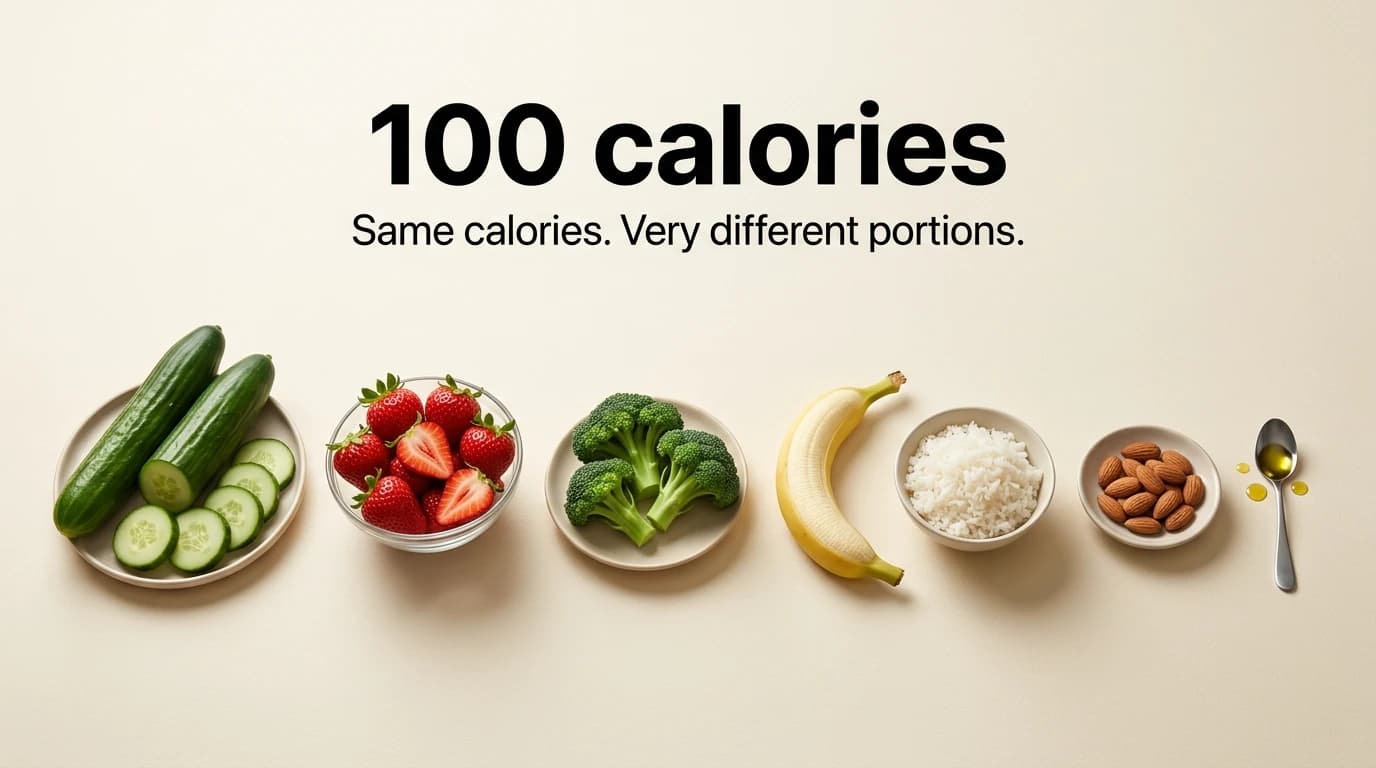
You do not have to eat this between meals. Have it with lunch, after dinner, or split the apple and almonds across the day. The arithmetic is the same. For more portion comparisons, see what 100 calories looks like.
Dinner: salmon, potatoes and carrots — about 682 calories
Bake the salmon and potato, cook the carrots, and divide the measured oil between the vegetables or use it as a dressing. The reference uses farmed Atlantic salmon cooked with dry heat; another salmon type can have different nutrition values.
| Ingredient | Amount to use | Calories |
|---|---|---|
| Atlantic salmon, farmed, cooked | 150g edible fish; about 5.3 oz | 309 |
| Baked potato, flesh and skin | 250g cooked; one fairly large potato | 233 |
| Carrots, boiled and drained | 150g cooked | 53 |
| Olive oil | 10g; a little over 2 teaspoons | 88 |
Meal total: 682 calories · about 41g protein.
The potato is weighed after baking, with its skin included. The carrot reference is boiled and drained. If you roast the carrots instead, water loss can change their calories per 100g; use an appropriate entry or calculate the recipe from its ingredients.
The 10g oil belongs to this serving. If you cook several portions together, divide the recipe's oil between those portions instead of assigning the whole pan's oil to one plate. Our homemade-food calorie guide walks through batch recipes.
All tables use edible food weights. Cups, spoonfuls and food-size descriptions are approximate orientation cues. The displayed meal totals use unrounded ingredient calculations, so rounded rows may differ by a calorie or two.
Why 2,000 calories can look like different amounts of food
There is no fixed plate size for 2,000 calories. In this menu, 20g of olive oil supplies about 177 calories, while 300g of the cooked broccoli and carrots supplies 105 calories. Water content and the mix of nutrients make their calorie densities very different.
Both amounts belong in the calculation. Oil does not become irrelevant because the plate contains vegetables, and a large bowl does not automatically contain many calories.
This is also why an image alone cannot establish a meal's total. A sauce mixed through rice or oil used in cooking may be hard to see. The portion-control guide can help you build familiar reference portions; the ingredient list tells you what the visual cannot.
Is 2,000 calories the right amount for you?
The FDA uses 2,000 calories as a reference for general nutrition advice. It explains that needs can be higher or lower depending on age, sex, height, weight and activity. The number on a food label is not a personal prescription. Source: FDA nutrition-label guidance.
Whether you lose, maintain or gain weight at that intake depends on your actual energy needs over time. A 2,000-calorie menu cannot tell you which outcome to expect on its own.
For a starting estimate, use the TDEE calculator, then read how many calories you should eat. The calculator estimates energy needs; it does not measure them.
If your target differs, use this day to understand portions rather than forcing yourself to follow it. The 1,500-calorie day guide offers a separate example, and the flexible calorie-counting plan covers planning across a week.
Simple swaps and adjustments
You can change this day without rebuilding every meal. Using the same references:
| Change | Approximate calorie difference |
|---|---|
| Add 50g cooked rice to lunch | +65 |
| Remove 50g cooked rice from lunch | −65 |
| Add 100g of the plain nonfat Greek yogurt | +59 |
| Use 5g less olive oil across the day | −44 |
| Add another 100g peeled banana | +89 |
These are arithmetic examples, not instructions to reduce your intake. Pick changes that fit your appetite and personal plan. You can also swap foods you dislike, but replacing salmon with chicken gram for gram will change the total because their nutrition differs.
There is no useful reason to remove four calories to make the day exactly 2,000. The ingredients, brands, cooking methods and measurements vary more than that. Keep a realistic portion and an appropriate food entry.
How to track your own version
Start with the meal you actually eat. You do not need to copy the menu to learn from it.
- Use your package label when it differs. Yogurt, peanut butter and prepared sauces can vary.
- Match the preparation state. Dry oats, cooked rice and cooked meat need the matching entries.
- Include the extras. This day already includes the listed oil. Add any milk, butter, sauces or calorie-containing drinks you use.
- Save repeat meals after checking them. A familiar breakfast or lunch becomes easier to log next time.
CalorieCue can use a photo as a starting estimate for your meal. Review the identified foods and portions, add missed oil or sauce, and correct the estimate with weights or labels when you have them. A photo cannot verify an exact calorie total. The photo food-logging guide explains the review step.
Want to try it with your next meal?
Download CalorieCueFrequently asked questions
Can I lose weight eating 2,000 calories a day?
Possibly, if it is below your actual energy needs over time. It could also be a maintenance intake or more than you need. Use your estimated needs and longer-term trend rather than assuming this menu produces weight loss.
How much protein is in this day?
About 122g, with the portions listed. That is the calculated amount in this example, not a requirement for everyone. See how much protein you need for a separate discussion of personal protein targets.
Do I need to eat three meals and a snack?
No. You can divide the food differently. This layout makes the day easy to picture, but it does not establish an ideal meal frequency or timing.
What drinks are included?
The example assumes water. Milk in oats or coffee, juice, sweetened drinks and alcohol need their own calorie entries. If you drink them, include them in your version of the day.
Does every day need to equal exactly 2,000 calories?
No. This menu is approximately 2,000 calories using reference averages. It illustrates portions; it does not make a four-calorie difference meaningful. Your food and needs will vary.
Nutrition sources and calculation method
Ingredient calculations use USDA FoodData Central's SR Legacy April 2018 dataset, checked November 2, 2026. These are legacy reference values, not new measurements. We multiplied each food's calories and nutrients per 100g by its listed weight, summed before rounding, and rounded the displayed calorie totals to whole numbers.
Reference records:
- Breakfast: dry oats, FDC 173904, plain nonfat Greek yogurt, 170894, banana, 173944, smooth peanut butter, 174294.
- Lunch: roasted chicken breast, 171477, cooked white rice, 168878, boiled broccoli, 169967.
- Snack: apple with skin, 171688, almonds, 170567.
- Dinner: cooked farmed Atlantic salmon, 175168, baked potato with skin, 170093, boiled carrots, 170394.
- Lunch and dinner oil: olive oil, 171413.
The official USDA dataset download provides the underlying records. Your own product label takes precedence when it describes a different food.