On this page
- Before You Start: Find Your Calorie Target
- How This Plan Works
- The Structure
- Daily Protein and Fiber Targets
- Check Portions Before You Use the Menu
- The Meal Options
- Breakfasts (350–450 calories)
- Lunches (400–500 calories)
- Dinners (450–600 calories)
- Snacks (100–200 calories)
- Sample 7-Day Plan (1,500 Calories)
- How to Adjust for 1,800 or 2,000 Calories
- For 1,800 Calories/Day
- For 2,000 Calories/Day
- A Week of Grocery Essentials
- Proteins
- Grains and Carbs
- Fruits and Vegetables
- Pantry Staples
- For Filipino Dishes
- 5 Rules That Make Calorie Counting Sustainable
- 1. Track Before You Eat, Not After
- 2. Aim for "Close Enough," Not Perfect
- 3. Front-Load Your Protein
- 4. Prep Two Things on Sunday
- 5. Have a "Lazy Day" Protocol
- What to Do When You Go Off-Plan
- Frequently Asked Questions
- Next Steps
Most calorie counting diet plans fail for a predictable reason: they hand you a rigid meal-by-meal schedule that has nothing to do with how you actually eat. By Wednesday, you're staring at a recipe that calls for ingredients you don't have, swapping in a frozen pizza, and deciding the whole thing was a waste of time.
This plan is designed differently.
Instead of dictating exact meals, it gives you a flexible framework — a set of interchangeable breakfasts, lunches, dinners, and snacks at three calorie levels (1,500, 1,800, and 2,000) that you can mix and match based on what sounds good, what's in your fridge, and what kind of day you're having. Every option is designed around the two nutrients research consistently links to weight loss success: protein and fiber.
A University of Illinois report on a dietary education program described greater protein and fiber intake among more successful participants. At one year, the successful subgroup had lost 12.9% of its starting weight. This was not proof that this menu produces the same result, or a randomized comparison showing that protein and fiber alone caused the difference.
That's exactly what this plan is built for.
Quick answer: This is a flexible calorie counting diet plan at three levels (1,500, 1,800, and 2,000 calories) with interchangeable high-protein, high-fiber meals you can mix and match. Pick your calorie target, choose from the meal options each day, and hit roughly 80g protein and 25g fiber daily for sustainable weight loss.
Before You Start: Find Your Calorie Target
A calorie counting diet plan only works if the calorie target is right for your body. Eating too little leads to muscle loss, fatigue, and the kind of hunger that eventually ends in a binge. Eating too much means no deficit, no results.
Here's how to find your number:
Step 1: Calculate your Total Daily Energy Expenditure (TDEE) — the number of calories your body burns each day including activity. You can use our free TDEE calculator to get your number in about 30 seconds.
Step 2: Subtract 300–500 calories from your TDEE. That is an illustrative starting adjustment, not a guaranteed weekly loss rate. It may be too large for some people's needs.
Step 3: Choose the plan level closest to your target:
| Your TDEE | Recommended Plan Level |
|---|---|
| 1,900–2,100 | 1,500 calories/day |
| 2,200–2,400 | 1,800 calories/day |
| 2,400–2,600 | 2,000 calories/day |
Important: Calorie intake should generally not fall below 1,200 per day for women or 1,500 per day for men without medical supervision. If your calculated target is below these thresholds, consult a healthcare professional before starting any calorie-restricted plan.
For a deeper walkthrough on finding your deficit, see our guide on how to calculate your calorie deficit.
How This Plan Works
This isn't a "eat this exact meal at this exact time" plan. It's a modular system.
You get a menu of options for each meal slot. Every option lists calories, protein, and fiber. Pick whatever you want each day — as long as your daily total lands within roughly 100 calories of your target, you're on track.
The Structure
- Breakfast: 350–450 calories
- Lunch: 400–500 calories
- Dinner: 450–600 calories
- Snack(s): 100–200 calories (1–2 per day depending on your calorie level)
Daily Protein and Fiber Targets
| Nutrient | Minimum Target | Why |
|---|---|---|
| Protein | 80g | Preserves muscle mass during a deficit, keeps you full |
| Fiber | 25g | Improves satiety, supports digestion, linked to better weight loss outcomes |
Every meal option in this plan is designed to contribute meaningfully to both targets. You won't need to obsess over hitting them perfectly — if you follow the plan, you'll get there.
Check Portions Before You Use the Menu
The figures below are planning estimates, not laboratory-tested recipes. Brands, raw versus cooked weights, the amount of oil and recipe substitutions can change totals. Match each nutrition entry to the ingredient and serving you actually use; for mixed dishes, total the batch ingredients and divide by portions.
The sample days show how the listed estimates add together. They do not establish your personal calorie, protein or fiber requirements. Use the daily-calorie guide to interpret a target and seek individual advice when needed.
The Meal Options
Breakfasts (350–450 calories)
Option 1: Greek Yogurt Power Bowl
Plain Greek yogurt (200g) topped with mixed berries (100g), a tablespoon of chia seeds, and a small handful of granola (30g).
~380 cal · 28g protein · 8g fiber
Option 2: Egg and Veggie Scramble on Toast
Two eggs scrambled with a handful of spinach, diced bell peppers, and onions, served on one slice of whole grain toast with a thin spread of avocado.
~400 cal · 24g protein · 6g fiber
Option 3: Overnight Oats
Rolled oats (50g) soaked overnight in milk (200ml) with a scoop of protein powder, topped with sliced banana and a teaspoon of peanut butter.
~420 cal · 30g protein · 7g fiber
Option 4: Banana Peanut Butter Smoothie
One banana, a tablespoon of peanut butter, a scoop of protein powder, a handful of spinach, and 250ml of milk, blended.
~400 cal · 32g protein · 5g fiber
Option 5: Cottage Cheese and Fruit Plate
Low-fat cottage cheese (200g) with sliced mango or pineapple (150g), a drizzle of honey, and a tablespoon of flaxseeds.
~370 cal · 30g protein · 4g fiber
Lunches (400–500 calories)
Option 1: Chicken and Quinoa Salad Bowl
Grilled chicken breast (120g), quinoa (80g cooked), mixed greens, cherry tomatoes, cucumber, and a lemon-olive oil dressing (1 tbsp olive oil + lemon juice).
~460 cal · 38g protein · 6g fiber
Option 2: Tuna Wrap
Whole wheat tortilla with canned tuna (1 can, drained), mixed with a teaspoon of mayo, lettuce, sliced tomato, and a side of carrot sticks.
~420 cal · 35g protein · 5g fiber
Option 3: Lentil Soup with Bread
Homemade or store-bought lentil soup (400ml, roughly 1.5 cups) with one slice of whole grain bread.
~440 cal · 22g protein · 14g fiber
Option 4: Chicken Tinola (Filipino-Style)
Chicken drumstick or thigh (skin removed, ~150g) simmered with ginger, garlic, moringa leaves (malunggay), and green papaya in a light broth. Served with half a cup of steamed rice.
~450 cal · 32g protein · 4g fiber
Option 5: Turkey and Avocado Sandwich
Two slices whole grain bread, sliced turkey breast (100g), half an avocado, lettuce, tomato, and mustard.
~480 cal · 30g protein · 9g fiber
Dinners (450–600 calories)
Option 1: Baked Salmon with Sweet Potato and Broccoli
Salmon fillet (150g) baked with lemon and herbs, one medium sweet potato (baked or roasted), and steamed broccoli (150g).
~520 cal · 38g protein · 8g fiber
Option 2: Chicken Stir-Fry with Brown Rice
Chicken breast (130g) stir-fried with mixed vegetables (bell peppers, snap peas, carrots, mushrooms) in soy sauce and garlic, served over brown rice (100g cooked).
~490 cal · 36g protein · 6g fiber
Option 3: Turkey Bolognese with Whole Wheat Pasta
Lean ground turkey (120g) simmered in marinara sauce with diced zucchini and mushrooms, served over whole wheat pasta (80g dry).
~530 cal · 35g protein · 8g fiber
Option 4: Pork Sinigang (Filipino Sour Soup)
Lean pork tenderloin (150g) simmered in tamarind broth with kangkong (water spinach), string beans, eggplant, tomatoes, and radish. Served with half a cup of steamed rice.
~480 cal · 34g protein · 6g fiber
Option 5: Bean and Vegetable Chili
Kidney beans and black beans (200g combined, cooked) with diced tomatoes, onion, peppers, and spices. Topped with a tablespoon of Greek yogurt and served with a small piece of cornbread.
~500 cal · 24g protein · 16g fiber
Snacks (100–200 calories)
| Snack | Calories | Protein | Fiber |
|---|---|---|---|
| Apple with 1 tbsp almond butter | 190 | 4g | 4g |
| Hard-boiled egg + a handful of baby carrots | 120 | 7g | 2g |
| Handful of mixed nuts (30g) | 180 | 6g | 2g |
| Greek yogurt (100g) with a drizzle of honey | 110 | 12g | 0g |
| Banana with a tablespoon of peanut butter | 200 | 5g | 3g |
| Edamame (100g, shelled) | 120 | 12g | 5g |
| Two rice cakes with cottage cheese (50g) | 130 | 8g | 1g |
| Small sweet potato (baked, plain) | 100 | 2g | 3g |
Sample 7-Day Plan (1,500 Calories)
Here's one way to put it together. Remember: you can swap any meal for another in the same category.
| Day | Breakfast | Lunch | Dinner | Snack | Total |
|---|---|---|---|---|---|
| Monday | Yogurt Bowl (380) | Quinoa Salad (460) | Bean Chili (500) | Egg + carrots (120) | ~1,460 |
| Tuesday | Egg Scramble (400) | Tuna Wrap (420) | Salmon + Sweet Potato (520) | Apple + almond butter (190) | ~1,530 |
| Wednesday | Overnight Oats (420) | Lentil Soup (440) | Chicken Stir-Fry (490) | Edamame (120) | ~1,470 |
| Thursday | Cottage Cheese (370) | Tinola + Rice (450) | Turkey Bolognese (530) | Yogurt + honey (110) | ~1,460 |
| Friday | Smoothie (400) | Turkey Sandwich (480) | Pork Sinigang (480) | Mixed nuts (180) | ~1,540 |
| Saturday | Egg Scramble (400) | Quinoa Salad (460) | Salmon + Sweet Potato (520) | Rice cakes + cheese (130) | ~1,510 |
| Sunday | Overnight Oats (420) | Tinola + Rice (450) | Bean Chili (500) | Banana + PB (200) | ~1,570 |
Weekly average of the listed calorie estimates: about 1,506 calories/day. Calculate protein and fiber from the ingredients and portions you actually use.
Notice how the totals aren't perfectly 1,500 every day — and that's fine. What matters is the weekly average. Some days will be slightly higher, others lower. Your body doesn't reset at midnight.
How to Adjust for 1,800 or 2,000 Calories
Don't restrict more than you need to. If your TDEE supports a higher calorie target, here's how to scale up:
For 1,800 Calories/Day
- Add a second snack each day (+150–200 cal)
- Increase protein portions at lunch or dinner by 30g (~50–70 cal)
- Add an extra tablespoon of olive oil or half an avocado to one meal (~100 cal)
For 2,000 Calories/Day
- Everything above, plus increase your rice or grain portions by 50g cooked at two meals (~100 cal total)
- Or add a pre-bed snack like cottage cheese with berries (~150 cal)
The key is to scale up with nutrient-dense additions — more protein, more vegetables, more healthy fats — not just bigger portions of everything.
A Week of Grocery Essentials
You don't need specialty ingredients. Here's a basic shopping list that covers most combinations for the week.
Proteins
Chicken breast or thighs, canned tuna, salmon fillets, lean ground turkey, eggs (1 dozen), Greek yogurt (1 kg tub), cottage cheese, sliced turkey breast
Grains and Carbs
Whole grain bread, whole wheat tortillas, rolled oats, quinoa, brown rice, whole wheat pasta
Fruits and Vegetables
Bananas, mixed berries (fresh or frozen), apples, spinach, broccoli, bell peppers, tomatoes, carrots, sweet potatoes, onions, garlic, ginger, lemon
Pantry Staples
Olive oil, peanut butter (or almond butter), canned lentils, canned kidney beans, canned black beans, canned diced tomatoes, chia seeds, flaxseeds, mixed nuts, soy sauce, protein powder
For Filipino Dishes
Moringa leaves (malunggay), green papaya, kangkong, eggplant, tamarind soup mix or fresh tamarind, string beans
Estimated weekly cost: This will vary by location, but the core ingredients are deliberately budget-friendly. Canned beans, lentils, oats, eggs, and frozen vegetables are some of the most affordable nutrient-dense foods available.
5 Rules That Make Calorie Counting Sustainable
The meal plan is the easy part. Sticking with it for more than a week is where most people fail. These five principles are what separate people who track for a month from people who actually get results.
1. Track Before You Eat, Not After
Logging a meal after you eat it feels like paperwork. Logging it before (or while you're cooking) feels like planning. This small mindset shift dramatically improves consistency.
Even better — snap a photo of your plate before you eat. If you use an AI photo calorie tracker, this takes about three seconds and eliminates the search-and-log friction that makes people quit.
2. Aim for "Close Enough," Not Perfect
Your daily target is a guide, not a law. Being within 100–150 calories of your target on most days will produce the same results as obsessive precision — without the anxiety.
If you're coming from a place where you had no idea how much you were eating, even rough tracking will be transformative. For a deeper dive on keeping tracking healthy, read our guide on how to track calories without obsessing.
3. Front-Load Your Protein
Most people eat almost no protein at breakfast and overload at dinner. This leads to energy crashes in the afternoon and overeating at night. Every breakfast option in this plan has 24–32g of protein for exactly this reason.
Research consistently shows that higher protein intake during calorie restriction not only helps preserve lean body mass but also improves overall diet quality — people who eat more protein naturally reduce their intake of refined grains and added sugar.
4. Prep Two Things on Sunday
You don't need to meal prep every meal for the week. That's overwhelming and the food gets boring by Thursday.
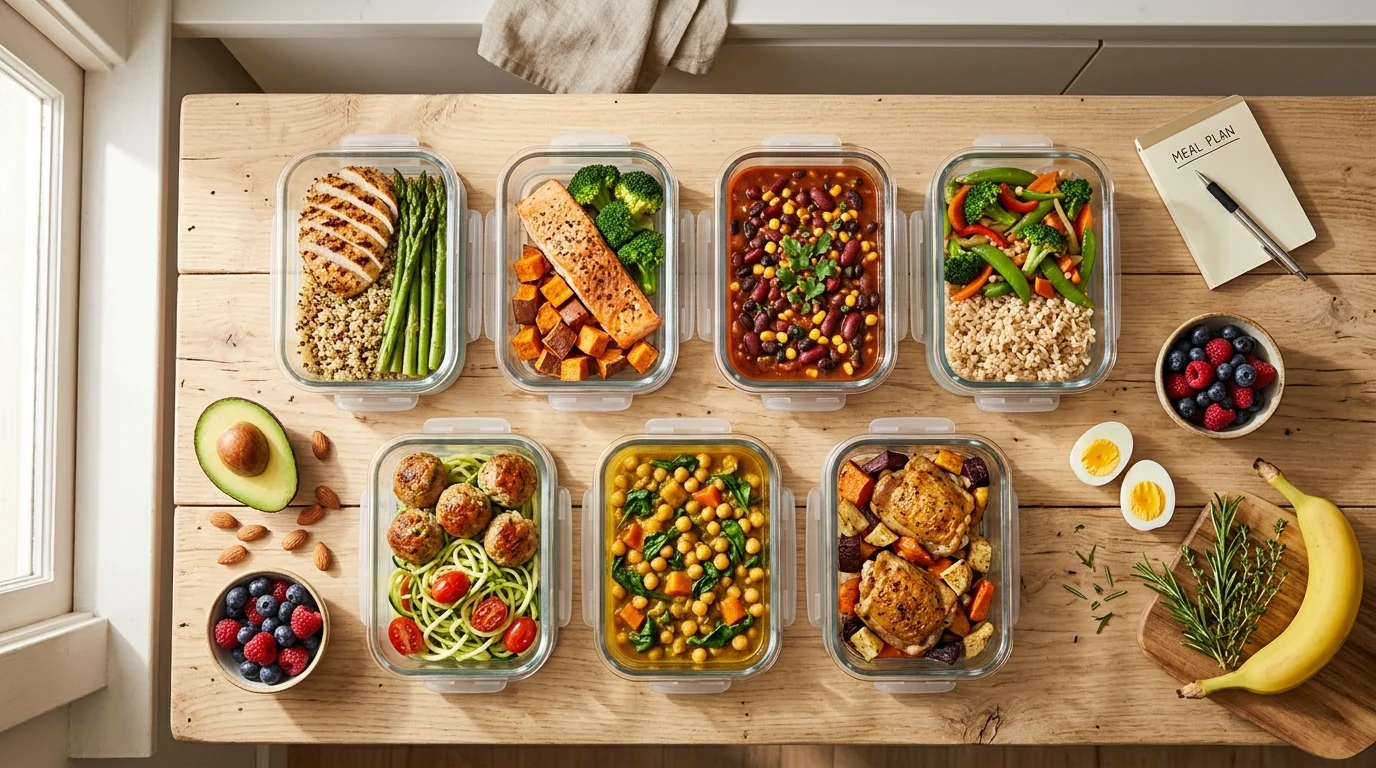
Instead, prep just two things: one protein (bake a batch of chicken, hard-boil a dozen eggs) and one grain (cook a pot of rice or quinoa). With those two anchors in your fridge, assembling any lunch or dinner from this plan takes less than 10 minutes. See our meal prep for beginners guide for more practical strategies.
5. Have a "Lazy Day" Protocol
Some days you won't feel like cooking. That's normal. Instead of abandoning the plan, have a default: a pre-built meal from the grocery store (rotisserie chicken + steamed vegetables + rice), a go-to restaurant order you've already logged, or a simple eggs-and-toast backup.
The goal isn't perfection — it's having a system that survives your worst day.
Download CalorieCueWhat to Do When You Go Off-Plan
You will go off-plan. Maybe it's a birthday dinner, a holiday, a stressful week, or just a day where the rice and beans sound terrible and you order pizza.
Here's what actually matters:
Don't try to "make up for it." Eating 800 calories the next day to compensate for last night's 2,500-calorie dinner is how you create an unhealthy cycle. Just return to your normal plan the next meal. One day above your target has almost zero impact on a weekly or monthly average.
Don't stop tracking. The impulse after a high-calorie day is to delete the app and pretend it didn't happen. That's the single biggest predictor of people quitting permanently. Log it — even if it's a rough estimate — and move on.
Zoom out. Weight loss happens over weeks and months, not hours. If you're at your target 5 out of 7 days, you will see results. The other two days aren't failures — they're life.
If you find yourself going off-plan frequently, the issue probably isn't willpower — it's that your calorie target is too aggressive. Going back to your TDEE calculation and choosing a smaller deficit (250–300 calories instead of 500) often fixes this entirely. A calorie deficit that's too aggressive is one of the most common reasons diets stall.
Frequently Asked Questions
Do I have to eat these exact meals?
No. The meal options are examples of what a balanced calorie-counted day looks like. The principle matters more than the specific meals: hit your calorie target, get enough protein (80g+) and fiber (25g+), and eat foods you actually enjoy. Swap freely — the structure is the tool, not the recipes.
Can I eat rice every day on this plan?
Absolutely. Rice is a perfectly fine carbohydrate source. The amount matters, not the food itself. Half a cup of cooked white rice is about 100 calories. If rice is a staple in your diet (as it is for many people in Southeast Asia and beyond), keep eating it — just measure your portions.
What if I'm vegetarian or vegan?
Swap the animal proteins for plant-based alternatives: tofu, tempeh, legumes, and plant-based protein powder. The lentil soup and bean chili options are already vegetarian. For a vegan plan, replace Greek yogurt with soy yogurt and cottage cheese with silken tofu.
Should I count calories on weekends too?
Ideally, yes — weekend meals, drinks and portions can differ from your weekday routine. You don't need to be rigid, but maintaining awareness of what you're eating on Saturday and Sunday keeps your weekly average on track.
How long should I follow this plan?
This isn't a "7-day detox" — it's a template for how to eat while losing weight. Use it for as long as you're working toward your goal. Most people start modifying the meals and building their own combinations within 2–3 weeks, which is exactly the point. The plan teaches you the framework; eventually, you won't need the plan.
Can I exercise while on this plan?
Yes, and you should. But don't eat back all the calories you burn during exercise — fitness trackers and machines notoriously overestimate calorie burn. If you do a hard workout and feel genuinely hungrier, add a protein-rich snack (like a hard-boiled egg or Greek yogurt). For more on finding the right balance, see our guide on how many calories you should eat per day.
What about Filipino foods? Can I still eat adobo, sinigang, and other local dishes?
Yes — we've included Filipino options in this plan for exactly that reason. Filipino food isn't the problem; portion sizes and cooking methods are what to watch. A serving of chicken adobo (without the skin, with measured sauce) fits perfectly into a calorie-counted day. For calorie data on specific Filipino dishes, check our calories in popular foods visual guide.
Next Steps
If this plan looks useful, here's how to start today:
- Calculate your TDEE using our free calculator and pick your calorie level.
- Choose your meals for the next three days from the options above. Don't over-plan — just three days.
- Go grocery shopping using the essentials list. You probably already have most of what you need.
- Start tracking. Use whatever method works for you — a notebook, a spreadsheet, or an app. If speed matters to you, try CalorieCue — snap a photo of your meal and get an instant calorie and macro estimate in seconds.
The best calorie counting diet plan isn't the one with the fanciest recipes or the most aggressive deficit. It's the one you'll actually follow next Tuesday when you're tired and don't feel like cooking.
Start simple. Stay consistent. The results will follow.
Download CalorieCueFor a complete guide on getting started with tracking, check out our how to count macros guide — it covers protein, carbs, and fat targets for any goal.