On this page
- What does 30g of protein look like? Eight food portions
- Chicken, yogurt and tofu: three useful starting points
- Chicken: weigh the cooked meat for this example
- Greek yogurt: one small container may not get you there
- Tofu: the label matters more than the word “firm”
- Four combinations around 30g protein
- How many eggs equal 30g protein?
- Calculate a 30g portion from your own label
- Avoid these portion mistakes
- Log your meal, then check the portion
- Does every meal need 30g protein?
- Sources and calculation method
- Frequently asked questions
- What does 30g of protein look like in food?
- Is 30g of chicken the same as 30g of protein?
- How many eggs provide 30g of protein?
- How can I get 30g protein without meat?
- Should I weigh these foods raw or cooked?
- Does every meal need exactly 30g protein?
About 30g of protein is found in 100g of cooked chicken breast, 120g of drained light tuna, 300g of plain nonfat Greek yogurt, or 175g of the firm tofu used in this guide. That is a small pile of chopped chicken, a generous yogurt bowl, or a substantial portion of tofu—not the same amount of food in each case.
The key distinction: 30g of protein does not mean 30g of food. Protein is one component of the food on your plate. Water, fat, carbohydrate and other components contribute to its weight too.
Below, you can compare eight portions, build around 30g using two foods, and download the one-page reference. The goal is to make your next meal easier to plan, not to hit an exact number at every meal.
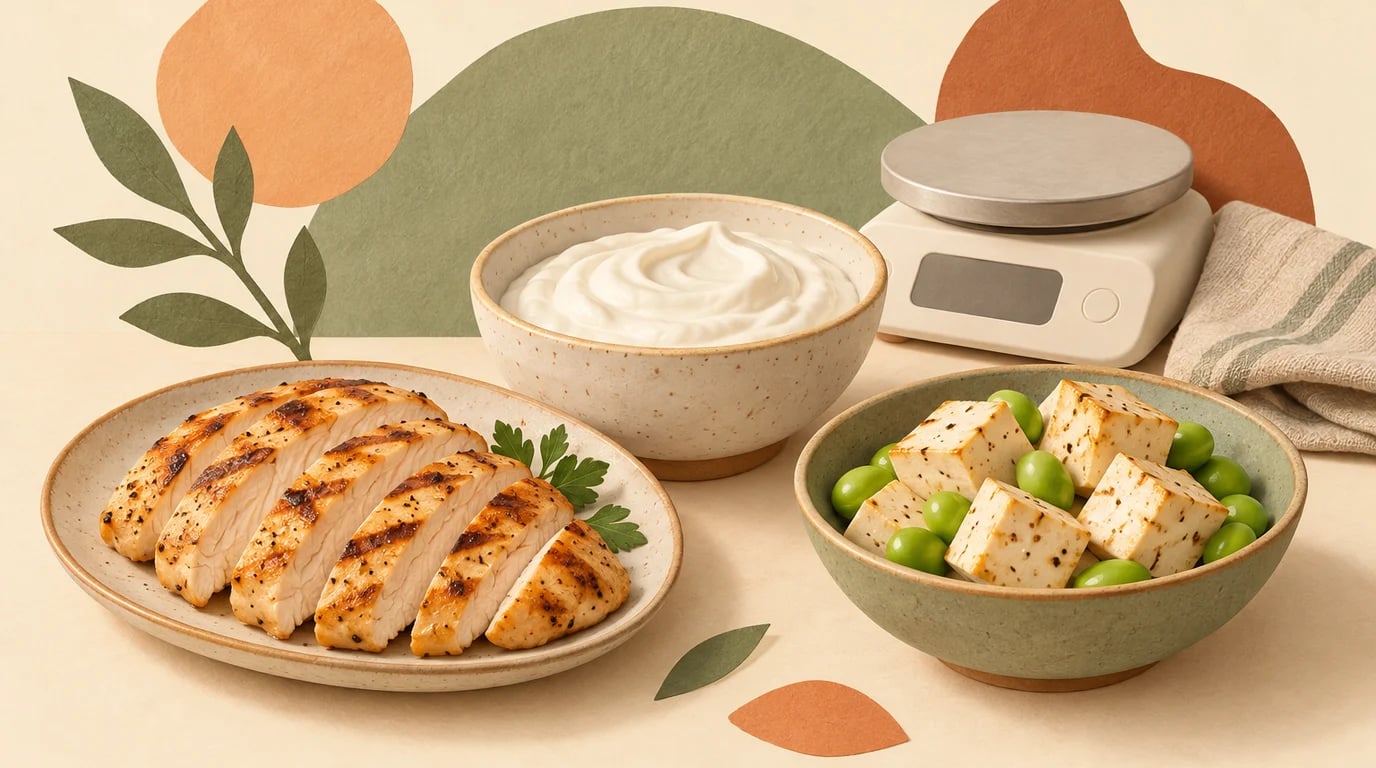
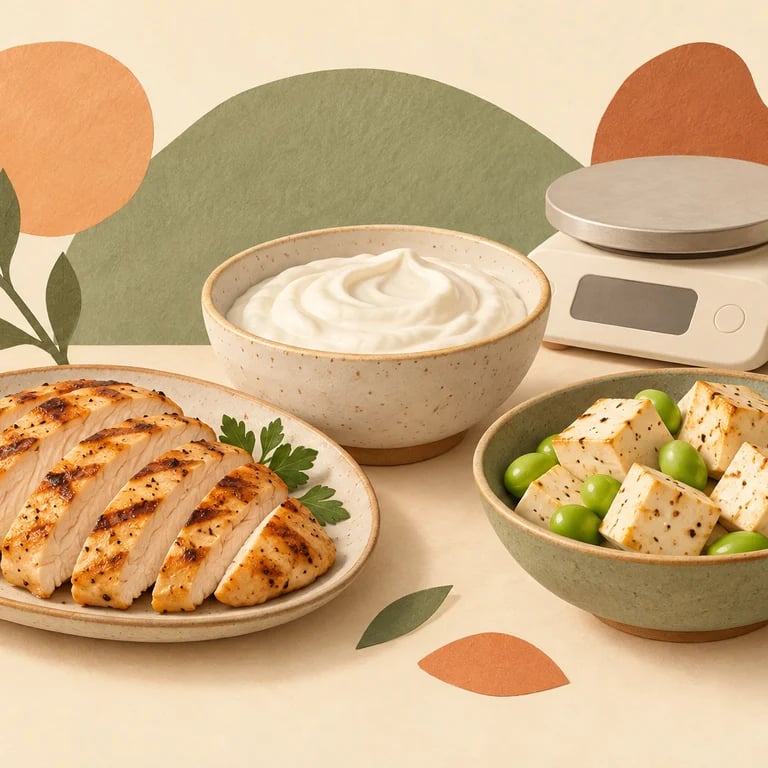
Nutrition references checked October 23, 2026 against USDA FoodData Central's SR Legacy dataset. Values are reference averages, not measurements of your food. The cover is an AI-generated editorial illustration, not a photograph of weighed 30g-protein portions. The charts below supply the calculated weights.
What does 30g of protein look like? Eight food portions
These portions land near 30g rather than pretending every food can be portioned to laboratory precision. The calorie values count only the listed food. Oil, butter, sauces and toppings are extra.
Each bar compares food weight, not volume. Portions provide approximately 30g protein; numbers are estimates.
Chicken breast
100g / 3.5 oz
31.0g protein · 165 kcal
About 3/4 cup, chopped
Cooked, roasted, skinless meat. USDA source
Canned light tuna
120g / 4.2 oz
30.6g protein · 139 kcal
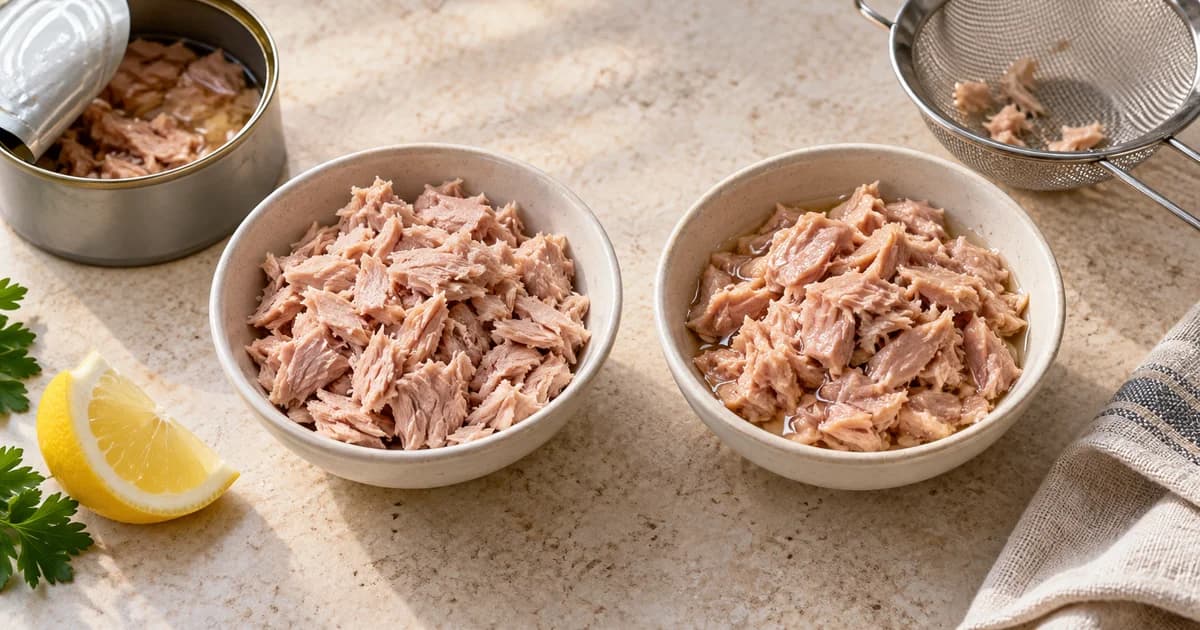
Weigh the drained fish, not the can
In water, without salt, drained solids. USDA source
Plain nonfat Greek yogurt
300g / 10.6 oz
30.6g protein · 177 kcal
About 1 3/4 of a 170 g container
Ready to eat; generic USDA reference. USDA source
Cottage cheese, 1%
245g / 8.6 oz
30.4g protein · 176 kcal
Just over 1 cup, not packed
Ready to eat. USDA source
Firm tofu
Plant-based175g / 6.2 oz
30.3g protein · 252 kcal
Just under half of a 400 g pack
Uncooked, calcium-sulfate-set reference. USDA source
Shelled edamame
Plant-based250g / 8.8 oz
29.8g protein · 303 kcal
About 1 2/3 cups
Frozen, prepared; beans only, no pods. USDA source
Lentils
Plant-based335g / 11.8 oz
30.2g protein · 389 kcal
About 1 2/3 cups
Cooked, boiled, without salt. USDA source
Whole eggs
250g / 8.8 oz
31.5g protein · 388 kcal
5 large eggs (50 g edible weight each)
Hard-boiled, shells removed. USDA source
Use the grams as your calculation basis. Cups and package fractions are rough orientation cues: chopped food packs differently, and packages come in different sizes. The bars compare weight, not how much space each food takes up on a plate.
For example, the chicken reference lists 140g per cup of chopped meat, so 100g is a little under three-quarters of a cup. The cottage cheese reference uses 226g per unpacked cup, so 245g is just over a cup. We are not treating a palm, bowl or scoop as a fixed measurement.
Chicken, yogurt and tofu: three useful starting points
Chicken: weigh the cooked meat for this example
The 100g portion is cooked, roasted chicken breast with skin and bone removed. In this USDA reference it supplies about 31g protein and 165 calories. A raw 100g chicken portion is a different entry; cooking changes its water content and therefore the nutrients per 100g.
A whole breast is not a dependable serving unit because sizes vary. Weigh the cooked meat or use a checked saved portion, then add the rice, vegetables and sauce you actually eat with it. Our chicken breast nutrition guide explains the raw-versus-cooked distinction in more detail.
Greek yogurt: one small container may not get you there
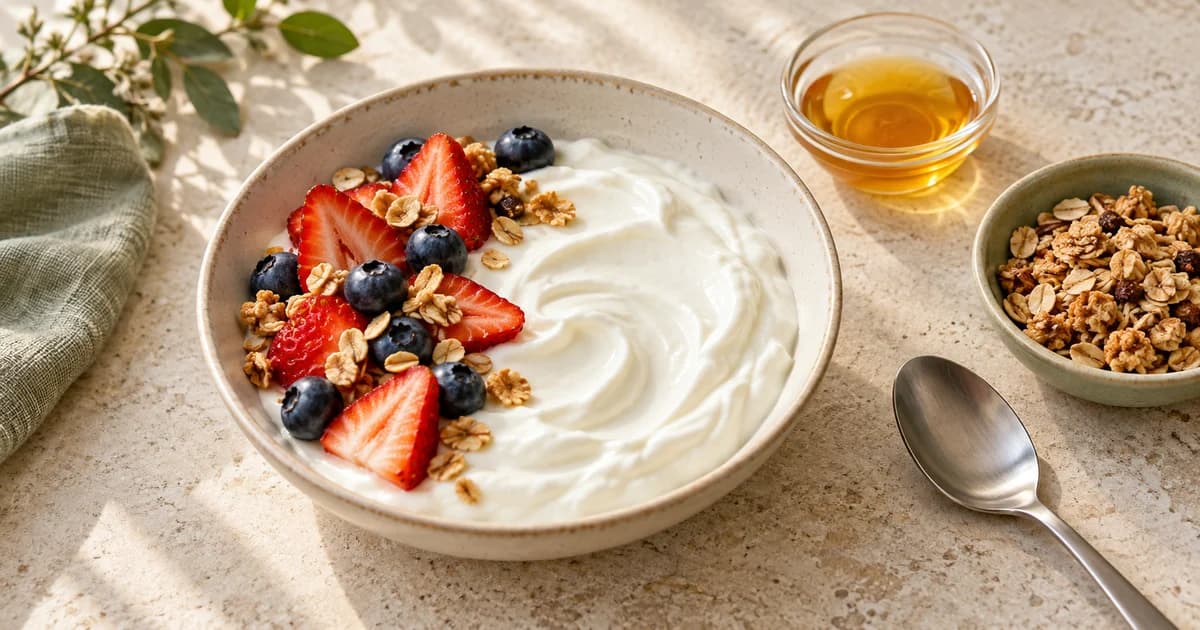
The generic plain nonfat Greek yogurt in this chart has 10.2g protein per 100g. That makes 300g about 30.6g protein and 177 calories. A 170g container of that reference food would provide about 17.3g protein—not 30g.
Check the tub you buy. Regular yogurt, flavored Greek yogurt and products with added protein need their own entries. A different fat content also changes the calorie calculation. The Greek yogurt guide helps you compare labels without treating every yogurt as interchangeable.
You can use a smaller yogurt portion alongside another protein food. There is no need to force a large bowl when a combination suits your breakfast better.
Tofu: the label matters more than the word “firm”
Our tofu reference is uncooked firm tofu prepared with calcium sulfate, with 17.3g protein per 100g. A 175g portion supplies about 30.3g protein. This does not mean every firm tofu or local tokwa provides that amount: water content and manufacturing differ.
If your packet says 8g protein per 100g, you would need 375g to obtain 30g protein from that tofu alone. That is an illustrative label calculation, not a claim about a particular product. Silken tofu and extra-dense high-protein tofu should not share one generic entry.
For the chart's uncooked tofu reference, weigh before cooking and log any added oil separately. A finished stir-fry's weight is not equivalent to the original tofu weight.
Four combinations around 30g protein
A single-food comparison is useful for learning portions. A meal can get its protein from several ingredients. These four combinations use the same reference values as the chart:
Eggs + yogurt
2 large hard-boiled eggs + 175 g plain nonfat Greek yogurt.
30.5g protein · 258 kcal
Protein base only. Add and log your vegetables, starches, oil, sauces or toppings separately.
Tofu + lentils
125 g firm tofu, weighed before cooking + 100 g cooked lentils.
30.6g protein · 296 kcal
Protein base only. Add and log your vegetables, starches, oil, sauces or toppings separately.
Edamame + lentils
150 g prepared shelled edamame + 135 g cooked lentils.
30.0g protein · 338 kcal
Protein base only. Add and log your vegetables, starches, oil, sauces or toppings separately.
Chicken + lentils
75 g cooked chicken breast + 75 g cooked lentils.
30.0g protein · 211 kcal
Protein base only. Add and log your vegetables, starches, oil, sauces or toppings separately.
For breakfast: two large eggs plus a modest yogurt serving may be more useful than eating five eggs to reach the same neighborhood of protein. Add fruit, toast or other foods according to your appetite and meal plan; their nutrients are not included in the displayed total.
For a vegan meal: tofu with lentils provides a combination of textures without asking lentils alone to supply all 30g. The edamame-and-lentil option works when you want a base for a warm bowl or salad. Count only shelled edamame beans, not the weight of the pods.
For a smaller meat portion: cooked chicken and lentils together reach about 30g while using less chicken than the single-food example. These are flexible protein bases, not complete meal prescriptions or a claim that the four combinations are nutritionally identical.
Build out the rest of the plate with foods you enjoy. For more shopping ideas, see the high-protein grocery list.
How many eggs equal 30g protein?
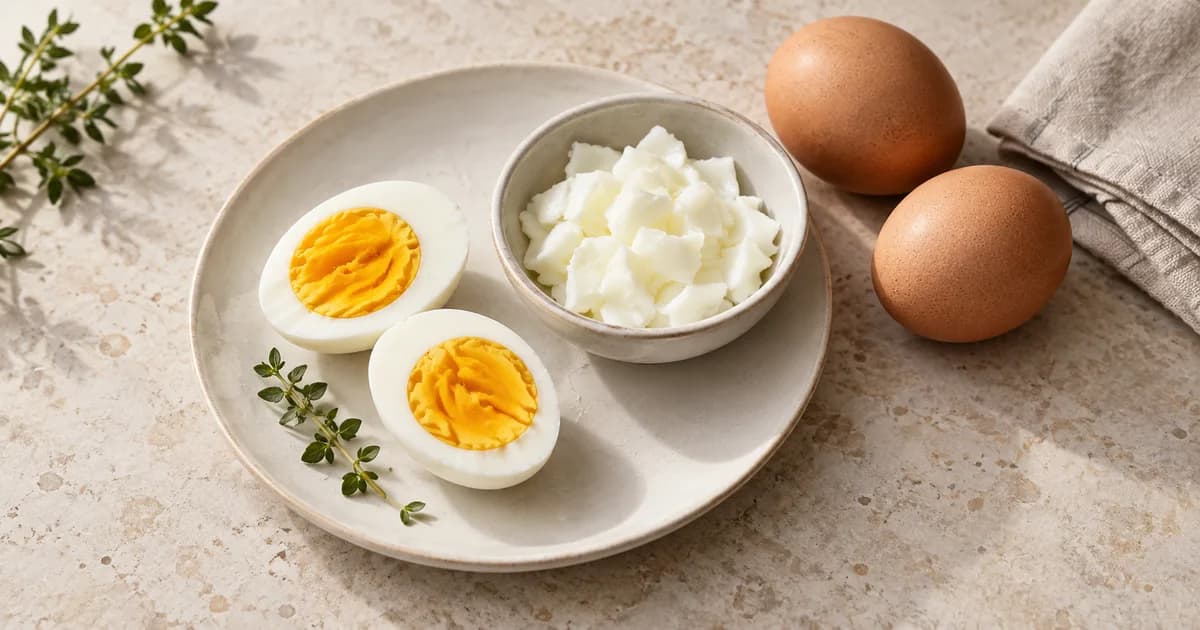
In the USDA hard-boiled egg reference, one large egg has 50g edible weight and about 6.3g protein. Five large eggs total about 31.5g protein and 388 calories. Two large eggs supply about 12.6g protein.
That five-egg example explains the arithmetic; it is not a recommendation to eat five eggs in one sitting. The egg-and-yogurt combination above is one way to use fewer whole eggs while arriving near 30g. If you use egg whites, follow their own label or database entry rather than counting them as whole eggs. See the egg and egg-white comparison for the differences.
Cooking oil and butter also matter. The values here are for hard-boiled eggs, so they do not automatically describe a fried egg or a cheese omelet.
Calculate a 30g portion from your own label
Use this when your product differs from the chart:
Food grams for 30g protein = 30 ÷ protein per labeled serving × serving weight in grams.
Suppose a fictional yogurt label lists 15g protein per 150g serving. The calculation is 30 ÷ 15 × 150 = 300g yogurt. If the same label lists 100 calories per serving, that portion would be two servings, or 200 calories. Do not substitute the generic yogurt's calorie value for the product's own label.
For a smaller mixed meal, add each food's contribution instead. Using this guide's data, 125g tofu provides about 21.6g protein and 100g cooked lentils provides about 9.0g, for about 30.6g together. The displayed totals are calculated before rounding.
There is no need to adjust a meal over a tenth of a gram. Labels are rounded and reference foods vary. What matters for useful logging is choosing the right food and recording a realistic amount.
Avoid these portion mistakes
- Reading food grams as protein grams. A 30g piece of the chart's cooked chicken contains about 9.3g protein. It is not a 30g-protein serving.
- Mixing raw and cooked entries. Weigh in the state described by the entry. A cooked lentil portion is not the same weight as the dry lentils used to make it.
- Counting packaging, liquid or shells. Tuna here is drained fish, edamame is shelled beans, and eggs exclude shells.
- Assuming one can or one scoop is standard. Use the label's serving weight and amount consumed. A 30g scoop of protein powder is 30g powder; its actual protein comes from the label.
- Leaving out the rest of the plate. Bread, grains, vegetables and sauces can contribute nutrients too. The chart is a reference for one food, not the total for your finished meal.
If you want to compare how much protein foods provide for their calories, use the separate protein-per-calorie chart. This guide answers the portion-size question. Neither comparison makes one food the right choice for every meal.
Log your meal, then check the portion
Start with one food or combination from the chart. Put together the meal you actually want, then check the amounts before saving your log.
CalorieCue can use a meal photo as a starting estimate. Review the identified foods and portions, check the package label when needed, and add missed oil or sauce. A photo cannot verify that a serving contains exactly 30g protein. When the amount matters, use the weight or label to correct the estimate.
The free allowance includes 3 meal-photo scans per day on iPhone; Premium is optional. The photo food-logging guide walks through the review step.
Does every meal need 30g protein?
No. Here, 30g is a consistent reference point so you can compare familiar foods. It is not a personalized daily target or a requirement for every breakfast, lunch and dinner.
Your needs depend on your circumstances, and a useful daily plan can include meals with different protein amounts. For the broader target question, start with our daily protein guide. Use this portion chart to translate a target into food once you have one that suits you.
Sources and calculation method
The chart and printable use the same per-100g protein and energy values from the USDA FoodData Central SR Legacy April 2018 download, checked October 23, 2026. They are established reference data, not new laboratory tests conducted on that date. Each chart card links to its exact USDA record.
For every portion, we multiply the per-100g values by the food weight divided by 100. We round displayed protein to one decimal place, calories to whole kilocalories, and ounces to one decimal place. Meal totals use unrounded ingredient calculations. Practical portions are intentionally close to 30g rather than all exactly 30.0g.
The reference foods are cooked roasted chicken breast, drained light tuna in water without salt, plain nonfat Greek yogurt, 1% cottage cheese, uncooked firm calcium-set tofu, prepared shelled edamame, boiled unsalted lentils, and hard-boiled whole eggs. Brands and preparation can differ. Use your product's current label for a closer match.
Frequently asked questions
What does 30g of protein look like in food?
Approximately 100g cooked chicken breast, 120g drained light tuna, 300g plain nonfat Greek yogurt or 175g of the firm tofu in this guide's USDA reference. Those are food weights; check the chart for preparation details and calories.
Is 30g of chicken the same as 30g of protein?
No. The cooked chicken reference provides 31g protein per 100g food, so 30g chicken provides about 9.3g protein.
How many eggs provide 30g of protein?
About five large hard-boiled eggs provide 31.5g protein. Another example is two large eggs plus 175g plain nonfat Greek yogurt, providing about 30.5g. Neither is a universal meal recommendation.
How can I get 30g protein without meat?
Try a portion of Greek yogurt, or use a vegan combination such as 125g firm tofu with 100g cooked lentils. Another option is 150g prepared shelled edamame plus 135g cooked lentils. Match the reference food or calculate from your own label.
Should I weigh these foods raw or cooked?
Use the state shown on each card. Chicken, lentils, edamame and eggs use cooked or prepared weights; tuna uses drained weight; tofu uses the uncooked reference. Yogurt and cottage cheese are weighed as eaten.
Does every meal need exactly 30g protein?
No. It is a comparison point in this guide. Use your daily needs and eating pattern to decide what works for you; individual meals do not have to match the chart exactly.