On this page
- Quick Answer
- Jump to the Food You Need
- Protein Sources
- Meat and Poultry
- Fish and Seafood
- Eggs and Dairy Proteins
- Plant-Based Proteins
- Grains, Bread, and Pasta
- Fruits
- Vegetables
- Dairy and Dairy Alternatives
- Nuts, Seeds, and Fats
- Snacks and Sweets
- Beverages
- Popular Restaurant and Takeout Meals
- Condiments, Sauces, and Extras
- Bonus: Southeast Asian Staples
- How to Use This List Effectively
- Learn Your Top 20 Foods First
- Pay Attention to Serving Sizes
- Notice the Calorie Density Patterns
- Use a Tracking Tool for Complex Meals
- Frequently Asked Questions
- How accurate are these calorie counts?
- Should I weigh food raw or cooked?
- Why are restaurant meals listed as ranges?
- How many calories should I be eating per day?
- What's the fastest way to look up calories in my actual meals?
- The Bottom Line
Knowing the calorie content of everyday foods is the single most practical skill in weight management. Not because you need to memorize every number — but because once you have a rough sense of what's in the foods you eat regularly, making better choices becomes automatic.
Quick Answer
Common food calories vary most by category: lean proteins are usually 100-250 calories per serving, cooked grains are about 200 calories per cup, fats are about 120 calories per tablespoon, and non-starchy vegetables are usually under 50 calories per cup.
This list covers over 200 common foods organized by category, with calories and protein per serving. All values are based on data from the USDA FoodData Central database, the most comprehensive and scientifically verified food composition resource available.
Bookmark this page. You'll come back to it.
Quick answer: This reference lists calories and protein for 200+ common foods — proteins, grains, fruits, vegetables, dairy, nuts, snacks, beverages, restaurant meals, and Southeast Asian staples — all at standard serving sizes and sourced from USDA FoodData Central. Use it to learn your most-eaten foods, then stop looking them up by memory.
How to use this list:
- Find your most-eaten foods and learn their calorie range
- Compare options within categories (e.g., which protein sources give you the most for the fewest calories)
- Use it alongside a calorie counting diet plan or your daily TDEE target to build meals that fit your goals
If you want a shorter, printable version, check out our calorie counting cheat sheet.
Jump to the Food You Need
Use the category links below, then check the serving size before comparing numbers:
- Protein sources
- Printable calorie-counting reference
- Protein per calorie comparison
- How to calculate a homemade meal
Scale the serving: if a listed 150 g portion has 248 calories, a 100 g portion of the same preparation is approximately 248 × 100 ÷ 150 = 165 calories. Match cooked or raw weights and add oil or sauce separately when it is not part of the listed preparation.
Protein Sources
Protein is the most important macronutrient for weight management. It preserves muscle during a deficit, keeps you fuller for longer, and has the highest thermic effect of any macro — meaning your body burns more calories digesting it. For a deep dive on the best options, see our high protein low calorie foods guide, or learn which foods win on protein per calorie.
Meat and Poultry
| Food | Serving Size | Calories | Protein |
|---|---|---|---|
| Chicken breast, skinless, grilled | 150g (5.3 oz) | 248 | 46g |
| Chicken thigh, skinless | 130g (4.6 oz) | 247 | 30g |
| Chicken drumstick, skinless | 95g (3.4 oz) | 146 | 24g |
| Turkey breast, roasted | 150g (5.3 oz) | 189 | 39g |
| Ground turkey, 93% lean | 150g (5.3 oz) | 240 | 33g |
| Ground beef, 90% lean | 150g (5.3 oz) | 291 | 39g |
| Ground beef, 80% lean | 150g (5.3 oz) | 367 | 35g |
| Sirloin steak, trimmed | 150g (5.3 oz) | 276 | 39g |
| Pork tenderloin, roasted | 150g (5.3 oz) | 220 | 37g |
| Pork chop, bone-in, grilled | 150g (5.3 oz) | 291 | 39g |
| Lamb leg, roasted, trimmed | 150g (5.3 oz) | 293 | 38g |
| Bacon, cooked | 3 slices (24g) | 129 | 9g |
| Deli ham, sliced | 60g (2 oz) | 61 | 10g |
| Deli turkey, sliced | 60g (2 oz) | 54 | 11g |
Fish and Seafood
| Food | Serving Size | Calories | Protein |
|---|---|---|---|
| Salmon, Atlantic, baked | 150g (5.3 oz) | 312 | 34g |
| Light tuna, canned in water, drained | 100g drained (3.5 oz) | 86 | 19.4g |
| Shrimp, cooked | 150g (5.3 oz) | 149 | 36g |
| Cod, baked | 150g (5.3 oz) | 140 | 31g |
| Tilapia, baked | 150g (5.3 oz) | 163 | 34g |
| Sardines, canned in oil, drained | 1 can (92g) | 191 | 23g |
| Tuna steak, grilled | 150g (5.3 oz) | 184 | 40g |
| Mahi-mahi, grilled | 150g (5.3 oz) | 148 | 31g |
Eggs and Dairy Proteins
| Food | Serving Size | Calories | Protein |
|---|---|---|---|
| Egg, whole, hard-boiled, large | 1 egg (50g) | 78 | 6g |
| Egg whites | 3 whites (99g) | 51 | 11g |
| Greek yogurt, plain, nonfat | 200g (7 oz) | 118 | 20g |
| Greek yogurt, plain, whole milk | 200g (7 oz) | 194 | 18g |
| Cottage cheese, low-fat (2%) | 1 cup (226g) | 183 | 24g |
| Cottage cheese, full-fat | 1 cup (226g) | 222 | 25g |
For egg sizes, whole eggs versus whites, and cooking-fat additions, use the egg calories and protein guide. Its charts distinguish raw-ingredient values from hard-boiled entries.
The yogurt rows use USDA plain nonfat and whole-milk references, with protein rounded to whole grams for this list. See the Greek yogurt calories and protein guide for serving sizes, fat levels and label calculations; your product’s label may differ.
Plant-Based Proteins
| Food | Serving Size | Calories | Protein |
|---|---|---|---|
| Tofu, firm | 150g (5.3 oz) | 126 | 15g |
| Tempeh | 100g (3.5 oz) | 192 | 20g |
| Edamame, shelled | 1 cup (155g) | 188 | 18g |
| Black beans, cooked | 1 cup (172g) | 227 | 15g |
| Chickpeas, cooked | 1 cup (164g) | 269 | 15g |
| Lentils, cooked | 1 cup (198g) | 230 | 18g |
| Kidney beans, cooked | 1 cup (177g) | 225 | 15g |
| Protein powder, whey | 1 scoop (30g) | 120 | 24g |
Grains, Bread, and Pasta
Carbohydrates aren't the enemy — portion sizes are. A cup of cooked rice is perfectly reasonable. Three cups is where it gets tricky. Knowing the calorie count per standard serving helps you build balanced meals without accidentally doubling your intake.
| Food | Serving Size | Calories | Protein |
|---|---|---|---|
| White rice, cooked | 1 cup (186g) | 206 | 4g |
| Brown rice, cooked | 1 cup (195g) | 216 | 5g |
| Quinoa, cooked | 1 cup (185g) | 222 | 8g |
| Oats, rolled, dry | 1/2 cup (40g) | 150 | 5g |
| Whole wheat bread | 1 slice (33g) | 81 | 4g |
| White bread | 1 slice (29g) | 75 | 2g |
| Whole wheat pasta, cooked | 1 cup (140g) | 174 | 7g |
| White pasta, cooked | 1 cup (140g) | 220 | 8g |
| Whole wheat tortilla, large | 1 tortilla (64g) | 170 | 5g |
| Flour tortilla, large | 1 tortilla (64g) | 200 | 5g |
| Bagel, plain | 1 medium (105g) | 270 | 10g |
| English muffin, whole wheat | 1 muffin (57g) | 134 | 6g |
| Couscous, cooked | 1 cup (157g) | 176 | 6g |
| Corn tortilla | 1 tortilla (26g) | 52 | 1g |
| Rice noodles, cooked | 1 cup (176g) | 190 | 2g |
| Granola | 1/2 cup (60g) | 298 | 7g |
Fruits
Fruits are nature's low-calorie snacks. Most are under 100 calories per serving, high in fiber, and loaded with vitamins. The exception is dried fruits and tropical fruits, which are calorie-dense by volume.
| Food | Serving Size | Calories | Fiber |
|---|---|---|---|
| Apple | 1 medium (182g) | 95 | 4g |
| Banana | 1 medium (118g) | 105 | 3g |
| Blueberries | 1 cup (148g) | 84 | 4g |
| Strawberries | 1 cup (152g) | 49 | 3g |
| Raspberries | 1 cup (123g) | 64 | 8g |
| Orange | 1 medium (131g) | 62 | 3g |
| Grapes | 1 cup (151g) | 104 | 1g |
| Watermelon | 1 cup diced (152g) | 46 | 1g |
| Mango | 1 cup sliced (165g) | 99 | 3g |
| Pineapple | 1 cup chunks (165g) | 82 | 2g |
| Peach | 1 medium (150g) | 59 | 2g |
| Pear | 1 medium (178g) | 101 | 6g |
| Cherries | 1 cup (154g) | 97 | 3g |
| Kiwi | 1 medium (69g) | 42 | 2g |
| Grapefruit | 1/2 medium (123g) | 52 | 2g |
| Avocado | 1/2 medium (68g) | 161 | 5g |
| Dates, dried | 3 dates (72g) | 200 | 5g |
| Raisins | 1/4 cup (41g) | 123 | 2g |
| Dried cranberries | 1/4 cup (40g) | 123 | 2g |
Perspective check: A cup of dried fruit can have 4–5× the calories of the same cup of fresh fruit. The water is what makes fresh fruit low-calorie. If you snack on raisins, dates, or dried cranberries, measure them the same way you would nuts — a small handful adds up fast.
Vegetables
Vegetables are the highest-volume, lowest-calorie foods on the planet. You can eat a massive plate of roasted vegetables for fewer calories than a single handful of chips. If you're in a calorie deficit and feeling hungry, adding more vegetables is almost always the answer. For more strategies like this, see our portion control guide.
| Food | Serving Size | Calories | Fiber |
|---|---|---|---|
| Broccoli, cooked | 1 cup (156g) | 55 | 5g |
| Spinach, raw | 2 cups (60g) | 14 | 1g |
| Spinach, cooked | 1 cup (180g) | 41 | 4g |
| Kale, raw | 2 cups (40g) | 14 | 1g |
| Bell pepper, raw | 1 medium (119g) | 31 | 2g |
| Carrots, raw | 1 medium (61g) | 25 | 2g |
| Tomato, raw | 1 medium (123g) | 22 | 2g |
| Cucumber | 1 cup sliced (119g) | 16 | 1g |
| Zucchini, cooked | 1 cup (180g) | 27 | 2g |
| Cauliflower, cooked | 1 cup (124g) | 29 | 3g |
| Green beans, cooked | 1 cup (125g) | 34 | 4g |
| Asparagus, cooked | 6 spears (90g) | 20 | 2g |
| Sweet potato, baked | 1 medium (114g) | 103 | 4g |
| Potato, baked, with skin | 1 medium (173g) | 161 | 4g |
| Corn on the cob | 1 ear (90g) | 77 | 2g |
| Mushrooms, cooked | 1 cup (156g) | 44 | 3g |
| Onion, raw | 1 medium (110g) | 44 | 2g |
| Eggplant, cooked | 1 cup (99g) | 33 | 3g |
| Brussels sprouts, cooked | 1 cup (156g) | 56 | 4g |
| Cabbage, cooked | 1 cup (150g) | 33 | 3g |
| Lettuce, romaine | 2 cups (94g) | 16 | 2g |
Dairy and Dairy Alternatives
| Food | Serving Size | Calories | Protein |
|---|---|---|---|
| Whole milk | 1 cup (244ml) | 149 | 8g |
| 2% milk | 1 cup (244ml) | 122 | 8g |
| Skim milk | 1 cup (244ml) | 83 | 8g |
| Almond milk, unsweetened | 1 cup (240ml) | 30 | 1g |
| Oat milk, unsweetened | 1 cup (240ml) | 80 | 3g |
| Soy milk, unsweetened | 1 cup (243ml) | 80 | 7g |
| Cheddar cheese | 30g (1 oz) | 114 | 7g |
| Mozzarella, part-skim | 30g (1 oz) | 72 | 7g |
| Parmesan, grated | 2 tbsp (10g) | 42 | 4g |
| Cream cheese | 2 tbsp (29g) | 99 | 2g |
| Butter | 1 tbsp (14g) | 102 | 0g |
| Heavy cream | 1 tbsp (15ml) | 51 | 0g |
| Sour cream | 2 tbsp (30g) | 59 | 1g |
Nuts, Seeds, and Fats
This is where most people underestimate calories. Nuts and seeds are incredibly nutrient-dense — but also calorie-dense. A "small handful" of almonds can easily be 200+ calories. Measure these until you develop an eye for portions.
| Food | Serving Size | Calories | Protein |
|---|---|---|---|
| Almonds | 30g (about 23 nuts) | 173 | 6g |
| Walnuts | 30g (about 14 halves) | 196 | 5g |
| Cashews | 30g (about 18 nuts) | 163 | 5g |
| Peanuts, dry roasted | 30g | 166 | 7g |
| Pecans | 30g (about 19 halves) | 196 | 3g |
| Macadamia nuts | 30g (about 10 nuts) | 204 | 2g |
| Pistachios | 30g (about 49 nuts) | 162 | 6g |
| Peanut butter | 1 tbsp (16g) | 94 | 4g |
| Almond butter | 1 tbsp (16g) | 98 | 3g |
| Chia seeds | 1 tbsp (12g) | 58 | 2g |
| Flaxseeds, ground | 1 tbsp (7g) | 37 | 1g |
| Pumpkin seeds | 30g | 153 | 7g |
| Sunflower seeds | 30g | 175 | 6g |
| Olive oil | 1 tbsp (14ml) | 119 | 0g |
| Coconut oil | 1 tbsp (14ml) | 121 | 0g |
The #1 hidden calorie source in home cooking: That "drizzle" of olive oil is probably 2–3 tablespoons = 240–360 calories. Cooking oils and added fats are among the most frequently untracked calorie sources. This alone can quietly eliminate an entire calorie deficit without you noticing.
Snacks and Sweets
For smarter snack options that support your goals, see our guide on healthy snacks for weight loss.
| Food | Serving Size | Calories | Notes |
|---|---|---|---|
| Dark chocolate (70%+) | 30g (about 3 squares) | 170 | 3g fiber |
| Milk chocolate | 30g | 153 | 1g fiber |
| Potato chips | 30g (about 15 chips) | 152 | 1g fiber |
| Tortilla chips | 30g (about 9 chips) | 142 | 1g fiber |
| Popcorn, air-popped | 3 cups (24g) | 93 | 4g fiber |
| Pretzels | 30g | 108 | 1g fiber |
| Trail mix | 30g | 140 | 1g fiber |
| Rice cake, plain | 1 cake (9g) | 35 | 0g fiber |
| Granola bar | 1 bar (42g) | 190 | 2g fiber |
| Protein bar (average) | 1 bar (60g) | 220 | 3g fiber |
| Ice cream, vanilla | 1/2 cup (66g) | 137 | 0g fiber |
| Frozen yogurt | 1/2 cup (72g) | 114 | 0g fiber |
| Cookie, chocolate chip | 1 large (45g) | 210 | 1g fiber |
| Brownie | 1 piece (56g) | 227 | 1g fiber |
Beverages
Liquid calories are the most common source of "invisible" calories. A single coffee shop drink can have more calories than an entire meal — and it won't fill you up.
| Beverage | Serving Size | Calories |
|---|---|---|
| Water | Any | 0 |
| Black coffee | 1 cup (240ml) | 2 |
| Coffee with milk (a splash) | 1 cup | 20 |
| Latte, whole milk | 16 oz (480ml) | 220 |
| Cappuccino, whole milk | 12 oz (360ml) | 140 |
| Green tea, unsweetened | 1 cup (240ml) | 2 |
| Orange juice | 1 cup (248ml) | 112 |
| Apple juice | 1 cup (248ml) | 114 |
| Coca-Cola | 1 can (355ml) | 140 |
| Diet soda | 1 can (355ml) | 0 |
| Beer, regular | 1 bottle (355ml) | 153 |
| Beer, light | 1 bottle (355ml) | 103 |
| Red wine | 1 glass (150ml) | 125 |
| White wine | 1 glass (150ml) | 121 |
| Vodka / Gin / Rum | 1 shot (44ml) | 97 |
| Margarita | 1 glass (240ml) | 274 |
| Smoothie, fruit, store-bought | 16 oz (480ml) | 250–400 |
| Protein shake (whey + water) | 1 scoop + 300ml | 120 |
Liquid calories don't trigger the same satiety signals as solid food. Two margaritas with dinner = 550 calories, and your body barely registers them. A daily 16 oz latte (220 cal) adds up to over 1,500 extra calories per week if nothing else changes.
Popular Restaurant and Takeout Meals
These are estimates based on typical restaurant portions. Actual calories vary by restaurant, preparation, and portion size — which is why tracking with a tool like CalorieCue is useful when eating out. For more tips, see our guide on how to track calories when eating out.
| Meal | Typical Serving | Estimated Calories |
|---|---|---|
| Cheeseburger (fast food, single patty) | 1 burger | 300–350 |
| Big Mac or equivalent | 1 burger | 550–590 |
| Grilled chicken sandwich | 1 sandwich | 380–450 |
| Pepperoni pizza | 1 slice, large (14") | 300–350 |
| Margherita pizza | 1 slice, large (14") | 250–300 |
| Caesar salad with chicken | 1 bowl | 470–600 |
| Chicken burrito | 1 burrito | 800–1,100 |
| Burrito bowl (no tortilla) | 1 bowl | 600–800 |
| Pad Thai with chicken | 1 plate | 600–800 |
| Chicken tikka masala with rice | 1 plate | 700–900 |
| Sushi roll (California, 6 pieces) | 1 roll | 250–300 |
| Fish and chips | 1 serving | 800–1,000 |
| Chicken fried rice | 1 plate | 500–700 |
| Ramen | 1 bowl | 500–700 |
| Greek gyro / souvlaki wrap | 1 wrap | 400–550 |
| Doner kebab | 1 wrap | 600–900 |
| Pho (beef or chicken) | 1 large bowl | 400–550 |
| Tacos (beef, soft shell) | 2 tacos | 340–450 |
| Sub sandwich (6-inch, turkey) | 1 sandwich | 280–350 |
| Sub sandwich (12-inch, meatball) | 1 sandwich | 900–1,100 |
Condiments, Sauces, and Extras
The "little things" that add up faster than you think.
| Item | Serving Size | Calories |
|---|---|---|
| Ketchup | 1 tbsp (17g) | 20 |
| Mustard | 1 tbsp (15g) | 10 |
| Mayonnaise | 1 tbsp (13g) | 94 |
| Mayonnaise, light | 1 tbsp (15g) | 35 |
| Ranch dressing | 2 tbsp (30g) | 129 |
| Italian dressing | 2 tbsp (30g) | 71 |
| Balsamic vinaigrette | 2 tbsp (30g) | 90 |
| Soy sauce | 1 tbsp (15ml) | 9 |
| Hot sauce | 1 tsp (5ml) | 1 |
| Honey | 1 tbsp (21g) | 64 |
| Maple syrup | 1 tbsp (20g) | 52 |
| BBQ sauce | 2 tbsp (36g) | 52 |
| Hummus | 2 tbsp (30g) | 70 |
| Guacamole | 2 tbsp (30g) | 50 |
| Salsa | 2 tbsp (30g) | 10 |
| Jam / jelly | 1 tbsp (20g) | 56 |
| Cream cheese, spread | 1 tbsp (14g) | 50 |
Bonus: Southeast Asian Staples
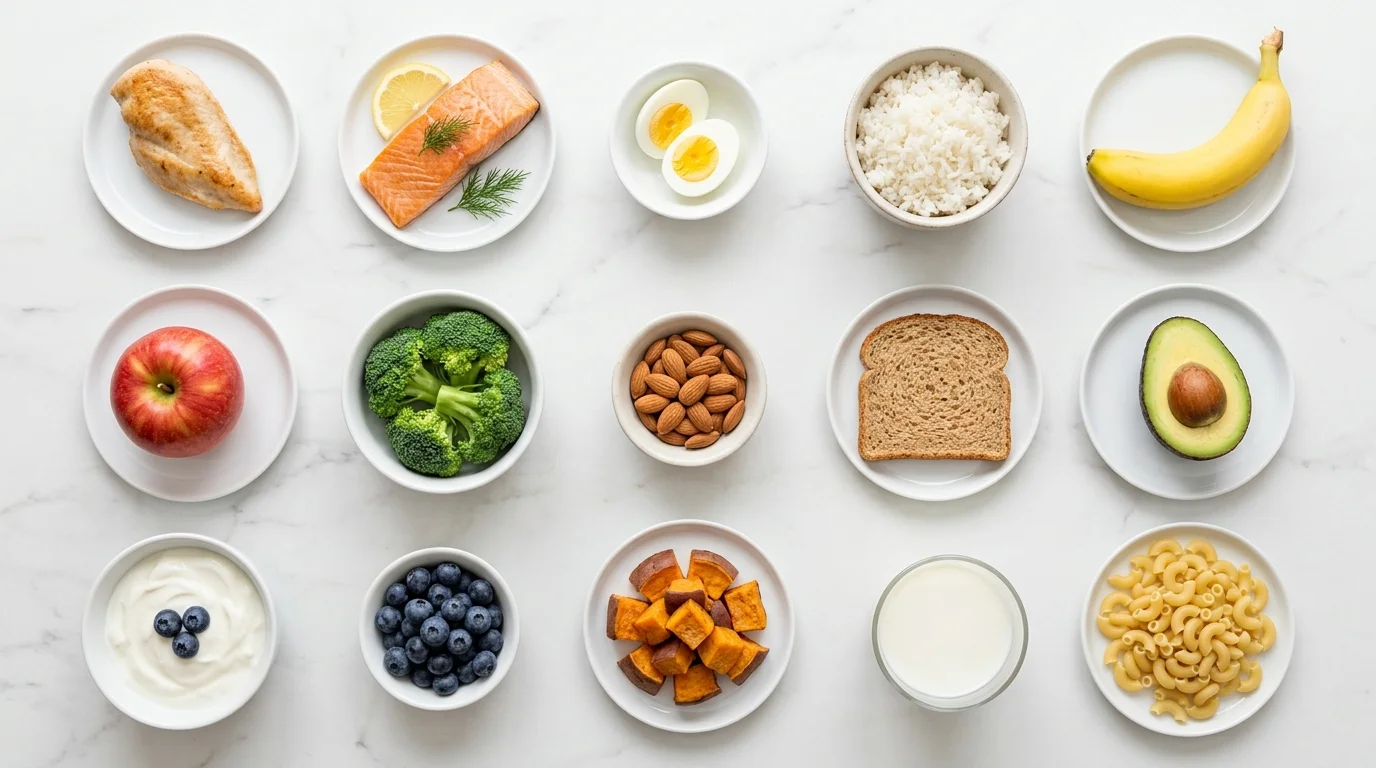
If your diet includes dishes from Southeast Asia, here are some common staples. For a more visual breakdown, check our calories in popular foods visual guide.
| Food | Serving Size | Estimated Calories | Protein |
|---|---|---|---|
| Jasmine rice, cooked | 1 cup (186g) | 213 | 4g |
| Sticky rice, cooked | 1 cup (174g) | 202 | 4g |
| Chicken adobo (with sauce, no skin) | 1 serving (~200g) | 300–350 | 30g |
| Pork sinigang (soup + meat) | 1 bowl (~400ml) | 250–350 | 25g |
| Chicken tinola (soup) | 1 bowl (~400ml) | 200–280 | 25g |
| Pad Thai | 1 plate | 600–800 | 20g |
| Green curry with rice | 1 plate | 550–700 | 20g |
| Pho (beef) | 1 large bowl | 450–550 | 25g |
| Nasi goreng (fried rice) | 1 plate | 500–650 | 15g |
| Spring rolls, fresh (rice paper) | 2 rolls | 140–180 | 6g |
| Egg fried rice | 1 plate | 350–500 | 12g |
| Tom yum soup (shrimp) | 1 bowl (~350ml) | 150–250 | 15g |
| Satay chicken (4 skewers) | 4 skewers + peanut sauce | 350–450 | 28g |
How to Use This List Effectively
Having a calorie list is one thing. Using it effectively is another. Here's how to get the most out of it:
Learn Your Top 20 Foods First
You probably eat the same 20–30 foods on rotation. Start by finding those foods on this list and memorizing their approximate calorie counts. You don't need to know every food — just the ones on your plate every week.
Pay Attention to Serving Sizes
The biggest mistake in calorie counting isn't eating the wrong foods — it's misjudging portions. A "cup of rice" and "a plate of rice" can differ by 400+ calories. When in doubt, measure for a week until you develop a sense for what standard portions look like. Our portion control guide covers this in detail.
Notice the Calorie Density Patterns
Once you scan through these lists, you'll see clear patterns: vegetables are extremely low-calorie, proteins are moderate, nuts and oils are very calorie-dense, and restaurant portions are almost always larger (and more caloric) than home-cooked versions. This intuition is more valuable than memorizing exact numbers.
Use a Tracking Tool for Complex Meals
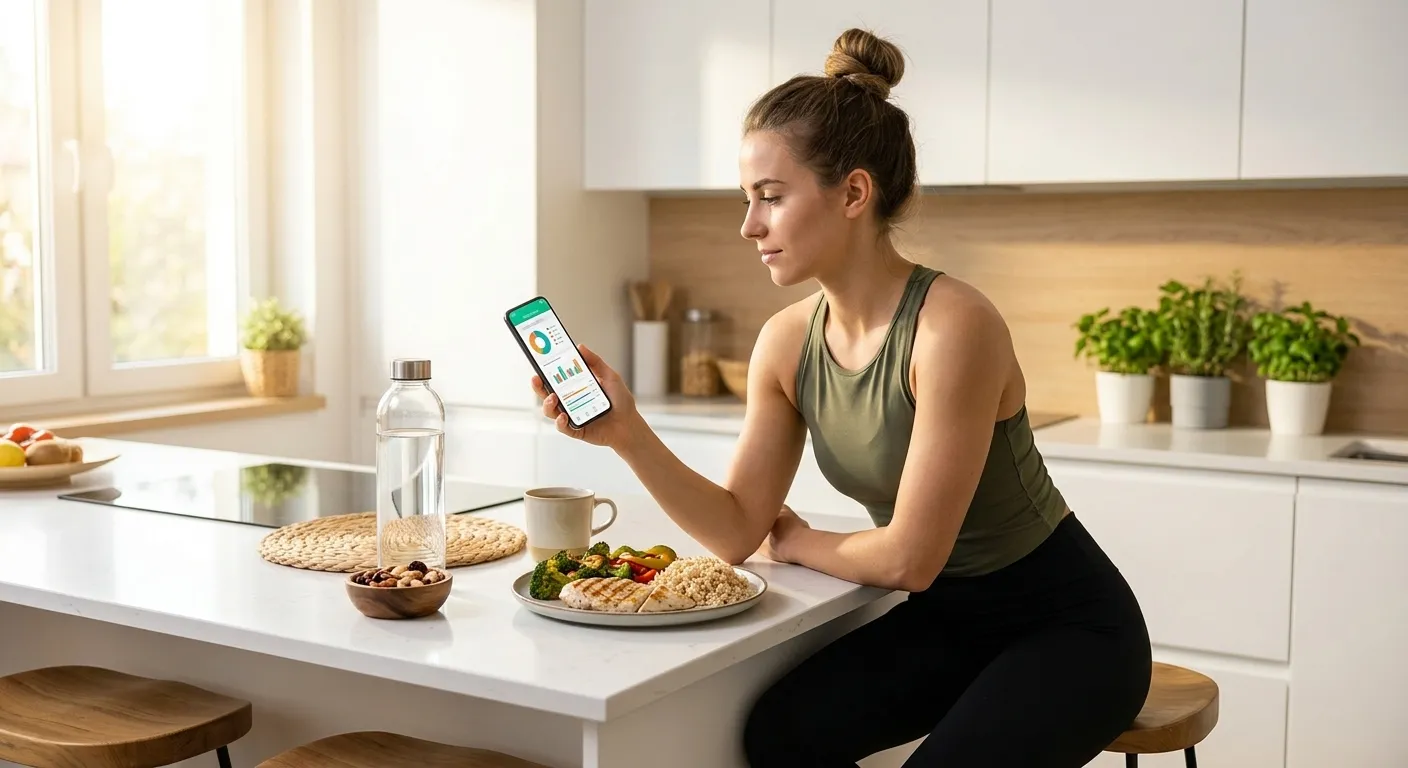
Simple single-ingredient foods are easy to look up. But mixed meals — a stir-fry, a curry, a casserole — are harder to estimate. That's where a tracking tool helps. You can log individual ingredients, or use an AI photo scanner to track your calories in seconds.
Frequently Asked Questions
How accurate are these calorie counts?
These values are based on the USDA FoodData Central database and represent averages for standard preparations. Real-world values vary with cooking method, brand and portion size; there is no single error range that applies to every food. They're accurate enough for effective calorie tracking — perfect precision isn't necessary for results.
Should I weigh food raw or cooked?
Either works, but be consistent and make sure you're using the right calorie value for raw or cooked. Meat loses water when cooked, so 150g of raw chicken breast becomes roughly 120g cooked — but the calories remain the same. Rice and pasta absorb water, so 100g dry rice becomes about 300g cooked. The values in this list specify whether they're raw or cooked to avoid confusion.
Why are restaurant meals listed as ranges?
Because preparation varies enormously. A chicken burrito could be 700 calories at one restaurant and 1,200 at another depending on the tortilla size, amount of cheese, sour cream, rice, and protein portions. The ranges give you a realistic ballpark. For more accuracy when eating out, check our guide on how to track calories at restaurants.
How many calories should I be eating per day?
That depends on your age, sex, weight, height, and activity level. Use our free TDEE calculator to get your personalized number, then read our guide on how many calories I should eat for a detailed walkthrough.
What's the fastest way to look up calories in my actual meals?
For packaged foods, check the nutrition label. For whole foods, use this list. For mixed or restaurant meals, an AI-powered tracking app like CalorieCue can estimate calories from a photo in seconds — no manual searching required.
The Bottom Line
You don't need to memorize this entire list. You just need to know the calorie range of the 20–30 foods you eat most often. That awareness alone puts you ahead of most people trying to manage their weight.
Start by scanning the categories above and flagging the foods that surprised you — the ones with more or fewer calories than you expected. Those surprises are where the biggest gains in calorie awareness come from.
And if you want to skip the manual lookups entirely, CalorieCue lets you snap a photo of any meal and get an instant calorie estimate. No searching, no scrolling, no typing.
Download CalorieCue