On this page
- The short answer
- Method 1: Use your hand as a measuring tool
- Method 2: Memorize a handful of calorie anchors
- Method 3: Read labels and menus (then round)
- Method 4: Build a rotation of known meals
- Method 5: Let your phone estimate it from a photo
- Putting it together: estimate a whole plate
- But how accurate is estimating without a scale?
- Do you ever need the scale?
- The bottom line
- Frequently asked questions
- Can you count calories without a food scale?
- How accurate is counting calories without weighing?
- How do I estimate portions without measuring cups?
- What's the easiest way to count calories without a scale?
- What throws off calorie estimates the most?
A food scale is the single most common reason people quit counting calories. It works great for about two weeks — then you're eating out, cooking for your family, or just tired of weighing chicken at 9 p.m., and the whole habit collapses.
Here's the good news: you don't need one. You can count calories accurately enough to lose or maintain weight using nothing but your hand, a few numbers worth memorizing, and the phone already in your pocket. Will it be perfect? No — but as we'll get to, weighing isn't perfect either, and a method you'll actually keep using beats a precise one you abandon.
Here are five ways to count calories without a scale, from quick estimates to letting your phone do it.
The short answer
To count calories without a food scale, estimate portions with your hand (a palm of protein is roughly 150 calories, a cupped hand of carbs ~120, a fist of vegetables ~30, a thumb of fat ~120), memorize the calories of your staple foods, read labels where you can, and use a photo-based app for anything mixed or cooked. Stay consistent and you'll land within a range that's more than accurate enough to hit your goal.
Method 1: Use your hand as a measuring tool
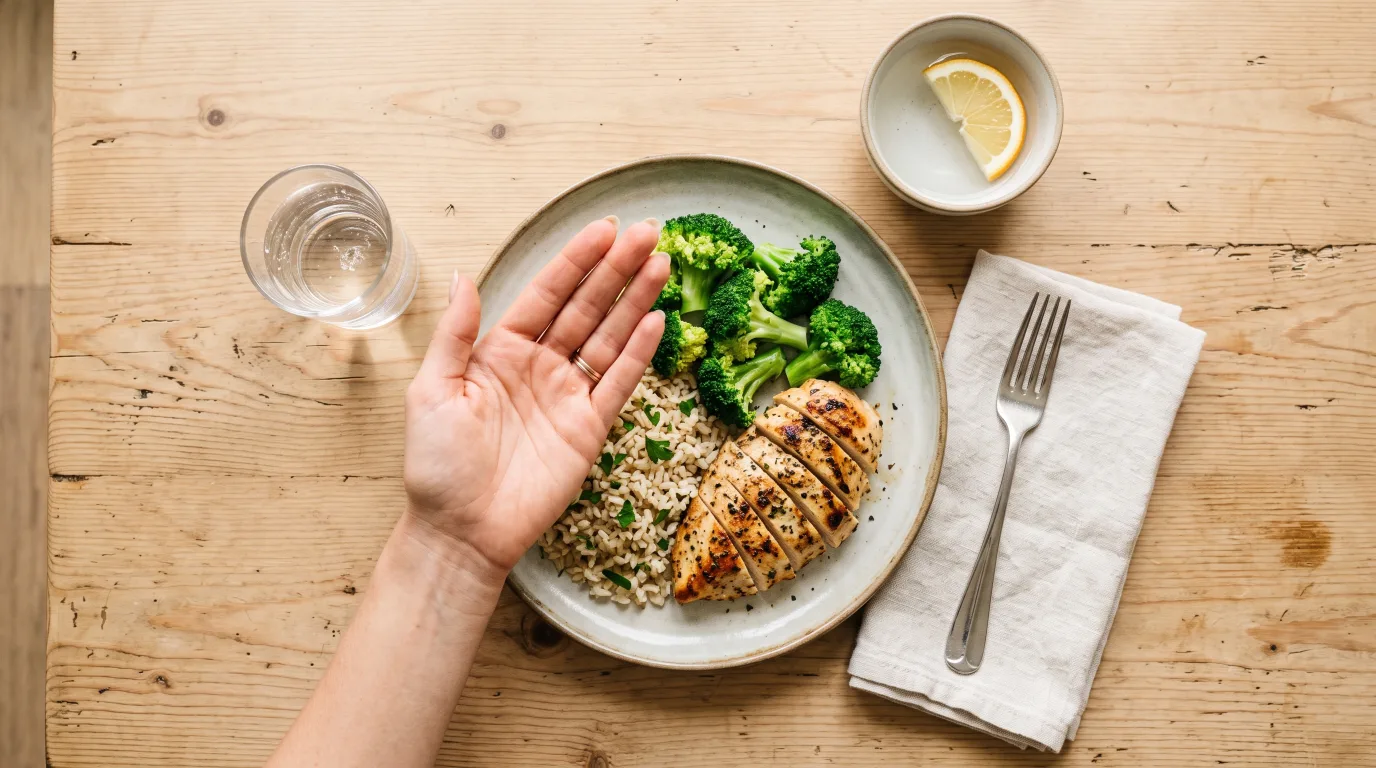
Your hand is always with you, and it scales with your body — bigger person, bigger hands, bigger portions. Four simple cues cover almost any plate:
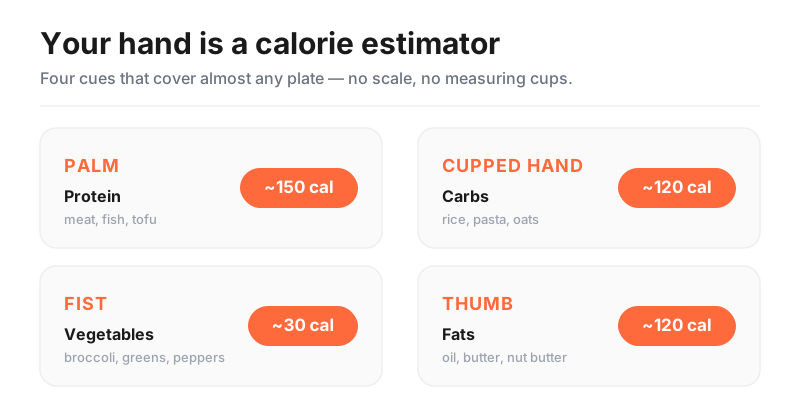
These come from the portion-estimation approach coaches like Precision Nutrition use instead of scales. Once you've seen what a palm or a cupped hand looks like a few times, you stop thinking about it — you just glance at the plate. (For the protein-specific version of this, see how to track protein without weighing.)
Method 2: Memorize a handful of calorie anchors
You don't need to know the calories of every food — just your regulars. Most people eat the same twenty or so foods on repeat, so learning a small set of "anchors" lets you ballpark almost any meal from memory:
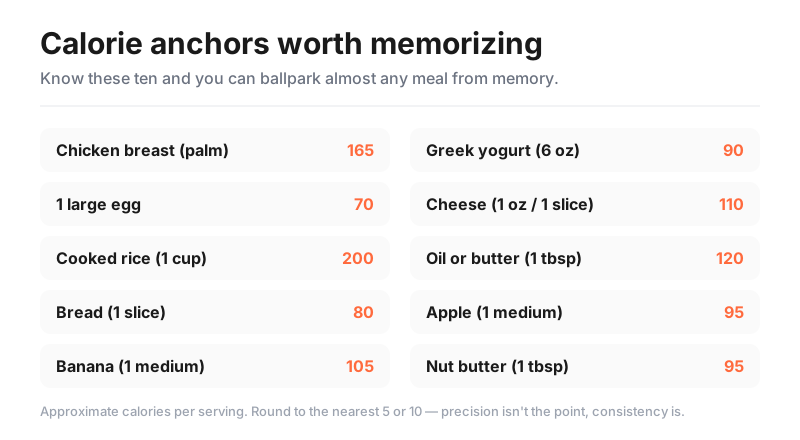
Round everything to the nearest 5 or 10 — precision isn't the point. For anything not on your mental list, our calories in food list has 200+ common foods with servings, and the calorie counting grocery list covers what to stock so your defaults are easy to track.
Method 3: Read labels and menus (then round)
Packaged food already did the counting — check the label, note the calories per serving, and eyeball how many servings are on your plate. Most large restaurant chains publish calorie info online too. For everywhere else, fall back to hand cues. The trick is to round rather than agonize: nobody hits or misses their goal over a 15-calorie rounding error.
Method 4: Build a rotation of known meals
Calculate the calories in your five or six go-to meals once, and after that, logging is "had my usual breakfast" — done. If you know the ingredients, our homemade food calorie calculator can save the recipe by equal servings or finished weight even when the ingredients have no package label. This is the lowest-effort approach for anyone with a routine, and it removes the daily math entirely. (If staying consistent is your sticking point, here's how to track calories without obsessing.)
Method 5: Let your phone estimate it from a photo
Every method above still asks you to do a little math. A photo-based tracker removes even that: take a picture of your plate and the AI estimates the calories for you — no scale, no lookup, no totaling.
It's especially useful for exactly the meals that break manual counting — a homemade stir-fry, a restaurant plate, food with no label. It won't be perfect (more on that next), but it's fast, it works on anything, and fast is what keeps you logging.
This is what we built CalorieCue for: snap the plate, get a close estimate, adjust if you know better, and keep moving. New to tracking? Start with what to do after you download a calorie tracker.
Putting it together: estimate a whole plate
In practice, you combine these without thinking. Here's a normal dinner, counted entirely by eye:
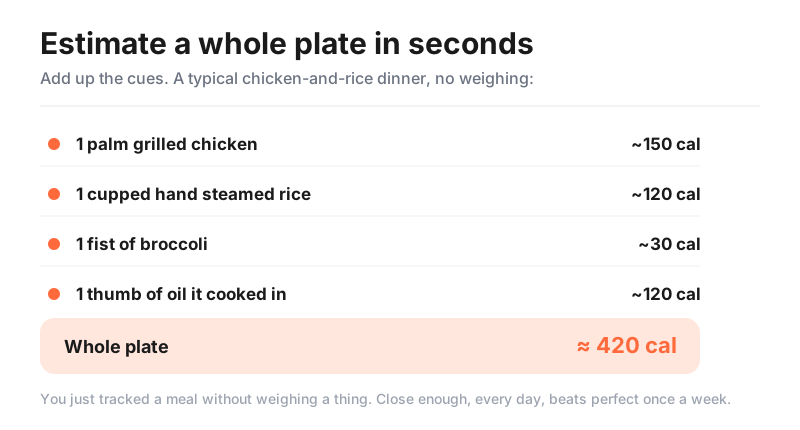
Ten seconds, no scale, and you're within range of the real number — which is all you need.
But how accurate is estimating without a scale?
Accurate enough — and here's the part nobody mentions: nothing is exact. Food labels are legally allowed to be off by up to 20%, and people estimating calories by eye are roughly in the same ballpark as a photo app. Your body doesn't respond to any single day's number anyway; it responds to the trend over weeks, and a small, consistent error largely cancels out.
We dug into the real numbers — including where AI photo estimates and human guesses each go wrong — in how accurate is AI calorie counting. The short version: pick a method you'll actually keep using, and consistency does the heavy lifting.
The one thing that throws estimates off most is hidden calories — the oil food was cooked in, butter on the vegetables, dressing already on the salad. Those are invisible to your eye and to a camera, so add them in. A single tablespoon of oil is about 120 calories.
Do you ever need the scale?
Only if you want to. Some people weigh their food occasionally — say, once in a while — purely to recalibrate their eye, then go back to estimating. That's a smart use of a scale: a tune-up, not a daily chore. For day-to-day counting, your hand and your phone are enough.
The bottom line
The food scale is optional; a method you'll stick with is not. Use hand cues to size up any plate, memorize the calories of your staples, round off labels, lean on a rotation of go-to meals, and let a photo app handle the rest. None of it is perfect — but it's accurate enough, it's fast, and it's something you can actually do every day. That's what gets results.
Want to skip the math entirely? Snap your next meal with CalorieCue and let it do the counting.
Download CalorieCueFrequently asked questions
Can you count calories without a food scale?
Yes. Estimate portions with your hand, memorize the calories of your staple foods, read labels where available, and use a photo-based app for mixed or cooked meals. It's accurate enough to lose or maintain weight as long as you're consistent.
How accurate is counting calories without weighing?
For most people, hand-based estimates land within roughly 10–20% of the true calories — about the same range as food labels (which are legally allowed a 20% margin) and AI photo estimates. Staying within that range consistently is enough to hit your goal.
How do I estimate portions without measuring cups?
Use your hand: a palm of protein is roughly 150 calories, a cupped hand of carbs about 120, a fist of vegetables about 30, and a thumb of fats about 120. Your hand travels everywhere and scales to your body size.
What's the easiest way to count calories without a scale?
Take a photo of your meal and let an app estimate it, or build a rotation of go-to meals you've calculated once. Both remove the daily math while keeping your tracking consistent.
What throws off calorie estimates the most?
Hidden calories you can't see — cooking oil, butter, and dressings. Always add them in; a tablespoon of oil alone is about 120 calories, enough to matter.