On this page
- First: how much protein are you aiming for?
- The real issue isn't knowing—it's logging
- Method 1: Hand portions (your palm is a protein scale)
- Method 2: Build meals around protein-per-calorie anchors
- Method 3: Label and menu math (round, don't obsess)
- Method 4: Build a rotation of "known" meals
- Method 5: Let an app estimate it from a photo
- How accurate do you actually need to be?
- The bottom line
- Frequently asked questions
- Can you track protein without a food scale?
- How accurate is estimating protein without weighing?
- Do I need to weigh food to build muscle?
- What's the easiest way to track protein when eating out?
- What foods have the most protein per calorie?
You already know protein is the macro that matters most for losing fat and holding onto muscle. That part isn't the problem. The problem is the tracking.
Pulling out a food scale, zeroing the bowl, weighing the chicken, logging it gram by gram—that works for about two weeks. Then real life shows up: lunch at the office, dinner at a restaurant, a stir-fry with eleven ingredients, a weekend away. The scale goes back in the drawer and the whole habit falls apart.
Here's the good news, and it's the entire point of this post: you do not need a food scale to hit your protein target. You need a method you'll actually use every day. A perfect system you abandon in two weeks loses to a "close enough" system you keep—every single time.
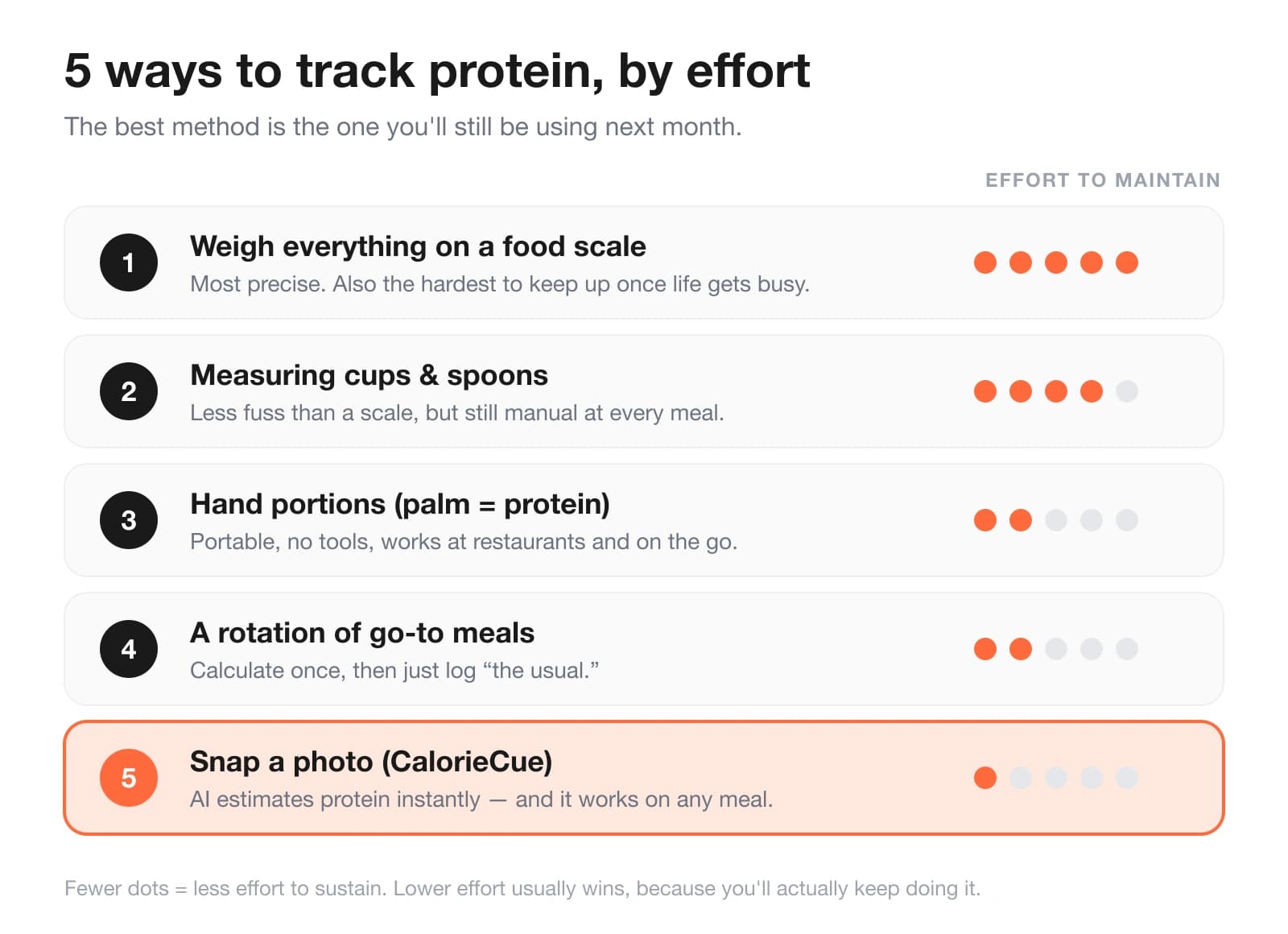
Below are five ways to track protein without weighing anything, ordered from a little hands-on to completely automatic. Most people end up combining two or three.
First: how much protein are you aiming for?
Quick reset before the methods, because tracking only matters if you have a number to hit.
For building or keeping muscle, the International Society of Sports Nutrition puts the useful range at 1.4–2.0 g of protein per kg of body weight per day, climbing to 2.3–3.1 g/kg when you're in a calorie deficit and trying to protect lean mass. If you'd rather not do metric math, a common shorthand is roughly 0.7–1 g per pound of goal body weight.
Why it's worth the effort to hit that number consistently:
- It keeps you full. Protein is the most satiating macronutrient—it lowers the hunger hormone ghrelin and raises fullness signals like GLP-1 and peptide YY, so you tend to eat less without trying.
- It has the highest thermic effect. Your body burns roughly 20–30% of protein's calories just digesting it, versus 5–10% for carbs and 0–3% for fat.
- It protects muscle in a deficit. When you're cutting, adequate protein is what tells your body to burn fat instead of muscle.
If you haven't set your target yet, start with our guide on how much protein you need per day to lose weight. Everything below assumes you've got a number in mind. From here, it's all about hitting it without a scale.
The real issue isn't knowing—it's logging
A food scale is the most accurate tool you can own. It's also the one least likely to still be in your routine a month from now. That's the trade nobody mentions.
Reframe what "accurate" means here. Your body doesn't respond to gram-perfect logs; it responds to weekly averages and consistency. So the goal isn't precision—it's a protein number you can land on most days, in any setting. Precision Nutrition, which coaches on portion estimation instead of weighing, found that hand-portion tracking is about 95% as accurate as weighing and measuring for most people—at a fraction of the effort. That 5% you give up is nothing compared to the consistency you gain.
With that mindset, here are the methods.
Method 1: Hand portions (your palm is a protein scale)
The simplest tool you own is attached to your wrist. One palm-sized serving of a protein-dense food is roughly 20–30 g of protein.
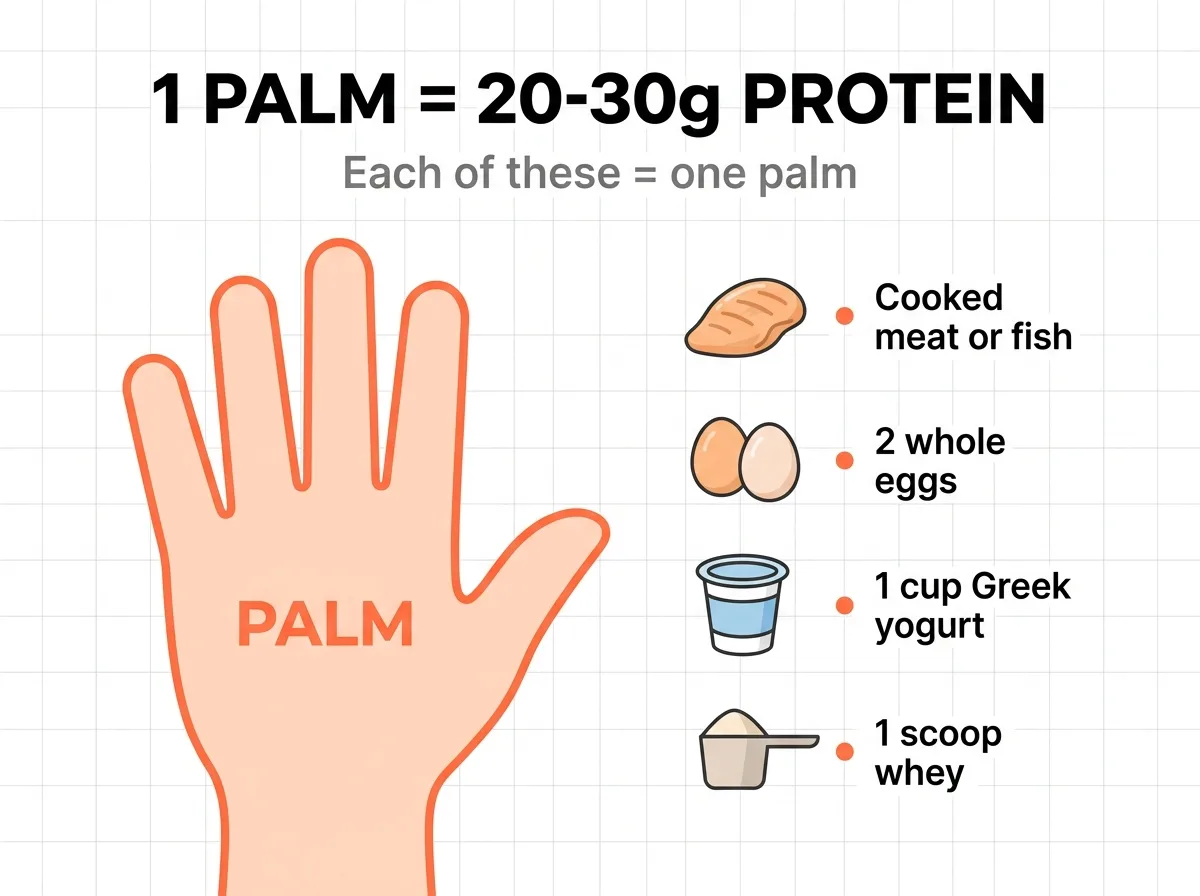
Your hand travels everywhere, and it scales with your body—bigger person, bigger hands, bigger portions—so it self-adjusts. A practical starting point is one to two palms of protein per meal, then nudge it to match your daily target.
Quick math: if you're aiming for around 150 g of protein, that's roughly five to seven palms spread across the day. Once you've seen what a palm looks like a few times, you stop thinking about it.
Best for: literally anywhere, but especially restaurants, social meals, and anything you didn't cook yourself.
Method 2: Build meals around protein-per-calorie anchors
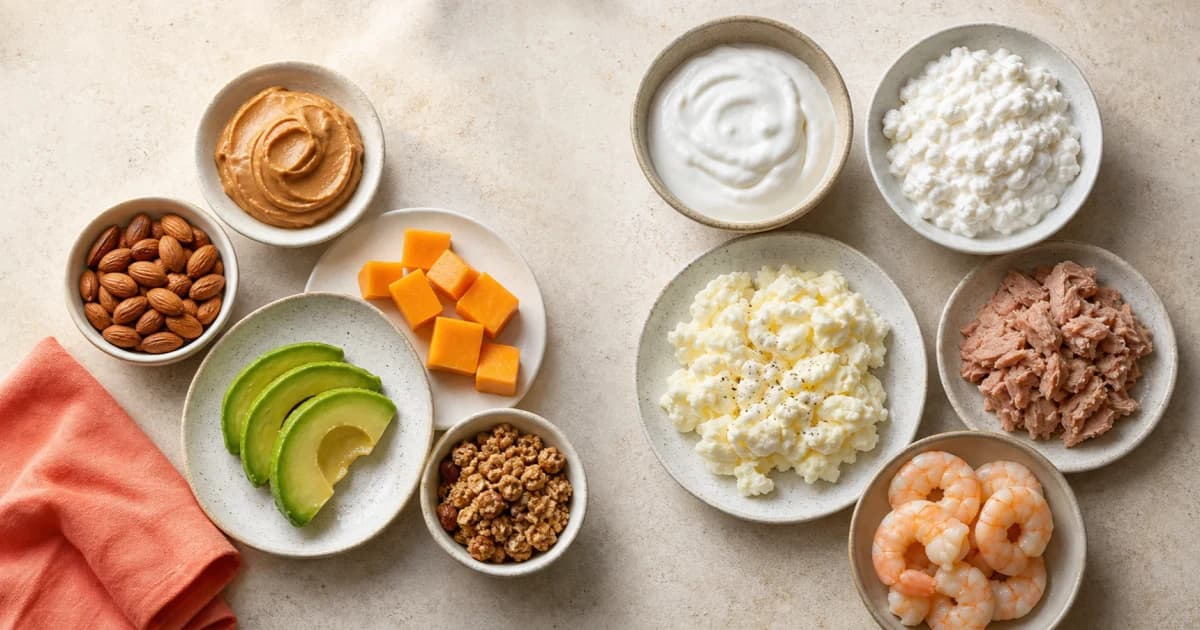
Here's a shortcut that does half the work for you: if you build each meal around foods with the most protein per calorie, you hit your target almost by default—and those foods are easy to eyeball.
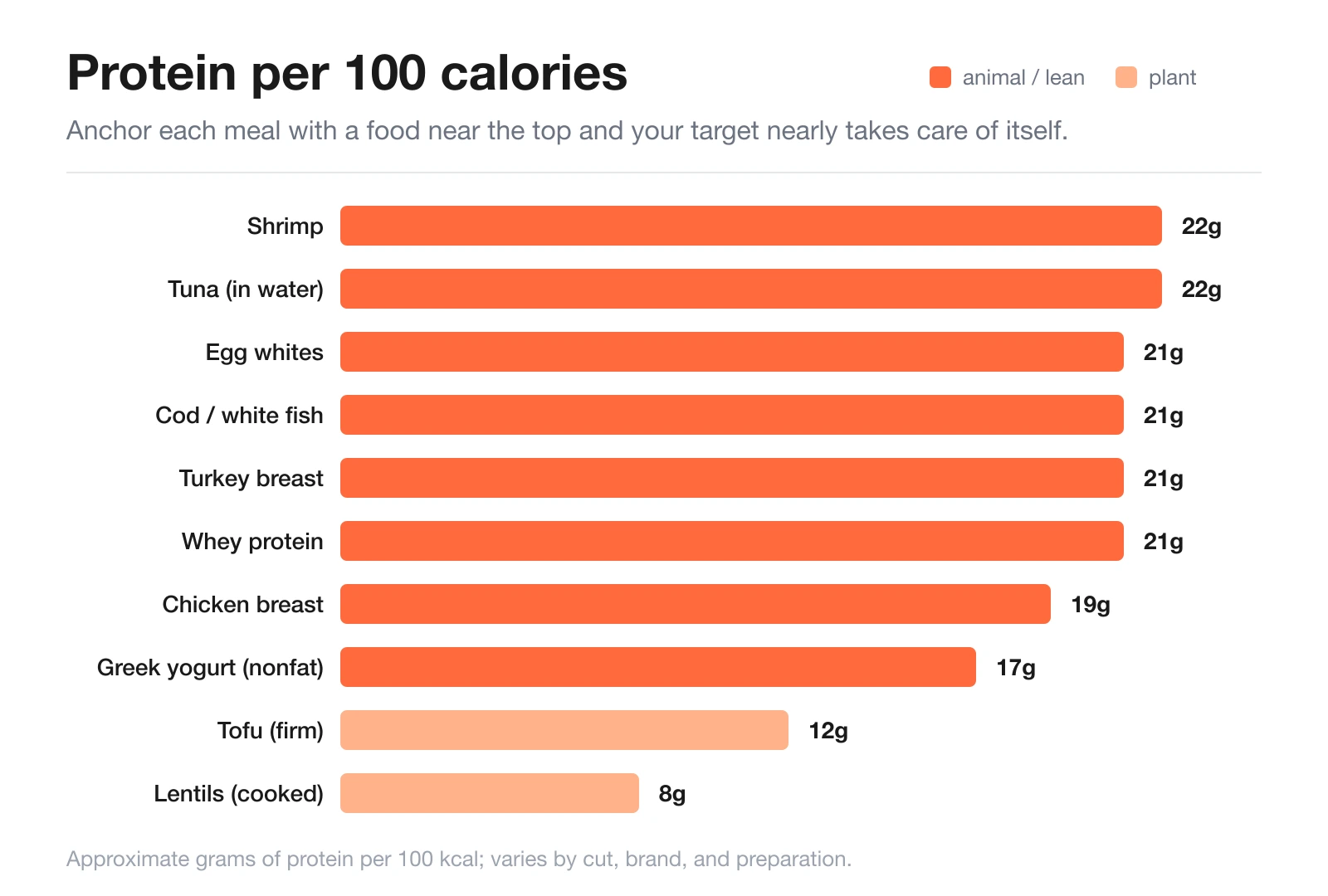
Lean animal proteins, egg whites, and whey land around 20 g of protein per 100 calories—meaning nearly all of their calories are protein. Plant sources like tofu and lentils come in lower but still earn a spot. Anchor every plate with something near the top of this list and the protein takes care of itself; you barely have to estimate.
Want to go deeper on this? See our breakdown of protein per calorie and the full list of high-protein, low-calorie foods.
Method 3: Label and menu math (round, don't obsess)
Packaged food already did the counting for you. Read the label, note the grams of protein per serving, and eyeball how many servings are on your plate. Done.
For restaurants, most large chains publish nutrition info online—and for the ones that don't, fall back to counting palms. The trick is to memorize the protein in your regulars so you stop looking things up:
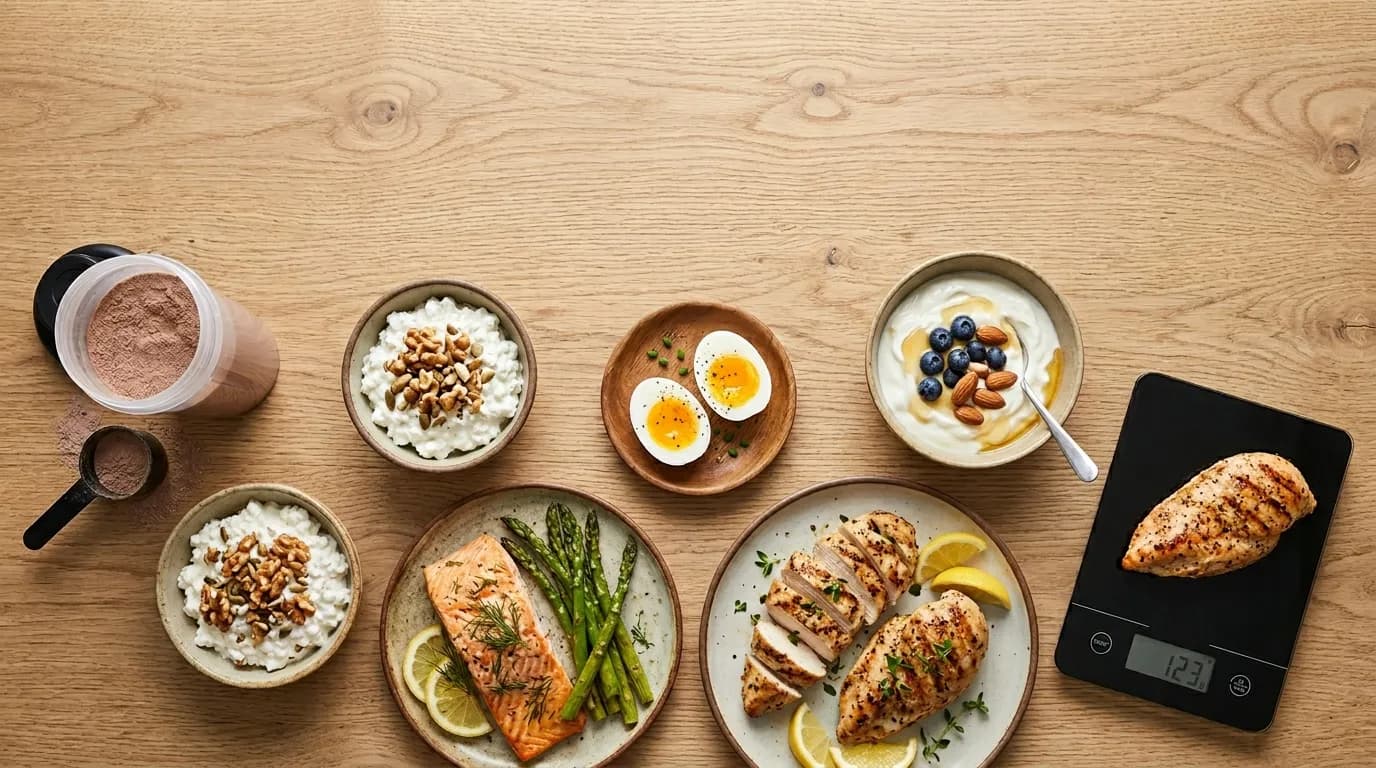
- A chicken breast ≈ 40–50 g
- A can of tuna ≈ 25 g
- 3 whole eggs ≈ 18 g
- A cup of Greek yogurt ≈ 20 g
- A scoop of whey ≈ 24 g
Round to the nearest 5. Nobody hits their goal or misses it because of a 3-gram rounding error.
Method 4: Build a rotation of "known" meals
Most people eat the same ten or so meals on repeat. Use that. Calculate the protein in your five or six go-to meals once, and after that, logging becomes "had my usual breakfast"—and you're done.
This is the lowest-mental-effort approach for anyone with a routine. It also pairs perfectly with the next method, and it keeps tracking from turning into a chore you resent. (If staying consistent is the part you struggle with, here's how to track without obsessing over it.)
Method 5: Let an app estimate it from a photo
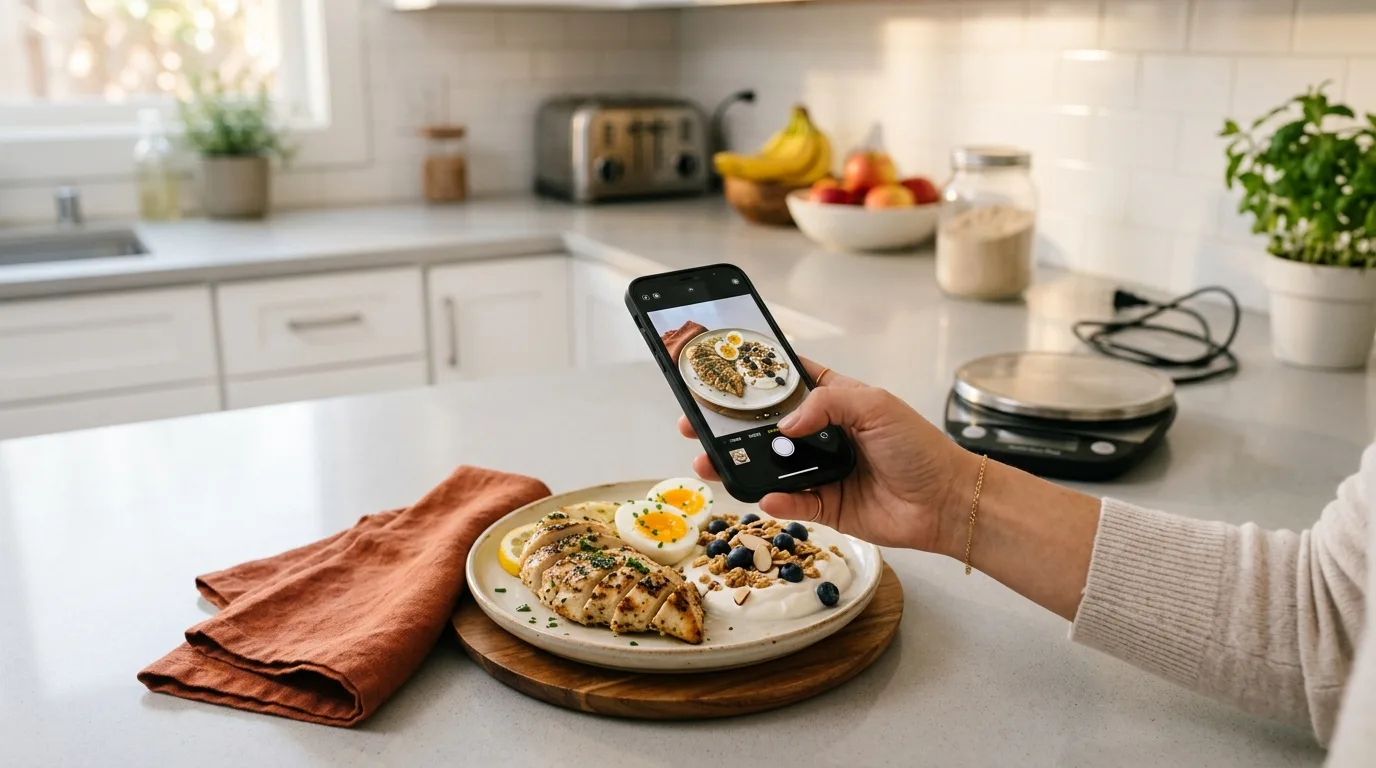
Notice what every method above has in common: the friction is in the lookup and the math. Even hand portions ask you to count and total. A photo-based tracker removes both steps—you take a picture of your plate and the AI estimates the protein and calories for you. No scale, no database search, no serving-size guesswork.
Where this really earns its place is exactly the meals that break manual tracking: homemade mixed dishes, a restaurant plate with no nutrition label, a friend's cooking, food you can't itemize. It also learns your frequent meals, so re-logging your usual lunch becomes a single tap.
Worth being straight with you: a photo estimate isn't lab-perfect, and it doesn't need to be. It sits in the same "close enough, every day" zone as hand portions—just faster, and it works on anything you point it at. For the actual goal here, which is hitting a protein number consistently, that trade is the whole game.
This is exactly what we built CalorieCue to do: snap your meal, see your protein and calories in seconds, skip the scale entirely.
How accurate do you actually need to be?
For hitting a protein goal, landing within about 10–15% day to day is plenty. Your body reads the weekly average, not a perfect daily ledger.
So pick the method—or the mix—that you'll genuinely keep doing. Weigh at home if you enjoy it. Count palms when you're out. Photograph the meals you can't break down. The "right" method isn't the most precise one on paper; it's the one still in your routine next month. That's the only kind of tracking that actually moves the scale.
The bottom line
A food scale is optional. A method you'll stick with is not.
Use hand portions so you can track anywhere, build meals around high protein-per-calorie foods so the math half-solves itself, set up a rotation of go-to meals to kill the repetition, and lean on a photo app for everything else. Combine them however fits your life—and stop letting "I didn't weigh it" be the reason you fell off.
Want to skip the scale for good? Snap your next meal with CalorieCue and see your protein in seconds. New to it? Here's what to do after you download a calorie tracker.
Frequently asked questions
Can you track protein without a food scale?
Yes. Hand portions, choosing high protein-per-calorie foods, reading labels, and photo-based apps all let you hit a protein target without weighing anything. For most people, consistency matters far more than gram-level precision.
How accurate is estimating protein without weighing?
Accurate enough. Precision Nutrition's data pegs hand-portion tracking at roughly 95% as accurate as weighing, and photo estimates land in a similar range. Staying within about 10–15% day to day is enough to reach your goal.
Do I need to weigh food to build muscle?
No. What builds muscle is hitting enough total daily protein—around 1.4–2.0 g/kg, more in a deficit—consistently over time, alongside training. How you measure it (scale, hands, or app) doesn't change the result; your adherence does.
What's the easiest way to track protein when eating out?
Count palms—one palm of meat or fish is about 20–30 g of protein—or photograph the plate and let an app estimate it. Both work without any menu nutrition info.
What foods have the most protein per calorie?
Egg whites, white fish like cod, shrimp, tuna, chicken and turkey breast, whey, and nonfat Greek yogurt all deliver roughly 17–22 g of protein per 100 calories. Building meals around these makes hitting your protein target nearly automatic.