On this page
- Quick answer
- Why most calorie counting meal prep fails
- Step 1: Pick your calorie target before you cook
- Step 2: Prep components, not finished recipes
- Protein anchors
- Carb anchors
- Volume anchors
- Sauce anchors
- The 75-minute prep plan
- 5 high-protein days you can log fast
- Day 1: Chicken rice bowl day
- Day 2: Turkey wrap day
- Day 3: Salmon and sweet potato day
- Day 4: Tuna bento day
- Day 5: No-cook backup day
- The under-two-minute logging flow
- What to prep if you only have 30 minutes
- How to avoid getting bored by Thursday
- The mistakes that break calorie-counted meal prep
- Mistake 1: Not logging cooking oil
- Mistake 2: Building meals too low in protein
- Mistake 3: Making every container identical
- Mistake 4: Prepping too many days
- Mistake 5: Trusting "healthy" labels instead of portions
- The grocery list
- Protein
- Carbs
- Vegetables
- Flavor
- How to start this week
- The bottom line
- Frequently asked questions
- What is the best meal prep for calorie counting?
- How do I meal prep without eating the same thing every day?
- How much protein should meal prep have?
- How long can meal prep stay in the fridge?
- How do I log meal prep quickly?
- Can I use CalorieCue for meal prep?
Calorie counting meal prep sounds simple: cook food on Sunday, put it in containers, eat the containers, lose weight.
That is not where most people fail.
They fail because the meals are hard to log. A chicken bowl has rice, oil, sauce, vegetables, and a protein portion that changes every time. By Wednesday, the tracker feels like homework, the food tastes repetitive, and the whole plan turns into "I'll start again next week."
This guide solves the part nobody talks about: meal prep that is built to be logged fast.
The goal is five high-protein days you can repeat, adjust, and track in under two minutes per meal. Not because two minutes is magic, but because a habit that takes two minutes survives busy weekdays. A habit that takes ten minutes gets skipped.
If you still need the broader calorie setup first, start with the calorie counting diet plan. If you already know your target and want the week to run smoother, this is the practical workflow.
Quick answer
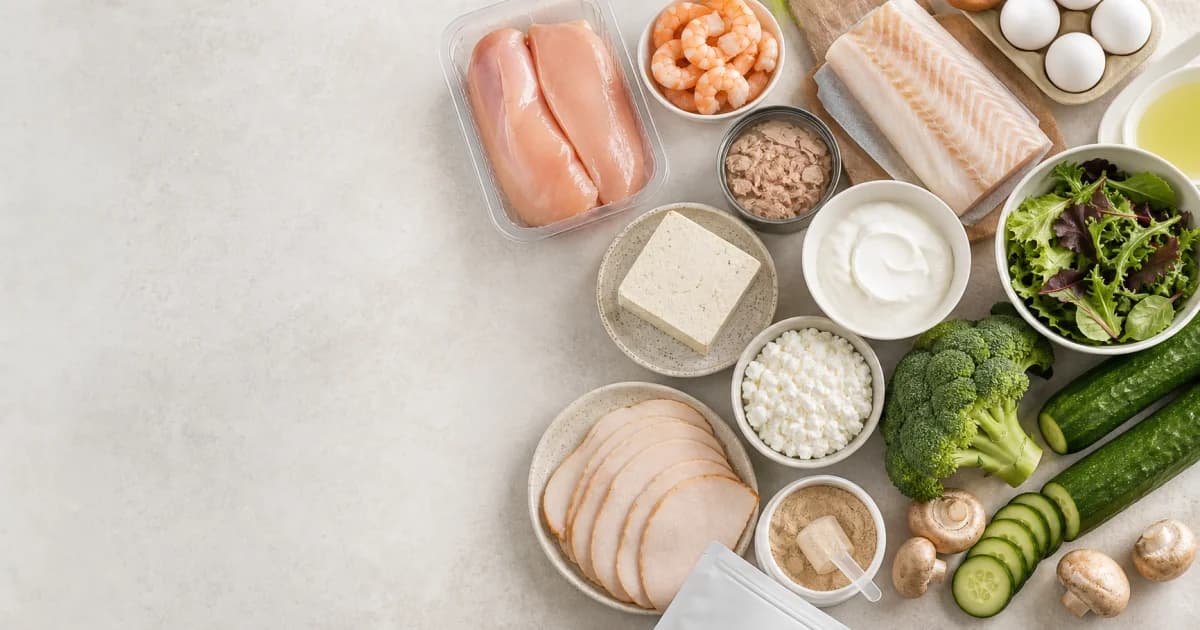
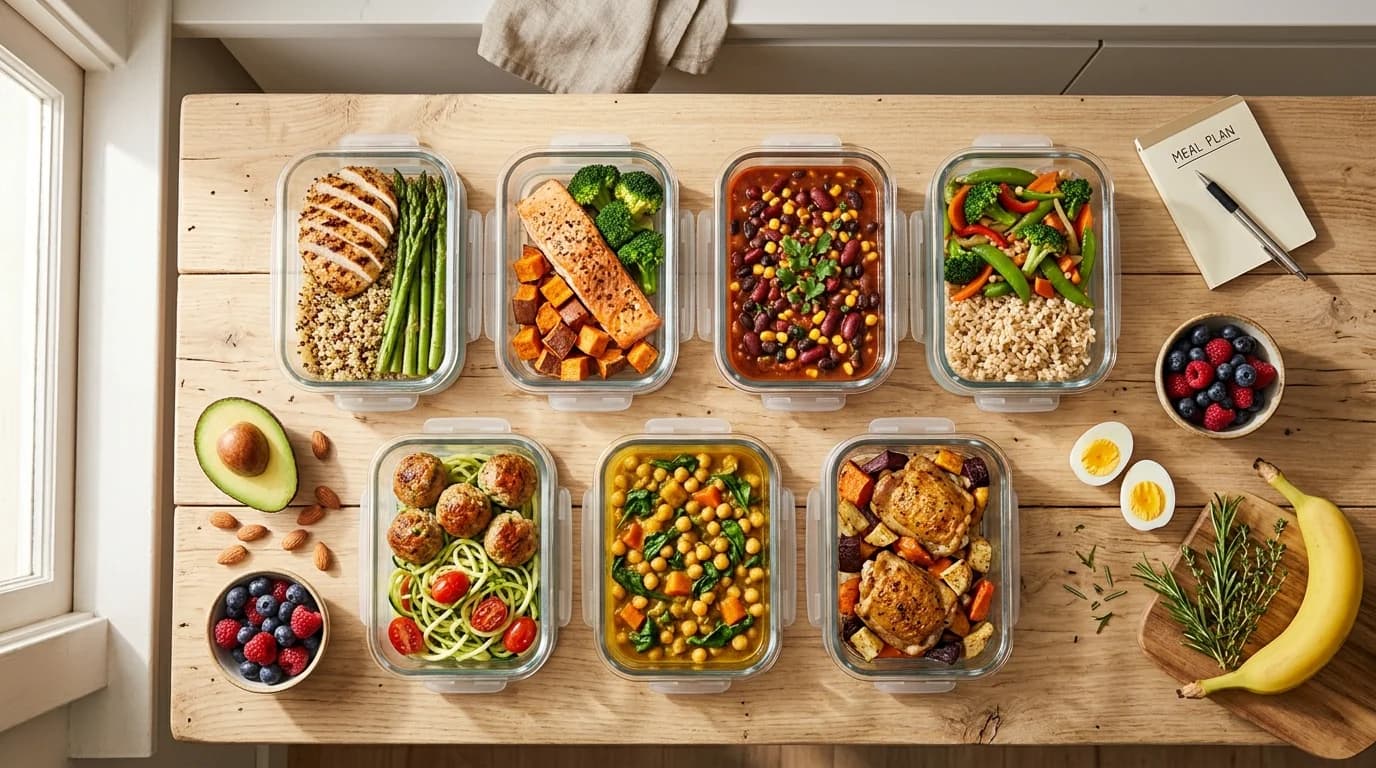
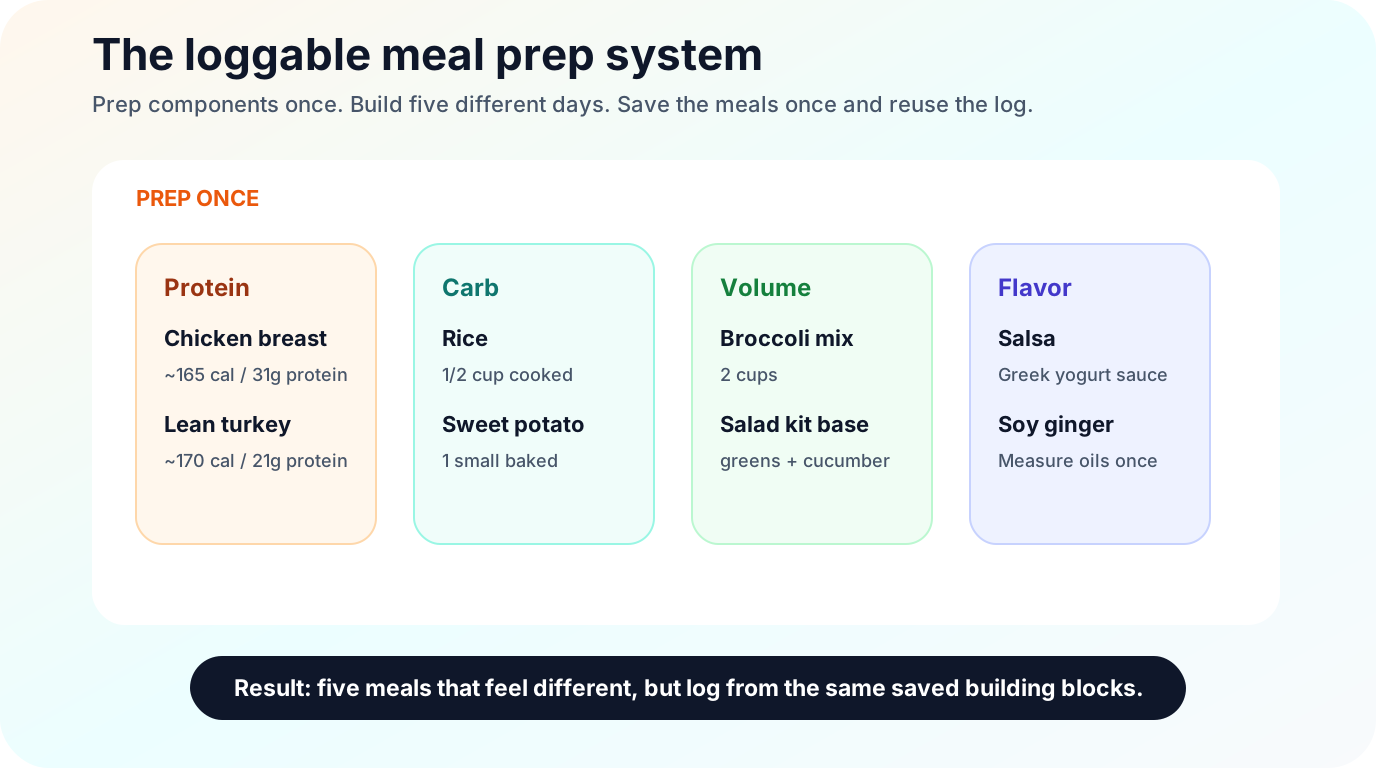
The best calorie counting meal prep is not five separate recipes. It is a small set of repeatable components: two proteins, one or two carbs, two vegetables, and two low-calorie sauces. Build five days from those pieces, save each meal in your tracker, and reuse the logs throughout the week.
Use this structure:
| Component | Prep target | Why it helps logging |
|---|---|---|
| Lean protein | 2 options | Keeps protein high without blowing calories |
| Carb | 1-2 measured options | Makes calorie totals predictable |
| Vegetables | 2 high-volume options | Adds fullness with little tracking risk |
| Sauce/flavor | 2 measured options | Prevents boredom without hidden calories |
| Snacks | 2 repeatable backups | Stops random grazing from breaking the day |
The rest of the article gives you the exact prep list, five high-protein days, the two-minute logging flow, and the mistakes that usually ruin calorie-counted meal prep.
Why most calorie counting meal prep fails
Most meal prep advice is recipe-first. It starts with "make these five healthy bowls."
That is fine for inspiration. It is bad for consistency.
When you are counting calories, the week succeeds or fails on three things:
- Protein: every main meal needs enough protein to keep you full.
- Predictability: the calories need to be close enough that you trust the log.
- Friction: the meal has to be easy to log when you are tired.
The first two get all the attention. The third is the conversion lever.
If logging is slow, people stop. If logging is fast, they keep going long enough for the calorie deficit to matter. That is why this meal prep system starts with the tracker, not the recipe.
The best meal prep container is not the prettiest one. It is the one you can identify, log, and repeat without thinking.
Step 1: Pick your calorie target before you cook
Meal prep should serve your target. It should not create a random pile of "healthy" food that may or may not fit.
Use your TDEE as the starting point. For steady fat loss, most people do better with a 300-500 calorie daily deficit than a crash target. If you are not sure how that math works, read the calorie deficit formula first.
For the sample plan below, I will use a moderate cutting range:
| Daily target | Protein target | Best for |
|---|---|---|
| ~1,500 calories | 100-130g protein | Smaller bodies or lower-activity days |
| ~1,700 calories | 120-150g protein | Many active women and smaller men |
| ~1,900 calories | 130-170g protein | Larger bodies or higher-activity days |
Do not force yourself into 1,500 calories just because that number is popular. Pick the closest level to your body, then scale the portions.
For protein, a practical meal target is 25-40g. The International Society of Sports Nutrition notes that 20-40g of high-quality protein per serving is a common recommendation for maximizing muscle protein synthesis, and that protein doses are ideally spread across the day. In plain English: do not save all your protein for dinner.
Step 2: Prep components, not finished recipes
The biggest upgrade is to stop prepping five fully finished meals. Prep building blocks instead.
Protein anchors
Pick two:
| Protein | Prep amount | Serving anchor |
|---|---|---|
| Chicken breast | 2 lb cooked | 5 oz cooked = ~230 cal, ~43g protein |
| Lean ground turkey | 1.5 lb cooked | 5 oz cooked = ~240 cal, ~34g protein |
| Salmon | 4 fillets | 5 oz cooked = ~300 cal, ~32g protein |
| Extra-firm tofu | 2 blocks | 200g = ~180 cal, ~20g protein |
| Tuna packets | 3-5 packets | 1 packet = ~70-100 cal, ~15-20g protein |
Chicken and turkey are the easiest default pair. If you want the leanest choices ranked by protein efficiency, use the protein per calorie chart and the high-protein, low-calorie foods list.
Carb anchors
Pick one or two:
| Carb | Prep amount | Serving anchor |
|---|---|---|
| Cooked rice | 3 cups cooked | 1/2 cup = ~100 cal |
| Roasted sweet potato | 4 small | 1 small = ~110 cal |
| Quinoa | 2 cups cooked | 1/2 cup = ~110 cal |
| Whole wheat wraps | 4-5 wraps | 1 wrap = ~120-180 cal |
Carbs are not the enemy. Unmeasured carbs are the problem. A measured half-cup of rice is easy to log. A random mound of rice is where the estimate drifts.
Volume anchors
Pick two:
- Roasted broccoli, zucchini, peppers, or green beans
- Salad base: romaine, cucumber, tomato, carrots
- Frozen stir-fry vegetables
- Cauliflower rice for lower-calorie bowls
Vegetables are your fullness lever. They let a 450-calorie meal look and feel like a real plate instead of a diet snack.
Sauce anchors
Measure these once:
| Sauce | Serving | Calories |
|---|---|---|
| Salsa | 2 tbsp | ~10 |
| Greek yogurt sauce | 2 tbsp | ~20 |
| Light teriyaki | 1 tbsp | ~25-40 |
| Hot sauce | 1 tsp | ~0-5 |
| Olive oil | 1 tsp | ~40 |
| Peanut sauce | 1 tbsp | ~80-100 |
Sauce is where "healthy meal prep" quietly becomes 300 calories higher than expected. You do not have to avoid it. You just have to measure it once and reuse the same serving.
Nutrition values vary by brand, so check labels for packaged foods. For single-ingredient foods, USDA FoodData Central is the best reference database.
The 75-minute prep plan
This is the Sunday workflow:
| Time | Task |
|---|---|
| 0-10 min | Start rice or quinoa. Preheat oven. Season proteins. |
| 10-35 min | Bake chicken or salmon. Brown turkey on the stove. |
| 25-45 min | Roast vegetables on a second tray. Mix sauces. |
| 45-60 min | Portion carbs and proteins into containers. |
| 60-75 min | Label meals, cool, refrigerate, and save the first log. |
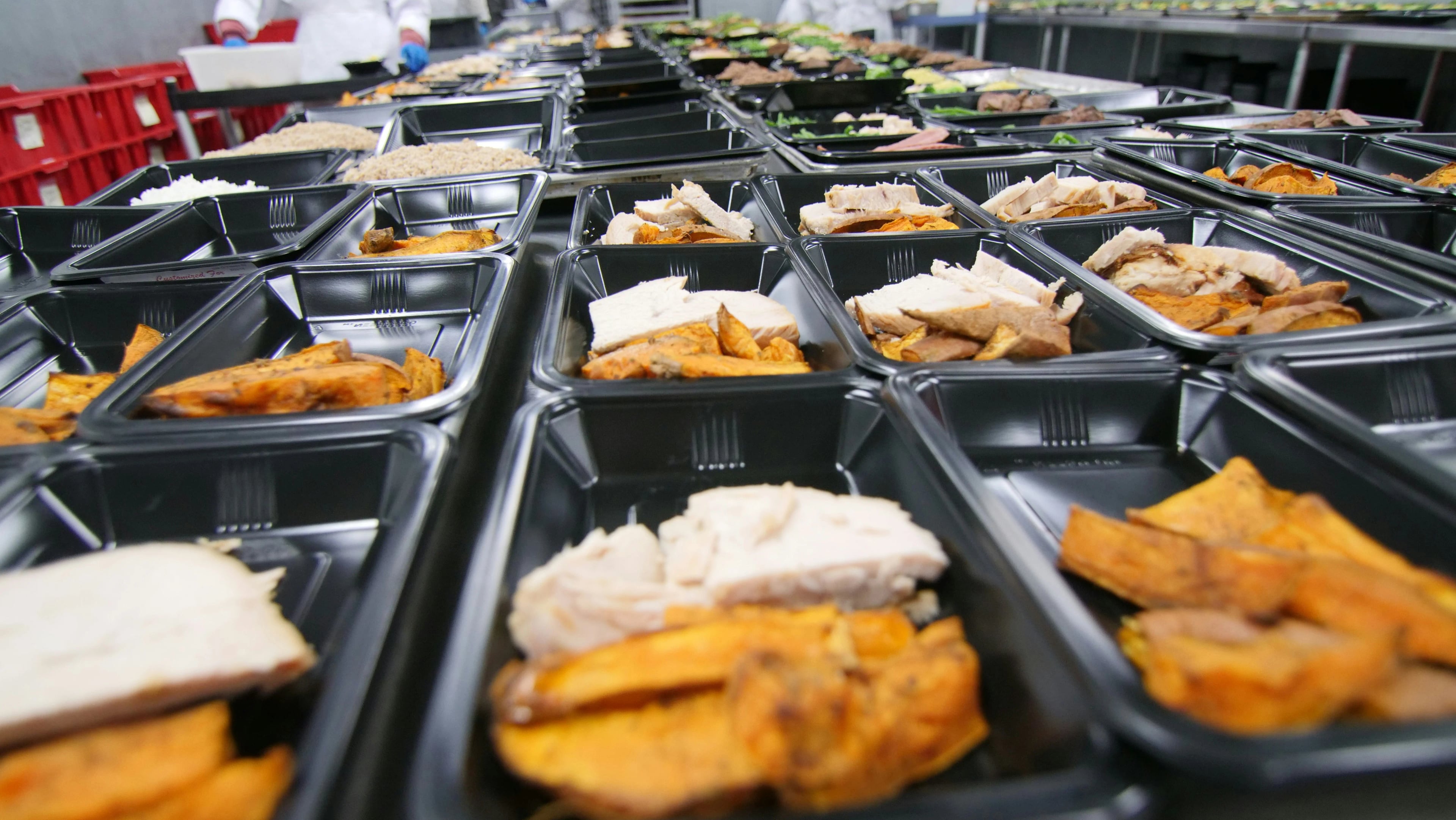
You are not cooking five recipes. You are making a small assembly line.
Food safety matters here because meal prep is leftovers by design. FoodSafety.gov lists cooked meat, poultry, soups, stews, and many leftovers at 3-4 days in a refrigerator at 40 F (4 C) or below. Prep 3-4 days for the fridge, then freeze anything you will not eat in that window.
5 high-protein days you can log fast
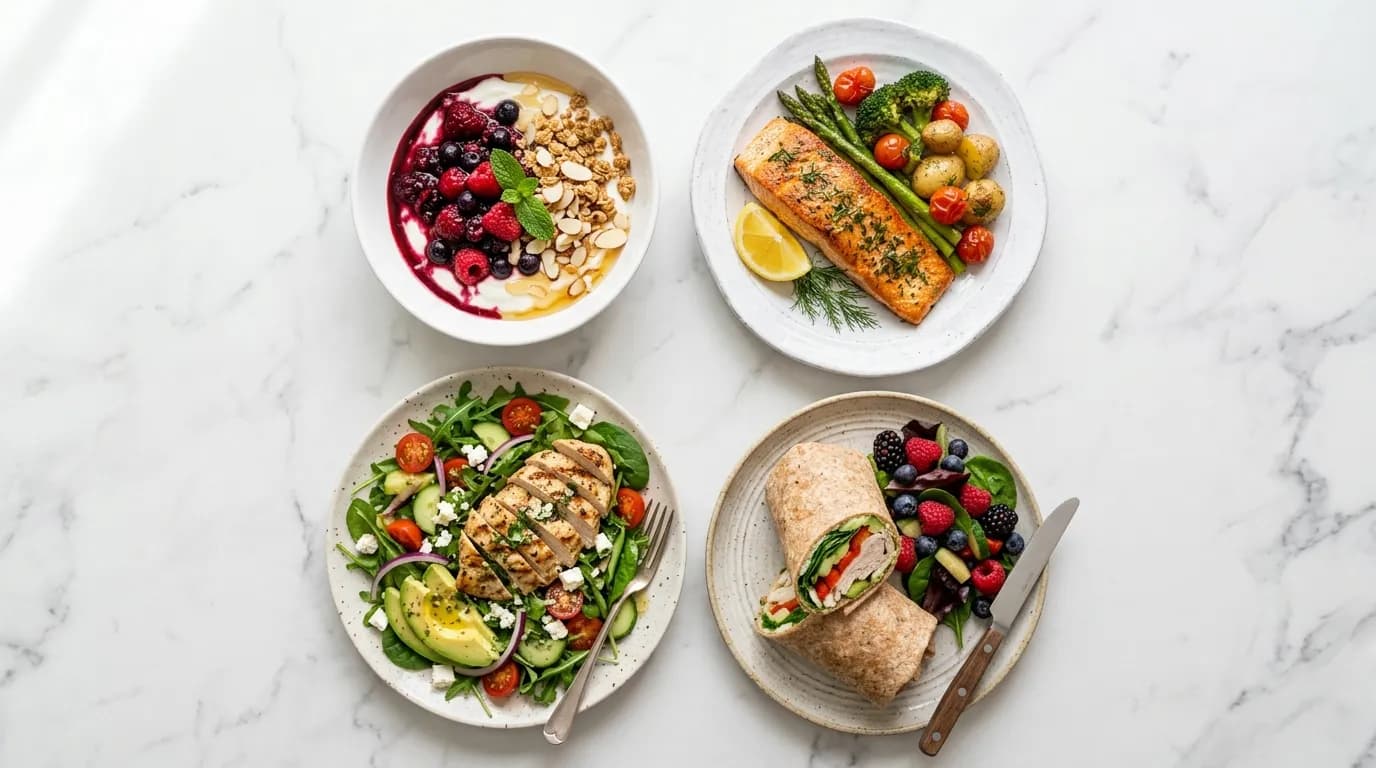
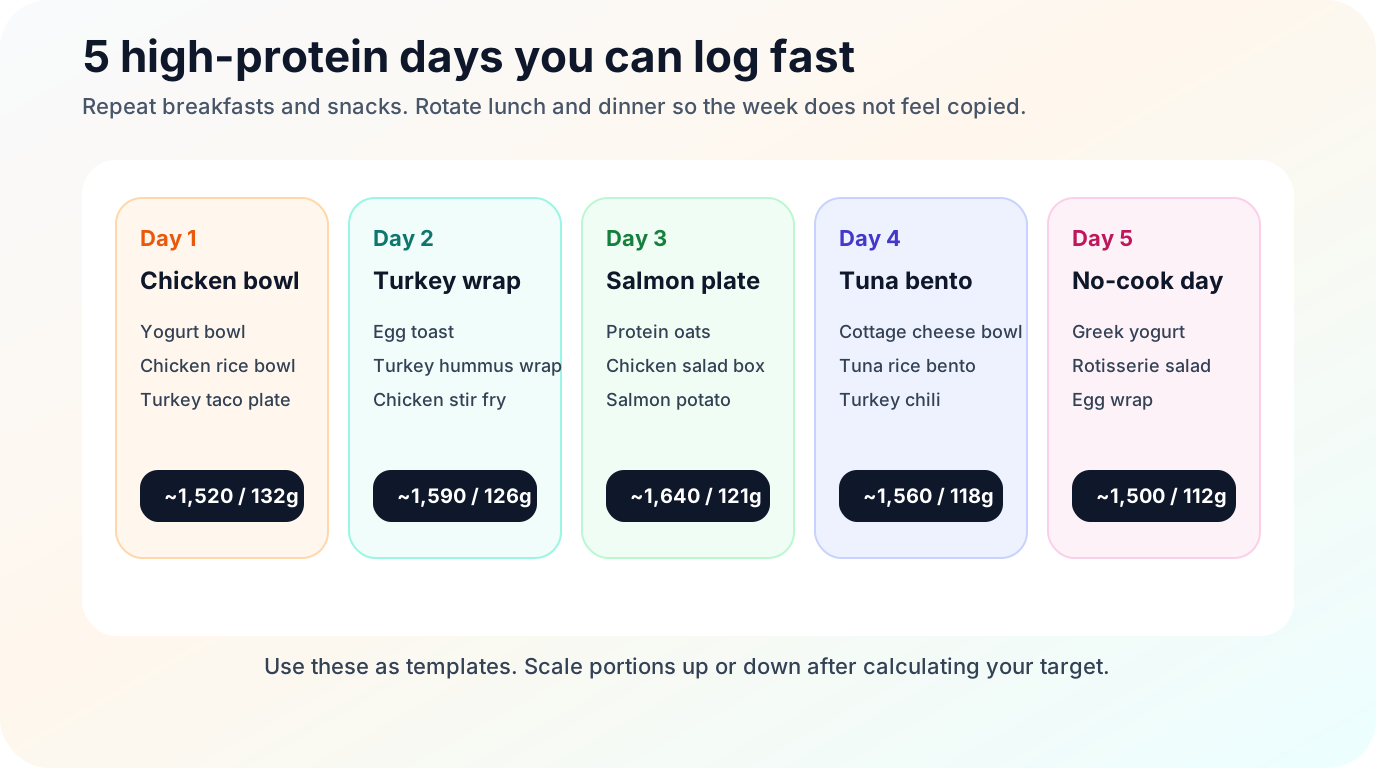
These days are templates, not rules. Use them as written once, then scale portions based on your calorie target.
Day 1: Chicken rice bowl day
| Meal | What to eat | Calories | Protein |
|---|---|---|---|
| Breakfast | Greek yogurt, berries, protein powder, small granola sprinkle | 360 | 38g |
| Lunch | Chicken rice bowl: chicken, 1/2 cup rice, roasted vegetables, salsa | 460 | 45g |
| Snack | Cottage cheese and fruit | 180 | 18g |
| Dinner | Turkey taco plate: lean turkey, lettuce, corn tortillas, Greek yogurt sauce | 520 | 31g |
Daily total: ~1,520 calories, ~132g protein.
Log the chicken bowl once as "Chicken Rice Bowl - Prep." If all containers are built the same way, you can reuse that meal for the rest of the week.
Day 2: Turkey wrap day
| Meal | What to eat | Calories | Protein |
|---|---|---|---|
| Breakfast | Egg toast: 2 eggs, toast, fruit | 390 | 22g |
| Lunch | Turkey hummus wrap with salad vegetables | 450 | 36g |
| Snack | Protein shake or Greek yogurt | 150 | 25g |
| Dinner | Chicken stir fry: chicken, vegetables, 1/2 cup rice, measured sauce | 600 | 43g |
Daily total: ~1,590 calories, ~126g protein.
This is the "normal weekday" version. It has a wrap, a stir-fry, and no meal that feels like plain chicken and broccoli.
Day 3: Salmon and sweet potato day
| Meal | What to eat | Calories | Protein |
|---|---|---|---|
| Breakfast | Protein oats with berries | 430 | 32g |
| Lunch | Chicken salad box with sweet potato and Greek yogurt dressing | 500 | 42g |
| Snack | Turkey roll-ups and fruit | 170 | 20g |
| Dinner | Salmon, roasted vegetables, small potato, lemon yogurt sauce | 540 | 27g |
Daily total: ~1,640 calories, ~121g protein.
This day is slightly higher in calories because salmon brings more fat. That is not bad. It is just why the rest of the day stays tighter.
Day 4: Tuna bento day
| Meal | What to eat | Calories | Protein |
|---|---|---|---|
| Breakfast | Cottage cheese bowl with berries and cereal | 350 | 30g |
| Lunch | Tuna rice bento: tuna, 1/2 cup rice, cucumber, carrots, soy ginger | 430 | 35g |
| Snack | Hard-boiled eggs and vegetables | 170 | 13g |
| Dinner | Turkey chili over cauliflower rice | 610 | 40g |
Daily total: ~1,560 calories, ~118g protein.
Use tuna packets or canned tuna when you need a no-cook protein. It is one of the easiest ways to rescue a day when the cooked protein runs out.
Day 5: No-cook backup day
| Meal | What to eat | Calories | Protein |
|---|---|---|---|
| Breakfast | Greek yogurt bowl with banana | 360 | 32g |
| Lunch | Rotisserie chicken salad with measured dressing | 430 | 35g |
| Snack | Cottage cheese or protein shake | 150 | 20g |
| Dinner | Egg wrap with salad and fruit | 560 | 25g |
Daily total: ~1,500 calories, ~112g protein.
This is the day that keeps the plan alive. You should always have one no-cook backup. Otherwise one busy afternoon turns into takeout, then takeout turns into "I ruined the week."
For more individual meal ideas, use high-protein meals under 500 calories. For a full food-shopping version, pair this with the calorie counting grocery list.
The under-two-minute logging flow
The first time you log a meal, be careful. After that, reuse the log.
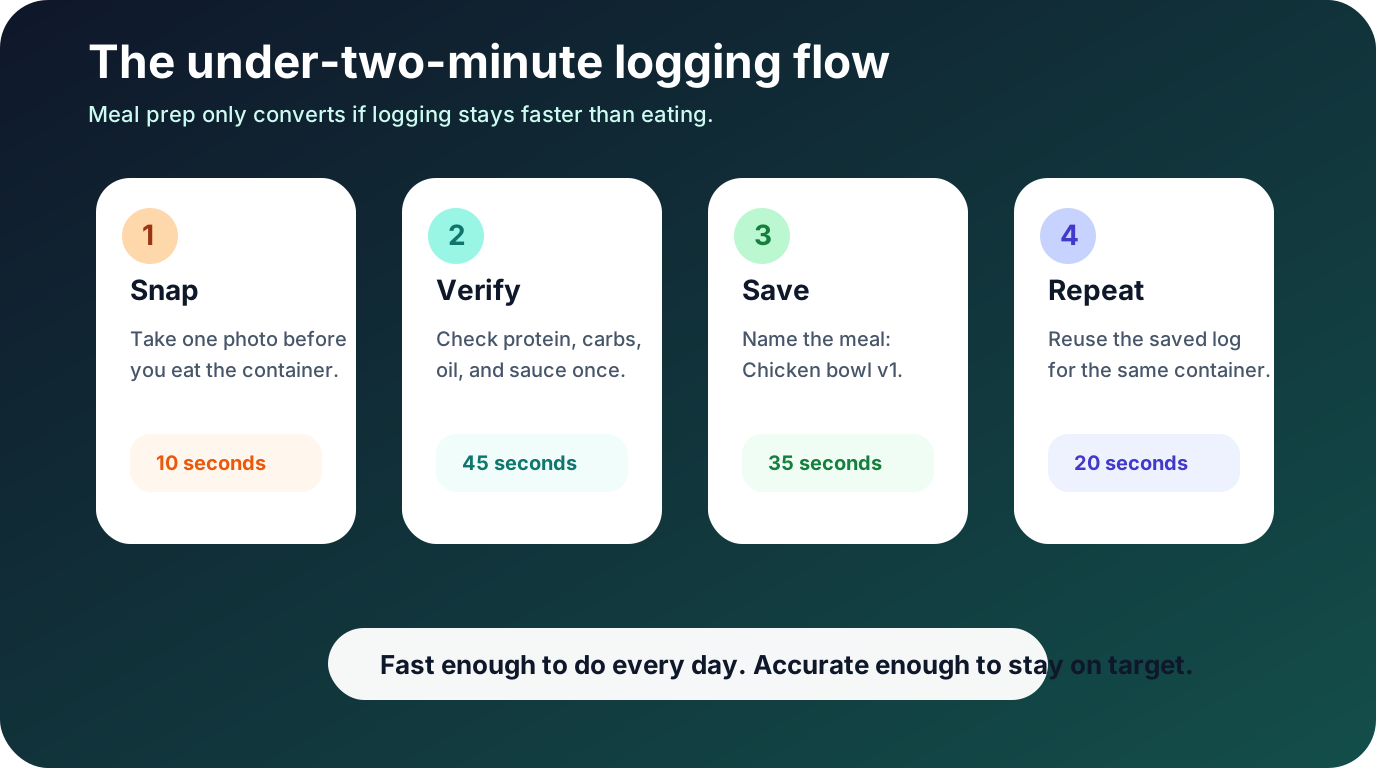
Here is the flow:
- Snap the meal. Use CalorieCue or your tracker before you eat.
- Verify the calorie anchors. Check protein, rice, oil, sauce, and anything calorie-dense.
- Save the meal. Name it something obvious: "Chicken Rice Bowl - Prep."
- Reuse it. For the same container tomorrow, copy the saved meal and adjust only what changed.
That is how meal prep becomes fast enough to keep doing.
If you use CalorieCue, this is the core loop: snap the meal, review the estimate, fix anything obvious, and move on. It is especially useful for mixed bowls, wraps, stir-fries, and leftovers where manual database searching is slow.
Want to try it with your next container? Download CalorieCue and snap the first meal you prep this week.
Download CalorieCueWhat to prep if you only have 30 minutes
Do not try to do a full week.
Prep these three things:
- One protein: chicken, turkey, tofu, tuna, or eggs.
- One carb: rice, potatoes, wraps, or oats.
- One backup snack: Greek yogurt, cottage cheese, protein shake, or hard-boiled eggs.
That is enough to make the next two days easier.
A 30-minute prep is still a win if it removes one random lunch and one late-night snack. Consistency does not come from perfect Sundays. It comes from making the next good choice easier than the bad one.
How to avoid getting bored by Thursday
Boredom is a real meal prep problem, but the fix is not five new recipes. The fix is controlled variation.
Use the same base, change the surface:
| Base meal | Flavor option 1 | Flavor option 2 | Flavor option 3 |
|---|---|---|---|
| Chicken rice bowl | Salsa + yogurt | Teriyaki + cucumber | Hot sauce + lime |
| Turkey bowl | Taco seasoning | Chili spices | Greek herbs |
| Salad box | Mustard vinaigrette | Greek yogurt ranch | Lemon pepper |
| Egg wrap | Salsa | Hot sauce | Light mayo + pickle |
This keeps calorie math stable while making the meals feel different.
Another trick: change the format, not the ingredients. Chicken, rice, vegetables, and sauce can be a bowl, wrap, salad, or stir-fry. The log stays similar. Your brain gets variety.
The mistakes that break calorie-counted meal prep
Mistake 1: Not logging cooking oil
Oil is the classic hidden calorie. One tablespoon is about 120 calories. If you cook five portions with three tablespoons of oil, that is roughly 70 extra calories per container before sauce.
Measure the oil once while cooking, divide it across servings, and save it in the meal.
Mistake 2: Building meals too low in protein
A 450-calorie bowl with 12g protein is not a high-protein meal. It is usually a carb bowl with chicken as a garnish.
Aim for 25-40g protein in the meals you expect to keep you full. If you struggle with hunger, read why am I always hungry after this.
Mistake 3: Making every container identical
Identical containers look productive on Sunday and depressing by Thursday.
Make the base repeatable, not the whole meal. Rotate sauces, formats, and vegetables.
Mistake 4: Prepping too many days
Most cooked leftovers are a 3-4 day fridge plan, not a 7-day fridge plan. Freeze later portions or prep twice per week.
Mistake 5: Trusting "healthy" labels instead of portions
Granola, nut butter, olive oil, avocado, trail mix, and creamy dressings can all fit. They just need measured servings. If you want quick reference numbers, use the calories in food list.
The grocery list
Use this if you want to make the five-day plan above.
Protein
- 2 lb chicken breast
- 1.5 lb 93% lean ground turkey
- 4 salmon fillets or 3-5 tuna packets
- 1 tub nonfat Greek yogurt
- 1 tub low-fat cottage cheese
- 1 dozen eggs
- Optional: whey protein
Carbs
- Rice or quinoa
- Sweet potatoes
- Whole wheat wraps or corn tortillas
- Oats
- Fruit: berries, bananas, apples
Vegetables
- Broccoli
- Zucchini
- Bell peppers
- Romaine or mixed greens
- Cucumbers
- Carrots
- Frozen stir-fry vegetables
Flavor
- Salsa
- Hot sauce
- Light teriyaki or soy sauce
- Mustard
- Lemon or lime
- Greek yogurt for sauces
- Olive oil spray or measured olive oil
If you want a larger by-aisle version, use the high-protein low-calorie grocery list or the broader calorie counting grocery list.
How to start this week
Do not overhaul your whole diet.
Start with two prep meals:
- Chicken rice bowl.
- Turkey wrap or turkey taco plate.
Log each once. Save both. Eat them twice this week.
That gives you four controlled meals without turning your kitchen into a meal prep business. Once that feels easy, add a breakfast and a snack.
If you are brand new to tracking, read what to do after downloading a calorie tracker. If you already track but hate the friction, this is exactly where CalorieCue helps: snap the meal, confirm the obvious pieces, and get back to eating.
High-converting calorie counting is not about knowing every nutrition fact. It is about reducing the number of moments where you have to decide from scratch.
The bottom line
Calorie counting meal prep works when the meals are easy to repeat and even easier to log.
Prep components, not complicated recipes. Build five days from a small set of protein, carb, vegetable, and flavor anchors. Save each meal after the first accurate log. Then reuse the meal all week with small adjustments.
That is how meal prep turns from a Sunday project into a weekday system.
Want the fastest version? Prep one bowl, snap it in CalorieCue, save the meal, and reuse the log the next time you eat it.
Download CalorieCueFrequently asked questions
What is the best meal prep for calorie counting?
The best meal prep for calorie counting uses repeatable components: lean protein, a measured carb, high-volume vegetables, and a measured sauce. Prep the components once, build several meals from them, and save each meal in your tracker so future logs take seconds.
How do I meal prep without eating the same thing every day?
Prep components instead of finished recipes. Keep the protein and carb predictable, then rotate sauces, vegetables, wraps, salads, and bowls. The calories stay easy to log, but the meals feel different enough to repeat.
How much protein should meal prep have?
A strong target is 25-40 grams of protein per meal, especially during a calorie deficit. That range makes meals more filling and helps preserve lean mass while weight is coming down. If you want a personal daily target, use the TDEE calculator and then spread protein across three or four meals.
How long can meal prep stay in the fridge?
FoodSafety.gov lists cooked meat, poultry, soups, stews, and many leftovers at 3-4 days in a refrigerator at 40 F (4 C) or below. Prep 3-4 days for the fridge and freeze anything you will not eat in that window.
How do I log meal prep quickly?
Log the first container carefully, then save it as a meal. For matching containers later in the week, reuse the saved meal and adjust only obvious changes like extra sauce, rice, or oil. A photo-based app can make the first log faster because it starts from the plate instead of a blank search field.
Can I use CalorieCue for meal prep?
Yes. CalorieCue is built for low-friction food logging: snap the meal, review the estimate, adjust anything you know is different, and use the log as a repeatable anchor for similar prep containers.