On this page
- Quick Answer
- Why Liquid Calories Are the Worst Kind of Calories
- The Honest Ranking — Best Drinks for Weight Loss
- Tier 1 — Drink These Freely
- Tier 2 — Useful Tools, With Caveats
- Tier 3 — These Aren't What You Think
- Tier 4 — The Active Saboteurs
- The "Health Halo" Problem
- Smart Swaps That Actually Work
- A Realistic Daily Beverage Plan
- A Note on Alcohol
- Frequently Asked Questions
- What is the best drink for weight loss?
- Does drinking water actually help you lose weight?
- What about apple cider vinegar?
- Are diet soda and zero-calorie drinks okay for weight loss?
- Is coffee good or bad for weight loss?
- What about protein shakes?
- Can I drink alcohol and still lose weight?
- Should I drink "fat burning" teas or weight loss drinks?
- The Bottom Line
What to Drink to Lose Weight: Best Drinks, Worst Drinks, and Simple Swaps
I'll give you the entire answer to this in one sentence: drink mostly water, with some plain coffee or unsweetened tea if you want caffeine, and stop pretending your green juice is health food.
That's it. That covers 95% of what you actually need to know.
Quick Answer
The best drinks for weight loss are water, black coffee, unsweetened tea, sparkling water, and zero-calorie drinks that help you avoid liquid calories. Protein shakes can help when they replace a snack or support protein targets, but juice, alcohol, sugary coffee, and smoothies can quietly erase a deficit.
The other 5% — covered later in this post — is mostly about acknowledging that you'll occasionally drink things that aren't water, and the specific math of which "exceptions" cost you the least.
But the reason this post needs to exist isn't because people don't know water is good for you. It's because the wellness industry has spent fifteen years convincing everyone that fresh juices, fancy smoothies, oat milk lattes, and "metabolism-boosting teas" are weight-loss-friendly. They're not. Most of them are calorie-dense meals masquerading as drinks, and they're one of the biggest reasons people stall in a calorie deficit.
If your scale isn't moving and you're sure you're "eating right," check your drinks before you check anything else. This is one of the fastest ways to diagnose why your calorie deficit isn't working because beverage calories are easy to forget and easy to fix.
Why Liquid Calories Are the Worst Kind of Calories
Solid food and liquid food affect your body completely differently — even when the calorie count is identical.
When you eat 400 calories of chicken and rice, your stomach stretches, your brain registers fullness, and hormones like cholecystokinin and leptin signal "okay, that's enough." You typically stop eating before things get out of hand.
When you drink 400 calories of smoothie, almost none of that happens. Liquid passes through your stomach quickly. The fullness signals barely trigger. An hour later, you're hungry again — and you've already consumed the equivalent of a meal without your body noticing.
This isn't speculation. Research from Johns Hopkins and others has consistently shown that liquid calories don't produce the same satiety signals as solid food. One study found that drinking water before meals can reduce calorie intake by up to 13%. Conversely, drinking high-calorie beverages tends to add to daily calorie intake rather than displace it.
This is the actual mechanism behind "my calorie deficit isn't working." If you're drinking 600 calories per day across smoothies, lattes, and kombucha — calories you're not really registering as food — you're not in the deficit you think you're in. That 500-calorie deficit you calculated? Gone. Plus a 100-calorie surplus on top.
If you've never audited your liquid intake, that's where to start. For more on diagnosing deficit failures, see our post on why your calorie deficit isn't working.
The Honest Ranking — Best Drinks for Weight Loss
I'm going to do something most "best weight loss drinks" lists won't: actually rank them honestly, instead of pretending every "natural" beverage is good for you.
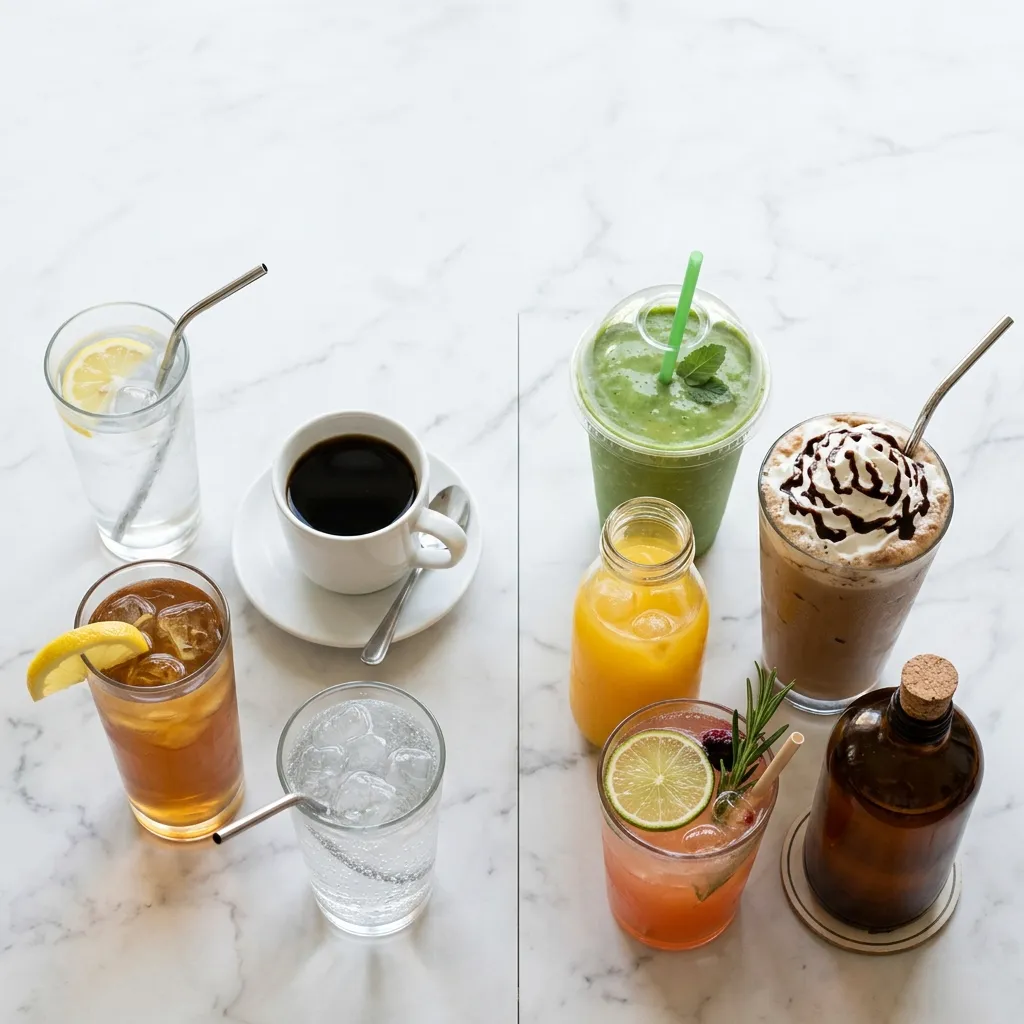
Tier 1 — Drink These Freely
Water. Zero calories. Suppresses appetite when consumed before meals. Hydration supports basically every metabolic function. Boring, free, universally available. Aim for half your body weight in ounces per day — for a 150-pound person, that's roughly 75 ounces (about 2.2 liters). If you get late-night hunger that is partly thirst or routine, this pairs well with the fixes in how to stop eating at night.
Black coffee. Two calories per cup. Contains caffeine, which has mild appetite-suppressing effects and a slight thermogenic boost. Coffee drinkers consistently maintain weight loss better than non-coffee-drinkers in long-term studies. The caveat: this is black coffee. The moment you add cream, syrup, or sugar, you've turned a free beverage into a 200-calorie meal replacement (more on this below).
Plain green or black tea. Similar caffeine benefits to coffee, with bonus polyphenols. About 2–5 calories per cup unsweetened. The "fat-burning" claims around green tea are overhyped, but the research is genuine that regular tea consumption supports modest weight management when paired with a deficit.
Sparkling water (plain or naturally flavored). Zero calories, satisfies the urge for "something to drink that isn't water." Brands like LaCroix, Spindrift, Bubly — all fine. Check labels and avoid versions with added sugar.
Diet soda and zero-calorie drinks. Zero calories, which means they are useful if they replace regular soda, juice, sweet tea, or sugar-heavy coffee. They are not required, and they are not a health food, but they are much easier to fit into a deficit than a 140-calorie can of soda. If diet soda makes you crave sweets, scale it back. If it keeps you from drinking regular soda, it is doing its job.
Tier 2 — Useful Tools, With Caveats
Protein shakes (whey + water). About 120 calories for 24g of protein. Not technically a "weight loss drink," but useful when you need to hit a protein target and don't have time to cook. Use water as the base, not milk. Don't add fruit, peanut butter, or "smoothie ingredients" — at that point you've made a 500-calorie meal. See our guide on how to eat more protein for the practical target, and best sources of protein for how shakes fit the bigger picture.
Vegetable juice (low sodium). About 40 calories per cup. Tomato juice, V8, or homemade vegetable juice (especially with pulp for fiber) can support weight loss when used to replace higher-calorie drinks. Better than fruit juice. Still worse than whole vegetables.
Apple cider vinegar (diluted in water). Roughly 5 calories. Some research suggests modest appetite-suppressing effects and slight improvements in insulin sensitivity. Most of the wellness industry claims are wildly overhyped. If you like the taste and it helps you drink more water, fine. If not, you're not missing anything magical.
Light beer or vodka soda (occasional). About 95–100 calories per serving. If you drink alcohol and want to lose weight, these are the least-bad options. Skip the cocktails with juice or syrups (those are dessert).
Electrolyte drinks and sports drinks. Useful if you are sweating heavily, training long, or replacing sodium. Usually unnecessary for a normal desk day. Choose zero-calorie electrolyte packets most of the time; full-sugar sports drinks can run 80–150 calories per bottle and should be treated like fuel, not hydration.
Tier 3 — These Aren't What You Think
This is where most "best drinks for weight loss" articles fall apart. They list these as weight-loss-friendly. They aren't.
Smoothies. A typical homemade "healthy" smoothie with banana, berries, oat milk, and protein powder is 400–500 calories. A Jamba Juice smoothie is 500–700. An acai bowl is 600+. These aren't weight loss drinks. They're meal replacements at best, and weight-gain accelerators at worst when consumed in addition to meals.
Fresh juice (fruit or "green"). 120–180 calories per cup, no fiber (it's been juiced out), high sugar concentration. Whole fruit is better in every way — fewer calories, more fiber, more satiety, slower glucose response. The "fresh juice is healthy" marketing is one of the most successful nutritional lies of the 21st century.
Kombucha. 30–60 calories per bottle. Marketed aggressively as a weight loss aid. The gut health benefits are real but modest. If you drink three a day (common), you're at 180 untracked calories — enough to wipe out a moderate deficit. Drink occasionally if you enjoy it. Don't drink it for weight loss.
Oat milk, almond milk, and "alternative" milks. Unsweetened almond milk is 30 calories per cup — fine. Oat milk is 80–120 calories per cup — significantly more than skim dairy milk. "Barista" oat milk for lattes can hit 150 calories per cup. Read the label.
Tier 4 — The Active Saboteurs
For a full calorie breakdown of the worst offenders across coffee, beer, wine, and cocktails, WebMD's best and worst drinks list is a useful reference. The categories below are the most common deficit-killers I see.
Sweetened coffee drinks. A grande Starbucks vanilla latte is 250 calories. A pumpkin spice latte is 390. A frappuccino can hit 500–600. These are desserts. If you drink one daily, you're consuming 1,750–4,200 calories per week that you probably haven't been counting as meals.
Energy drinks (sweetened). A standard energy drink runs 110–220 calories. Watch the sugar content — many are basically liquid candy with caffeine.
Soda (regular). A 12-oz can is about 140 calories with zero nutritional value. The classic empty calorie. Diet versions have zero calories, so the swap from regular soda to diet soda is one of the easiest beverage calorie cuts you can make.
Sweetened iced tea, lemonade, and fruit-flavored "waters." Often 100–180 calories per bottle. The "healthy-looking" packaging is the entire deception.
Detox drinks and fat-burning teas. Usually caffeine, herbs, laxative-adjacent marketing, or flavoring dressed up as metabolism science. If you like tea, drink unsweetened tea. If you want caffeine, drink coffee. You do not need a detox drink to lose fat.
Cocktails with juice, syrup, or premade mixers. A margarita is 270 calories. A piña colada is 500. A mojito is 240. A craft cocktail at a nice restaurant easily hits 300–500.
Sweet wines, dessert wines, and craft beers. Standard wine is 120 calories per 5-oz pour. Craft beer can run 200–300 per glass. Dessert wines top 200 calories per serving.
The "Health Halo" Problem
Here's why so many people stall on diets while drinking "healthy" beverages: a phenomenon researchers call the health halo effect.
When you label a beverage as "healthy" or "wellness" or "plant-based" or "organic," your brain partially exempts it from caloric accounting. A 500-calorie green smoothie feels healthier than a 500-calorie milkshake — but your body processes the calories nearly identically. The brain undercounts the smoothie. The scale doesn't.
This is why the same person can simultaneously be "in a calorie deficit" and drinking 800 calories of liquid wellness products per day. They've quietly exempted those calories from their mental budget. Tracking apps don't fix this unless you actually log the beverages — and most people don't, because they don't perceive them as food.
The fix is uncomfortable: every liquid that has calories goes in your log. The kombucha. The latte. The protein shake. The wine. If it has calories and entered your mouth, it counts.
For a deeper dive on this and other tracking gaps, see our guide on how to count calories accurately.
Smart Swaps That Actually Work
If you've been drinking Tier 3 or Tier 4 beverages regularly, here's how to dial down without giving up everything you enjoy.
| If you currently drink... | Swap to... | Calorie savings |
|---|---|---|
| Grande vanilla latte (250 cal) | Black coffee with a splash of milk (15 cal) | ~235 cal |
| Frappuccino (450 cal) | Iced coffee with sugar-free vanilla (10 cal) | ~440 cal |
| Smoothie (500 cal) | Greek yogurt + fruit + protein scoop (300 cal) | ~200 cal |
| Fresh-pressed juice (150 cal) | Whole fruit + water (~80 cal) | ~70 cal + fiber |
| Acai bowl (600 cal) | Greek yogurt parfait (300 cal) | ~300 cal |
| Margarita (270 cal) | Vodka soda with lime (100 cal) | ~170 cal |
| Sweet white wine (200 cal) | Dry red or white wine (120 cal) | ~80 cal |
| Craft IPA (220 cal) | Light beer (95 cal) | ~125 cal |
| Sweetened iced tea (130 cal) | Unsweetened iced tea (5 cal) | ~125 cal |
| Kombucha (60 cal × 3/day = 180) | Sparkling water (0 cal) | ~180 cal |
None of these require giving up the experience of having a beverage. They just require choosing the lower-calorie version of what you're already doing.
If you swap two daily beverages using this list, you'll often save 300–500 calories per day. That alone can resolve a stalled deficit without changing a single meal. For a full breakdown of how volume eating and smart swaps compound, that post is worth reading alongside this one.
A Realistic Daily Beverage Plan
For someone trying to lose weight while staying sane:
Morning:
- Glass of water on waking
- Black coffee or coffee with a small splash of milk (15–30 cal)
- Optional: green tea with breakfast
Mid-morning to midday:
- Continuous water sipping (aim for ~32 oz before lunch)
- Optional second coffee or unsweetened tea
Afternoon:
- More water
- Sparkling water if you want variety
- Protein shake only if needed (and as a snack replacement, not addition)
Evening:
- Water with dinner (16–24 oz before/during meal)
- If drinking alcohol: one glass, ideally vodka soda, light beer, or dry wine
- Avoid sweet cocktails or heavy beers
Total beverage calories: under 200 per day. Most experienced trackers settle around 50–100 calories from beverages. The "wellness drink" people you see on Instagram are easily hitting 600–1,000 calories from drinks before they've eaten anything.
A Note on Alcohol
Most weight loss content either pretends alcohol doesn't exist or recommends quitting it completely. Neither is realistic for most people.
The honest take: alcohol has 7 calories per gram — between carbs (4) and fat (9). A glass of wine has 100–140 calories. A beer has 100–200. A cocktail can have 200–500.
Alcohol also lowers inhibitions. This is the bigger problem. The drinks themselves aren't the deficit-killer — it's the late-night pizza, drunken snacking, and skipped morning workout that follow. The cascade matters more than the calories.
You don't have to quit drinking to lose weight. You do have to count the calories accurately and account for the cascade effects. If you can have two drinks without it becoming a four-drink night followed by takeout, alcohol fits into most weight loss plans.
If your weight loss is stalled and you drink most weekends, consider this: most "I'm not losing weight" plateaus involve 800–1,200 untracked weekend calories, mostly from alcohol and the food that follows. A two-week alcohol-free trial often breaks the plateau without any other changes.
For restaurant and social eating situations where drinks are involved, see our guide on how to track calories when eating out.
Frequently Asked Questions
What is the best drink for weight loss?
Water is the best default drink for weight loss because it has zero calories, supports hydration, and can reduce appetite when consumed before meals. Black coffee, unsweetened tea, sparkling water, and zero-calorie drinks can also help because they replace higher-calorie beverages.
Does drinking water actually help you lose weight?
Modestly, yes — but not in a magical way. Research suggests that drinking water before meals can reduce calorie intake by ~13%. It also displaces higher-calorie beverages (the bigger benefit) and supports general health. It's not a "fat-burning miracle" — it's a free, low-effort tool that helps.
What about apple cider vinegar?
The benefits are real but small. Some research suggests modest appetite suppression and slight improvements in insulin sensitivity. The wellness industry has wildly exaggerated these effects. ACV won't move the needle on its own — it might add a 1–2% edge if everything else is dialed in.
Are diet soda and zero-calorie drinks okay for weight loss?
Yes, if they help you replace regular soda, juice, sweet tea, or high-calorie coffee drinks. Diet soda is not magic, and some people find it keeps sweet cravings alive, but it is far easier to fit into a calorie deficit than a 140-calorie regular soda.
Is coffee good or bad for weight loss?
Black coffee is genuinely useful — caffeine suppresses appetite mildly and supports a slight thermogenic effect. Studies show coffee drinkers maintain weight loss better than non-drinkers. The problem isn't coffee — it's what people add to it. A black coffee with a splash of milk is great. A pumpkin spice latte is a dessert.
What about protein shakes?
Useful as a tool, not a foundation. A whey-and-water shake (120 cal, 24g protein) is one of the cleanest ways to hit a protein target on busy days. Just don't blend in banana, peanut butter, and milk and turn it into a 500-calorie smoothie. Keep them simple.
Can I drink alcohol and still lose weight?
Yes, with awareness. Track every drink. Choose lower-calorie options (vodka soda, light beer, dry wine). Account for the cascade — the calories you eat because you drank often matter more than the drinks themselves. For more on tracking these situations, see our guide on how to track calories when eating out.
Should I drink "fat burning" teas or weight loss drinks?
No. They're marketing. The active ingredients (caffeine, green tea extract, occasional bitter herbs) provide minor effects that you'd get from plain coffee and tea at 5% the cost. The "thermogenic blends" with multiple stimulants can also cause heart palpitations, anxiety, and sleep issues. Skip them.
The Bottom Line
Drink water. Drink black coffee or unsweetened tea. Drink sparkling water when you want variety. That's it.
Everything else — smoothies, fresh juices, oat milk lattes, kombucha, "wellness elixirs" — is either a calorie-dense meal pretending to be a drink, or a marketing product with claims that don't hold up. The "healthy" branding doesn't change the calorie count. Your body doesn't know your kombucha is artisanal.
If you've been stuck on a plateau and you're sure your meals are dialed in, audit your beverages for one week. Track every sip with calories — the lattes, the wine, the kombucha, the smoothies. Most people find 300–600 untracked calories per day hiding in their drinks. For the next layer, check why am I always hungry and the broader guide on how to track calories. For a full picture of why deficits stall, the portion control guide and healthy snacks for weight loss post cover the solid-food side of the same equation.
Tracking liquid calories is one of the things photo-based apps actually do well. CalorieCue recognizes most common beverages from a photo — the latte, the smoothie, the wine glass — and logs them automatically. If the friction of typing in "grande caramel macchiato, oat milk, no whip" is what causes you to skip logging drinks, snapping a photo solves that. Use our TDEE calculator to set your target, then track everything — including the drinks.
Drink water. Drink coffee. Stop pretending green juice is a vegetable. The math gets easier from there.