On this page
- The Smart Snack Formula
- 20 Snacks Under 200 Calories
- High-Protein Snacks (Best for Staying Full)
- Crunchy Snacks (When You Need to Chew)
- Sweet Snacks (No Guilt Required)
- On-the-Go Snacks (Zero Prep)
- 5 Snacking Mistakes That Stall Weight Loss
- 1. Eating from the bag or container
- 2. Choosing "healthy" but calorie-dense snacks
- 3. Not tracking snacks
- 4. Snacking because you're bored, not hungry
- 5. Skipping snacks entirely, then binging at dinner
- How to Build Your Own Smart Snack
- Frequently Asked Questions
- How many calories should a snack be for weight loss?
- Are snacks bad for weight loss?
- What should I snack on at night?
- Is it better to have 3 big meals or add snacks?
- What's the healthiest low-calorie snack?
- Smart Snacking Is a Skill, Not Willpower
Snacks get blamed for weight gain, but the problem was never snacking — it was snacking on the wrong things.
The data backs this up: snacks account for 20–30% of daily calories for most Americans. That's a massive portion of your calorie budget going to food you probably didn't plan, didn't measure, and barely remember eating. But here's the flip side — smart snacking actually prevents overeating at meals by keeping hunger under control between breakfast and lunch, or lunch and dinner.
This isn't about willpower. It's about having the right snacks ready so you never reach the "I'm starving, give me anything" danger zone.
What follows: 20 specific snacks under 200 calories, organized by category, plus a simple formula for building your own smart snack every time.
Quick note on calories: The numbers below are approximate and based on standard serving sizes. Your exact totals may vary slightly depending on brands and portions. If you want precise numbers, snap a photo with CalorieCue — it takes about 5 seconds.
The Smart Snack Formula
Every good weight loss snack follows one rule: protein + fiber (or volume).
Here's why each component matters:
- Protein keeps you full. Aim for 10g+ per snack. Protein triggers satiety hormones and takes longer to digest than carbs or fat, which means you stay satisfied longer.
- Fiber slows digestion and adds bulk. Fruits, vegetables, and whole grains provide fiber that physically fills your stomach and slows the release of energy.
- Volume makes your brain feel satisfied. Large-volume, low-calorie foods (like popcorn, veggies, berries) trick your brain into feeling like you ate a lot — because you did, just not a lot of calories. This is the core principle behind volume eating.
Here's what happens when you skip these: snacks that are only carbs — crackers, pretzels, fruit alone — spike your blood sugar and leave you hungry again in 30 minutes. You eat the snack, feel briefly satisfied, then crash and reach for more. That's not a snack. That's a cycle.
The formula: Pick a protein anchor + add produce or volume + flavor smart, measure fats.
Target: 100–200 calories per snack, depending on your daily calorie budget.
20 Snacks Under 200 Calories
High-Protein Snacks (Best for Staying Full)
These snacks prioritize protein above all else — the single most important nutrient for satiety during weight loss. If you only remember one category, make it this one.
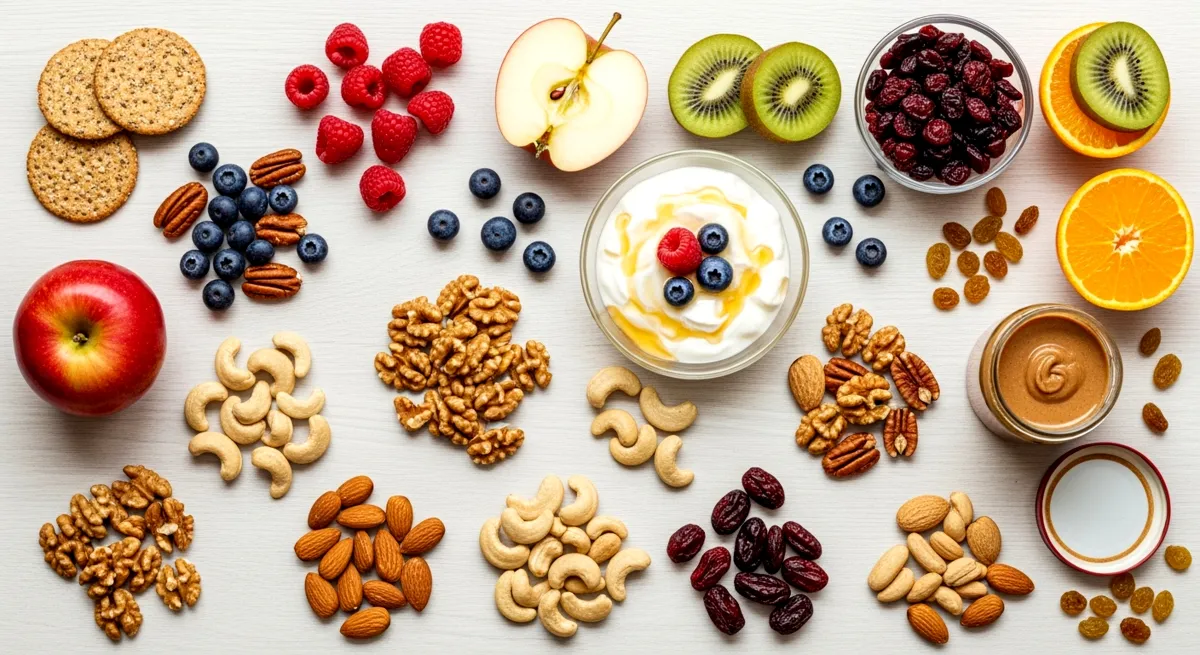
1. Greek yogurt + berries — 150 cal, 18g protein The gold standard of weight loss snacks. Nonfat Greek yogurt delivers nearly 20g of protein per cup, and the berries add fiber, sweetness, and volume. Add a sprinkle of cinnamon for zero extra calories.
2. Cottage cheese + cucumber slices — 130 cal, 14g protein Cottage cheese is an underrated protein powerhouse. The cucumber adds crunch and water content, making this feel like a bigger snack than 130 calories. Season with salt, pepper, and everything bagel seasoning.
3. 2 hard-boiled eggs — 140 cal, 12g protein Boil a batch on Sunday, keep them in the fridge all week. Each egg packs 6g of protein with healthy fats that support sustained energy. Sprinkle with salt and hot sauce.
4. Turkey roll-ups (4 slices + mustard) — 120 cal, 16g protein Roll deli turkey around mustard and optional lettuce. At 120 calories and 16g of protein, this is one of the most efficient protein-to-calorie ratios on this list. Pair with a few pickles for zero-calorie crunch.
5. Edamame (1/2 cup shelled) — 95 cal, 9g protein Pop these straight from the freezer into the microwave. Two minutes later, you have a warm, satisfying, plant-based protein snack. Sprinkle with sea salt or chili flakes.
6. String cheese + an apple — 150 cal, 8g protein The classic combo. The cheese provides protein and fat for satiety, the apple provides fiber and volume. Together, they cover multiple satiety signals for minimal calories.
Crunchy Snacks (When You Need to Chew)
Sometimes you don't just need calories — you need texture. These snacks satisfy the craving to crunch without the calorie density of chips or crackers.
7. Air-popped popcorn (3 cups) — 93 cal, 3g fiber Three full cups of popcorn for under 100 calories. That's an enormous volume of food for minimal energy. Popcorn is a whole grain, so you get fiber too. Season with nutritional yeast, garlic powder, or paprika — not butter.
8. Carrots + 2 tbsp hummus — 100 cal, 3g protein The crunch of carrots combined with the creaminess of hummus is deeply satisfying. A full cup of baby carrots is only about 50 calories, so the hummus is doing most of the caloric work here — and it's worth every calorie.
9. Bell pepper strips + guacamole (2 tbsp) — 110 cal, 2g protein Colorful, crunchy, and fresh. Bell peppers are one of the highest-volume vegetables you can snack on, and the guacamole adds healthy fats to keep you satisfied. Measure the guac — it's easy to overdo.
10. Roasted chickpeas (1/3 cup) — 130 cal, 6g protein Crunchy, flavorful, and portable. Toss canned chickpeas with spices and roast at 400°F for 25 minutes. They taste like chips but deliver protein and fiber instead of empty calories.
11. Rice cake + 1 tbsp peanut butter — 130 cal, 4g protein The rice cake provides satisfying crunch, and the peanut butter adds protein, fat, and flavor. This is a portion control test — measure the peanut butter, because "a tablespoon" and "what I think is a tablespoon" can differ by 100+ calories.
12. Cucumber slices + everything bagel seasoning — 30 cal Basically free. An entire cucumber is about 45 calories, and everything bagel seasoning is zero. This is your unlimited-quantity snack for when you want to chew something without thinking about calories at all.
Sweet Snacks (No Guilt Required)
Craving something sweet doesn't mean your diet is over. These snacks satisfy a sweet tooth without derailing your progress.
13. Apple slices + 1 tbsp almond butter — 190 cal, 4g protein The sweetness of the apple paired with the richness of almond butter feels indulgent. At 190 calories it's at the top of our range, but the combination of fiber and healthy fats makes it one of the most satisfying snacks on this list.
14. Frozen grapes (1 cup) — 62 cal Nature's candy, taken to the next level. Freezing grapes transforms their texture into something resembling a sorbet or frozen treat. One cup takes a while to eat because they're frozen solid, which slows you down — a natural portion control mechanism.
15. Banana + 1 tsp dark chocolate chips — 135 cal Slice a banana, sprinkle a teaspoon (not a tablespoon) of dark chocolate chips on top, and you have a dessert-like snack for 135 calories. The banana provides potassium and fiber, and a small amount of dark chocolate is enough to satisfy a chocolate craving.
16. Berries + 2 tbsp whipped cream — 70 cal A full cup of mixed berries with a dollop of whipped cream is 70 calories and feels like dessert. Berries are one of the lowest-calorie fruits, packed with fiber and antioxidants. This is your go-to when you want something sweet for almost nothing.
17. Protein smoothie (protein powder + almond milk + ice) — 150 cal, 25g protein Blend one scoop of protein powder with unsweetened almond milk and a handful of ice. It tastes like a milkshake, delivers 25g of protein, and costs you 150 calories. Add a handful of frozen berries or half a banana if you have the calorie room.
On-the-Go Snacks (Zero Prep)
No fridge, no prep, no kitchen required. These snacks live in your bag, desk drawer, or car and are ready when hunger strikes.
18. Beef or turkey jerky (1 oz) — 80 cal, 10g protein One ounce of jerky delivers 10g of protein for just 80 calories. It's shelf-stable, portable, and requires zero preparation. Look for brands with lower sodium if you eat jerky regularly.
19. Mixed nuts (1 oz / small handful) — 170 cal, 6g protein Nuts are nutrient-dense and satisfying, but they add up fast. One ounce — about 23 almonds or 14 walnut halves — is 170 calories. The biggest mistake people make with nuts is eating them by the handful from a large container. Measure, portion into small bags, and never eat directly from the jar.
20. Protein bar (look for under 200 cal, 15g+ protein) — varies Not all protein bars are created equal. Some are glorified candy bars with 300+ calories and 30g of sugar. Look for bars with under 200 calories, at least 15g of protein, and less than 8g of added sugar. Read the label — not the marketing.
5 Snacking Mistakes That Stall Weight Loss
You can eat all 20 snacks above and still stall your weight loss if you make these common mistakes.
1. Eating from the bag or container
No visual cues = mindless overeating. When you eat chips from the bag, crackers from the box, or nuts from the jar, your brain has no reference for how much you've consumed. Always plate or portion your snacks. Put them in a bowl, on a plate, or in a small container. When the plate is empty, the snack is over.
2. Choosing "healthy" but calorie-dense snacks
Trail mix, granola bars, acai bowls, and smoothie bowls all carry a health halo — but they can easily hit 400–600 calories. "Healthy" and "low-calorie" are not the same thing. A snack can be nutritious and still blow your calorie budget. Always check the numbers, not just the label claims.
3. Not tracking snacks
This is the silent killer of calorie deficits. People diligently log their meals but completely forget to track the handful of almonds, the few bites of their kid's food, or the sample at the grocery store. That untracked handful of trail mix was 200 calories. Over a week, untracked snacks can erase your entire deficit.
CalorieCue tracks snacks too — snap a photo of your snack plate and see the real numbers in seconds. No more forgetting to log the small stuff.
4. Snacking because you're bored, not hungry
Before reaching for a snack, pause and ask: am I actually hungry, or am I looking for stimulation? Boredom eating is one of the most common causes of overeating. If you ate a meal two hours ago and aren't physically hungry, the craving is likely emotional. Try a glass of water, a short walk, or a change of environment first.
5. Skipping snacks entirely, then binging at dinner
This is the opposite mistake — and it's just as damaging. Skipping your afternoon snack to "save calories" often backfires spectacularly at dinner. You arrive at the table ravenous, make impulsive food choices, eat too fast to register fullness signals, and end up consuming far more than if you'd eaten a 150-calorie snack three hours earlier. Strategic snacking prevents the "I'm starving, give me everything" dinner.
How to Build Your Own Smart Snack
You now have 20 ready-made options, but you don't need a list to snack smart. You just need a framework.
Step 1: Pick a protein anchor. Greek yogurt, cottage cheese, eggs, turkey, cheese, jerky, protein powder. This is the foundation that makes your snack actually filling.
Step 2: Add produce or volume. Fruit, vegetables, popcorn, rice cakes. This adds fiber, micronutrients, and physical bulk that makes the snack feel substantial.
Step 3: Add flavor. Seasoning, salsa, mustard, hot sauce, cinnamon, everything bagel seasoning — all zero or near-zero calories. Flavor keeps your snacks interesting without adding to the calorie count.
Step 4: Measure any calorie-dense add-ons. Nut butter, cheese, nuts, dressing, avocado, chocolate chips. These are fine in measured amounts, but they go from helpful to harmful the moment you stop portioning. Check our portion control guide if eyeballing portions has been a challenge.
This framework means you'll never run out of snack ideas. Protein anchor + produce + flavor + measured fats = infinite combinations, all under 200 calories.
Frequently Asked Questions
How many calories should a snack be for weight loss?
Aim for 100–200 calories per snack. This range is enough to curb hunger between meals without eating a significant chunk of your daily budget. If your daily calorie target is 1,500 calories and you eat three meals, a 150-calorie snack fits perfectly. If your target is higher, you may have room for two snacks or slightly larger portions. The key is that your snack has a defined calorie boundary — not an open-ended grazing session.
Are snacks bad for weight loss?
No — and this myth needs to die. Snacks are not inherently bad for weight loss. In fact, strategic snacking can help you lose weight by preventing the extreme hunger that leads to overeating at meals. The problem is unplanned, mindless snacking on calorie-dense foods. A 150-calorie Greek yogurt with berries helps your diet. A 600-calorie handful-after-handful of trail mix hurts it. The difference is intention and portion awareness, not snacking itself.
What should I snack on at night?
Choose something high in protein and low in sugar to avoid blood sugar spikes before bed. Good nighttime snacks include cottage cheese with cucumber, a hard-boiled egg, turkey roll-ups, or Greek yogurt. Avoid heavy carb-based snacks like cereal, chips, or cookies — these tend to trigger more cravings and can disrupt sleep quality. Keep your nighttime snack under 200 calories and eat it at least 30 minutes before lying down.
Is it better to have 3 big meals or add snacks?
It depends on your personal preference and hunger patterns. Some people thrive on three satisfying meals with no snacks. Others find that a mid-afternoon snack prevents them from arriving at dinner ravenous and overeating. Neither approach is inherently better for weight loss — total daily calories matter most. Experiment with both patterns and see which helps you stay within your calorie target more consistently. Learn more about what to eat for weight loss.
What's the healthiest low-calorie snack?
Greek yogurt with berries is hard to beat — it delivers 15–18g of protein, fiber, vitamins, and probiotics for about 150 calories. For something crunchy, carrots with hummus or air-popped popcorn are excellent choices. For something sweet, frozen grapes or berries with whipped cream are nearly free. The healthiest snack is ultimately one that combines protein with fiber or volume, keeps you satisfied for 1–2 hours, and fits within your daily calorie target.
Smart Snacking Is a Skill, Not Willpower
Smart snacking comes down to three things: protein + fiber + portion awareness. That's it. No superfoods, no special timing, no expensive products.
Don't avoid snacks — make them work for your goals. A well-chosen 150-calorie snack is the difference between cruising through your afternoon and white-knuckling it until dinner. Between hitting your calorie target and unknowingly blowing past it.
The 20 snacks above give you a starting point. The smart snack formula gives you a framework for life. And tracking what you actually eat gives you the awareness to know whether your snacking habits are helping or hurting.
Track every snack in seconds — Download CalorieCue free on the App Store.
Download CalorieCue