On this page
- Why Restaurant Meals Are a Calorie Black Box
- The "Close Enough" Method
- The 3-Step Restaurant Estimation Method
- The Fastest Way — Snap a Photo
- Restaurant Survival Guide by Cuisine
- Fast Casual (Chipotle, Panera, Sweetgreen)
- Italian
- Mexican
- Asian (Chinese, Thai, Japanese)
- American / Steakhouse
- 7 Rules for Eating Out Without Blowing Your Calories
- 1. Check the menu before you go
- 2. Eat a small snack before dinner
- 3. Skip the bread basket
- 4. Get dressing and sauces on the side
- 5. Box half before you start eating
- 6. Drink water, not calories
- 7. Don't compensate by skipping meals
- Frequently Asked Questions
- How many calories is a typical restaurant meal?
- Can I lose weight and still eat out?
- How do I track calories at restaurants without a food scale?
- Is it okay to skip tracking for restaurant meals?
- How accurate are AI calorie estimators for restaurant food?
- Eating Out and Tracking Aren't Mutually Exclusive
Your calorie tracking is going great — until Friday night when your friends want dinner. Suddenly you're staring at a menu with zero nutrition info, and your food scale is at home.
This is the moment most people either skip tracking entirely or decide calorie counting "doesn't work for real life." Both reactions are wrong.
Here's the reality: Americans eat roughly one-third of their calories from food prepared outside the home. And research shows that restaurant meals average 1,000–1,200+ calories per entrée — often more than half a day's intake in one sitting. If you're not accounting for restaurant meals, you're flying blind for a massive chunk of your diet.
But here's what this guide will show you: you don't need to be perfect. You need a practical system to estimate restaurant calories without being "that person" at the table — and close enough is absolutely good enough.
Why Restaurant Meals Are a Calorie Black Box
The gap between what you cook at home and what a restaurant serves is enormous — and it's almost entirely invisible.
Restaurants use way more fat than you do. Professional kitchens finish dishes with butter, drizzle plates with oil, and build sauces from cream. A home-cooked grilled chicken breast has the calories of the chicken plus a teaspoon of oil. A restaurant version might have 2–3 tablespoons of butter melted on top. That's an extra 200–300 calories you can't see.
Portions are 2–3x what you'd serve yourself. A standard serving of pasta is 2 ounces dry (about 200 calories). A restaurant plate of pasta is typically 4–6 ounces — before the sauce, cheese, and oil. According to the National Institute of Health's portion distortion research, restaurant portions have grown by 138% since the 1970s.
Hidden calorie sources add up before you even notice:
- Bread basket: 300–500 calories before your meal arrives
- Sauces and dressings: 200–400 calories per serving
- Cooking oils: 120 calories per tablespoon — and chefs use 2–3
- Drinks: 200–600 calories per cocktail, 150 per soda, 125 per glass of wine
Even "healthy" menu items are often calorie bombs. A restaurant salad with candied nuts, cheese, croutons, and a generous pour of vinaigrette can easily hit 800+ calories. The word "grilled" on a menu doesn't mean low-calorie — it means grilled then finished with butter.
But here's the good news: you don't need to be perfect. Close enough is good enough.
The "Close Enough" Method
Let's get this out of the way: perfect calorie accuracy at restaurants is impossible. Even registered dietitians can't nail it. And you don't need to.
Research from the International Journal of Obesity shows that even imperfect dietary self-monitoring is dramatically better than no monitoring at all. People who track consistently — even roughly — lose significantly more weight than people who don't track. The act of paying attention matters more than decimal-point precision.
The goal: estimate within 15–20% of actual calories. Over a week, the highs and lows average out. A meal you overestimate by 100 calories on Tuesday balances the one you underestimate by 100 on Thursday. Your weekly average — not any single meal — determines your results.
The 3-Step Restaurant Estimation Method
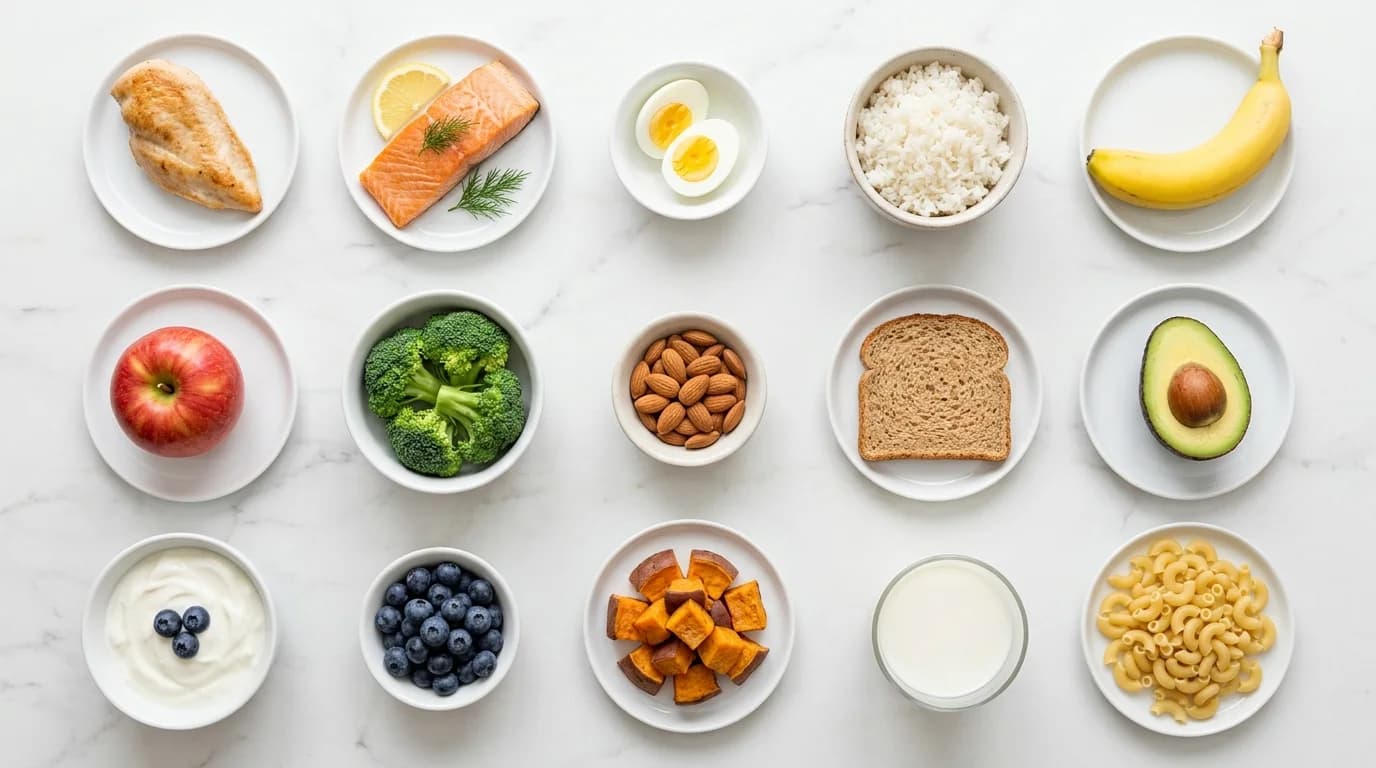
Step 1: Identify the components. Look at your plate and break it down. What's the protein? What's the carb? What's the fat source? A plate of food is just combinations of these three things.
Step 2: Estimate portions using your hand.
- Palm = a serving of protein (150–200 cal for lean, 250–300 for fatty cuts)
- Fist = a serving of carbs like rice, pasta, or potato (150–200 cal)
- Thumb = a serving of fat like oil, butter, or cheese (100–120 cal)
Step 3: Add a buffer for hidden fats. This is the step most people skip — and it's the most important. Add +100–200 calories for the cooking oils, butter, and sauces you can't see. Restaurants use fat liberally. Your buffer accounts for this.
Example: Grilled salmon, rice, and steamed vegetables → salmon (300) + rice (200) + vegetables (50) + hidden butter and oil (+150) = ~700 calories
That estimate might be off by 50–100 calories in either direction. That's completely fine. It's close enough to keep your weekly average on track — and infinitely better than logging nothing.
For a deeper dive into estimating portions visually, check out our portion control guide.
The Fastest Way — Snap a Photo
The mental math above works, but there's an even faster option — and it's what CalorieCue was built for.
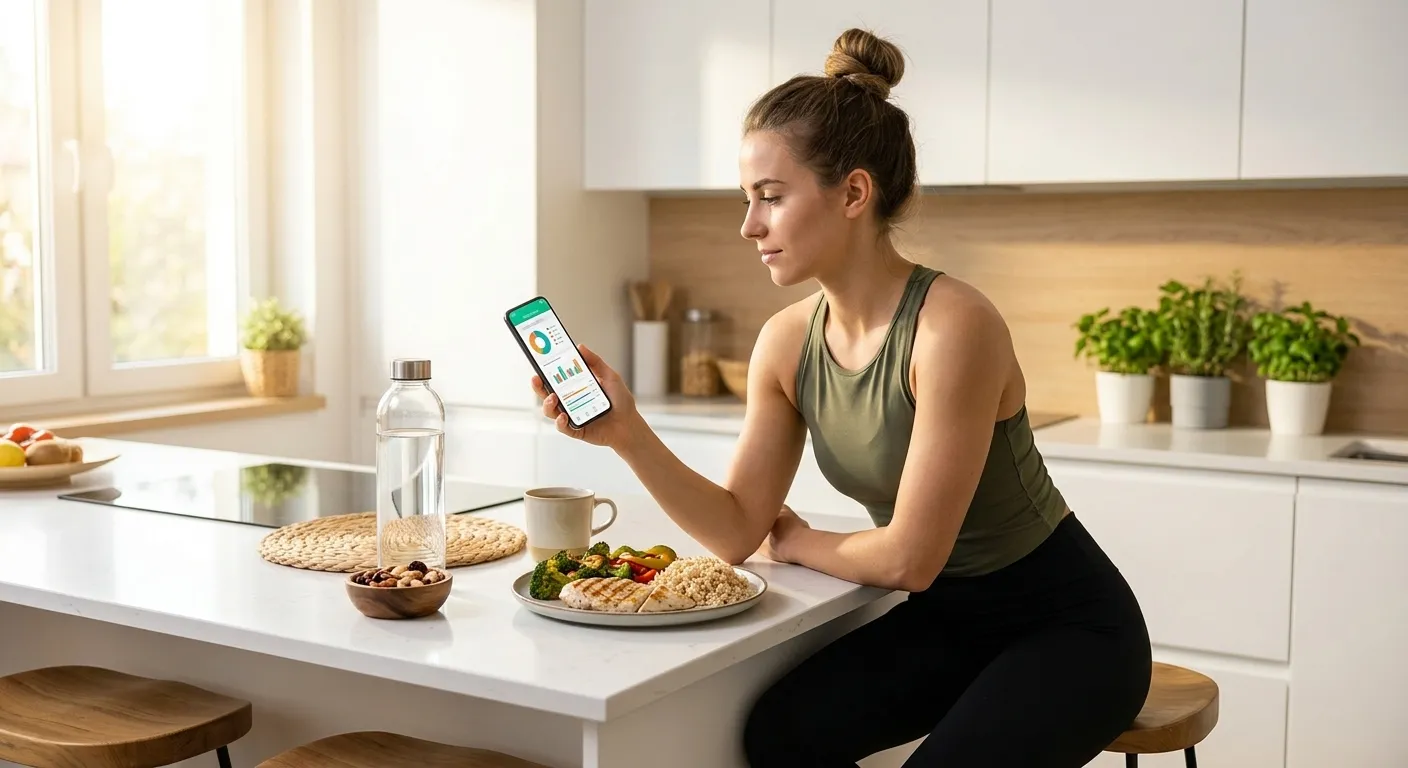
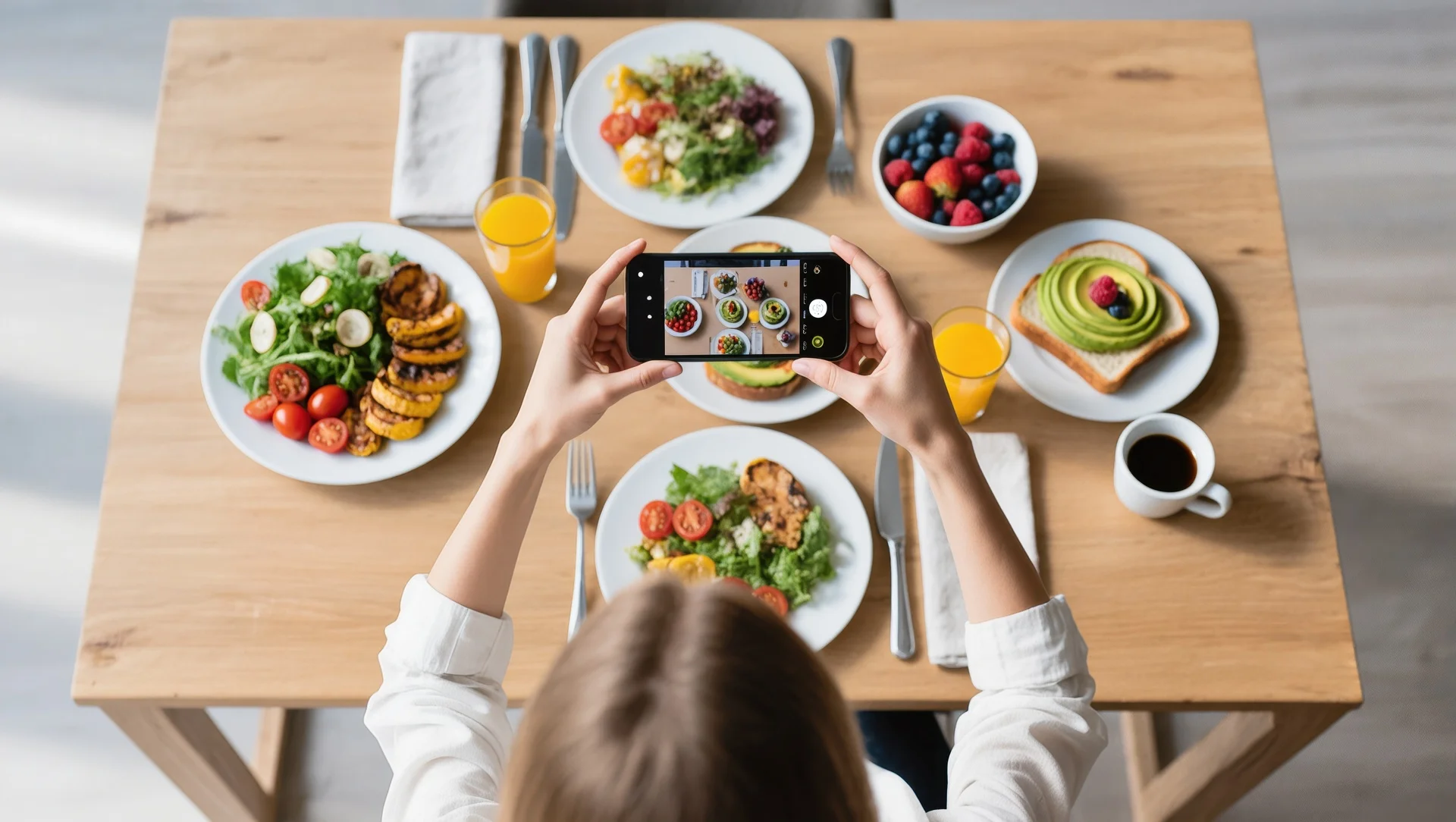
Instead of identifying components, estimating portions, and adding buffers manually, you can snap a photo of your plate and let AI do the work. CalorieCue identifies the dish, estimates portion sizes visually, and gives you a calorie and macro breakdown in seconds.
This works for plated meals, bowls, messy plates, and even dishes you can't name. The AI has been trained on thousands of restaurant dishes — so it recognizes a chicken alfredo, a burrito bowl, or a pad thai without you having to search a database.
Time comparison: 3 seconds (photo) vs. 3 minutes (mental estimation and manual logging).
This is the single most practical use case for AI calorie tracking — and where older apps completely fail. Good luck finding "chicken alfredo from Joe's Bistro" in a generic food database. With photo scanning, you just point and shoot.
Next time you eat out, snap before you eat. It takes 3 seconds and removes the biggest excuse for not tracking restaurant meals. Download CalorieCue free on the App Store.
Restaurant Survival Guide by Cuisine
Not all restaurants are created equal. Here's how to navigate the most common types — and the specific traps to watch for in each.
Fast Casual (Chipotle, Panera, Sweetgreen)
Your best advantage: Most fast-casual chains post nutrition info online and in-app. The FDA requires any restaurant chain with 20+ locations to display calorie counts on menus — use this.
Chipotle hack: Get a bowl instead of a burrito (saves ~300 calories from the tortilla). Skip sour cream and cheese, add extra fajita vegetables for free. A chicken bowl with rice, black beans, fajita veggies, and salsa comes in around 600 calories — reasonable for a filling lunch.
General rule: Check the restaurant's website or app before you order. Having a plan before you sit down eliminates impulse decisions.
Italian
Traps: Pasta portions (800–1,200 cal for a full entrée), cream-based sauces (alfredo adds 400+ cal vs. marinara), and the bread-and-olive-oil appetizer that arrives without you ordering it.
Best bets: Grilled protein with a vegetable side, marinara over alfredo or vodka sauce, split a pasta entrée with someone. If ordering pasta solo, ask for a half portion — many Italian restaurants will accommodate this.
Buffer: Add +200 calories for oil and butter used in cooking. Italian kitchens are generous with both.
Mexican
Traps: Chips and salsa before your meal (400–600 cal if you're not careful), cheese and sour cream on everything, fried tortillas (a fried taco shell adds 100+ cal vs. corn).
Best bets: Fajitas (you control your own toppings), grilled protein tacos on corn tortillas, burrito bowls without the tortilla. Ask for pico de gallo instead of queso — massive calorie savings with more flavor.
Buffer: Add +150 calories for cooking oils. Most Mexican proteins are cooked in oil or lard.
Asian (Chinese, Thai, Japanese)
Traps: Stir-fry oil (200–400 hidden calories), sweet sauces like teriyaki, orange, and General Tso's (100–200 cal from sugar alone), fried rice vs. steamed rice (+200 cal).
Best bets: Steamed options, sashimi, pho or broth-based soups, stir-fries with a request for light oil. Sushi is generally moderate — but watch for tempura rolls.
Sushi note: A California roll is ~250 calories. A tempura shrimp roll is ~500. A spicy mayo-drizzled specialty roll can hit 600+. Stick to simple rolls with fresh fish and you'll stay in a reasonable range.
American / Steakhouse
Traps: Portion sizes — a 16-ounce ribeye is 1,000+ calories from the steak alone. Loaded sides make it worse: a baked potato with all toppings hits 500+ calories, and restaurant fries are 400–600 per serving.
Best bets: Grilled chicken or fish, steamed or roasted vegetables instead of fries, request sauce on the side. If you want steak, go for a leaner cut like sirloin or filet mignon and keep the portion to 8 ounces.
Buffer: Add +150 calories for butter on steak and vegetables. Most steakhouses finish their steaks with a pat of butter — it's standard practice.
7 Rules for Eating Out Without Blowing Your Calories
These aren't extreme diet rules. They're practical habits that let you enjoy restaurant meals while keeping your calorie deficit intact.
1. Check the menu before you go
Most chain restaurants post full nutrition info online. Decide what you'll order before you sit down, when you're thinking clearly — not when you're hungry, the bread basket is calling, and your friends are ordering appetizers. Going in with a plan is the single most effective strategy.
2. Eat a small snack before dinner
Arriving starving at a restaurant is a recipe for overordering. Have a 100–150 calorie snack — Greek yogurt, an apple, a handful of almonds — about an hour before. It takes the edge off your hunger so you can order with your brain instead of your stomach. Check out our list of smart snack options for ideas.
3. Skip the bread basket
Or limit yourself to one piece and ask the server to take the rest away. A single dinner roll is 100–150 calories. Three rolls with butter before your meal even arrives is 400–600 calories — nearly a full meal's worth of food you didn't plan for and won't even remember.
4. Get dressing and sauces on the side
This one simple request saves 200–400 calories instantly. Restaurant kitchens pour dressing — they don't measure it. When it comes on the side, dip your fork into the dressing before each bite. You'll use a fraction of what they'd normally put on.
5. Box half before you start eating
Restaurant portions are 2–3x a normal serving. Before you take your first bite, move half the plate into a to-go container. You just got two meals for the price of one — your dinner tonight and lunch tomorrow. This is the best portion control hack for restaurants.
6. Drink water, not calories
A margarita is 300–500 calories. Two glasses of wine add up to 250+ calories. A soda is 150 calories. These add up fast — and they don't fill you up or add nutritional value. Switch to water or sparkling water with lemon. If you want alcohol, budget for it and limit to one drink.
7. Don't compensate by skipping meals
Had a big dinner out? Eat normally the next day. Don't starve yourself to "make up for it." This triggers a restrict-binge cycle that causes more damage than the restaurant meal ever did. One high-calorie meal doesn't ruin your week — but a pattern of restriction and overcompensation will. Learn more about breaking the overeating cycle.
Remember: Your weekly calorie average matters more than any single meal. One 1,200-calorie restaurant dinner in a week of otherwise on-target eating barely moves the needle. Don't let a single meal derail your consistency — track without obsessing.
Frequently Asked Questions
How many calories is a typical restaurant meal?
Most sit-down restaurant entrées range from 1,000 to 1,200+ calories — and that's before appetizers, drinks, or dessert. Research published in the Journal of the American Academy of Nutrition and Dietetics found that the average restaurant meal contains 1,205 calories. Fast-casual meals are somewhat lower (600–900 calories) because portions tend to be more standardized. The safest rule: assume any restaurant entrée is at least 700–800 calories unless you have specific nutrition data.
Can I lose weight and still eat out?
Yes — and anyone who says otherwise is overcomplicating this. Eating out 2–3 times per week is fully compatible with weight loss, as long as you estimate your meals (even roughly) and don't try to compensate by skipping meals before or after. Your overall calorie deficit is determined by your weekly average, not by individual meals. People who track consistently — including restaurant meals — lose more weight than those who only track home-cooked food.
How do I track calories at restaurants without a food scale?
Use hand-based portion estimates: your palm equals a protein serving (150–200 cal), your fist equals a carb serving (150–200 cal), and your thumb equals a fat serving (100–120 cal). Break your plate into components, estimate each, and add 100–200 calories for hidden cooking fats. Or use AI photo tracking — snap a photo of your plate and get an instant estimate in seconds. Either method gets you close enough.
Is it okay to skip tracking for restaurant meals?
No — and this is where most calorie deficits quietly die. Untracked meals create blind spots that can erase your progress without you noticing. A rough estimate is infinitely better than a blank entry. Even logging "grilled chicken pasta — ~900 cal" gives you enough data to make informed decisions the rest of the day. If you find yourself tempted to skip, remember that consistency matters more than accuracy.
How accurate are AI calorie estimators for restaurant food?
AI estimators like CalorieCue are typically accurate within 15–20% for restaurant meals. They identify dish components, estimate portion sizes visually, and apply nutritional data — all in a few seconds. This is comparable to (and often better than) most people's manual estimates, especially for complex dishes. For restaurant meals where exact nutrition info doesn't exist, AI photo estimation is one of the most practical approaches available. Learn more about how AI food scanning works.
Eating Out and Tracking Aren't Mutually Exclusive
The biggest myth in calorie tracking is that you have to choose between eating out and staying on track. You don't.
You need a system, not perfection. Identify the components on your plate, estimate portions, add a buffer for hidden fats — or just snap a photo and let AI handle it. Either way, you're logging your meal in under a minute and moving on with your night.
Over a week, those rough estimates average out to something surprisingly accurate. One overestimate here, one underestimate there — your daily calorie target stays on track. The research consistently shows that people who track imperfectly but consistently outperform people who track perfectly but inconsistently.
So go to dinner with your friends. Order something you enjoy. Track it in 3 seconds. And stop letting restaurants be the reason you quit.
Make restaurant meals trackable — Download CalorieCue free on the App Store.
Download CalorieCue