On this page
- Why "Best Protein Source" Is the Wrong Question
- Category 1 — Best Protein Per Calorie (For Aggressive Cutting)
- The Honest Ranking
- The Winners (And Why)
- When This Category Matters Most
- Category 2 — Best Proteins for Satiety (Staying Full)
- The Real Satiety Winners
- When This Category Matters Most
- Category 3 — Best Proteins by Cost (Budget-Optimized)
- The Cheapest High-Quality Proteins
- The Expensive Proteins
- The Honest Take
- Category 4 — Best Proteins for Convenience
- The Convenience Winners
- The Inconvenient Proteins
- The Realistic Default
- The "Best Overall" Question (If You Insist)
- A Quick Note on Plant-Based Proteins
- The Proteins Most People Should Eat (Decision Cheat Sheet)
- Frequently Asked Questions
- The Bottom Line
Best Sources of Protein for Weight Loss (Ranked by What Actually Matters)
I'll start with the truth most "best protein source" articles avoid: chicken breast isn't the best protein source.
It's a fine protein source. It's not even close to the best.
The reason every fitness article puts chicken breast at the top of their list isn't because it's optimal. It's because nobody wants to argue with 90s bodybuilding culture, which decided in 1992 that "clean" eating meant chicken breast and broccoli. That branding stuck. The science never actually backed it up.
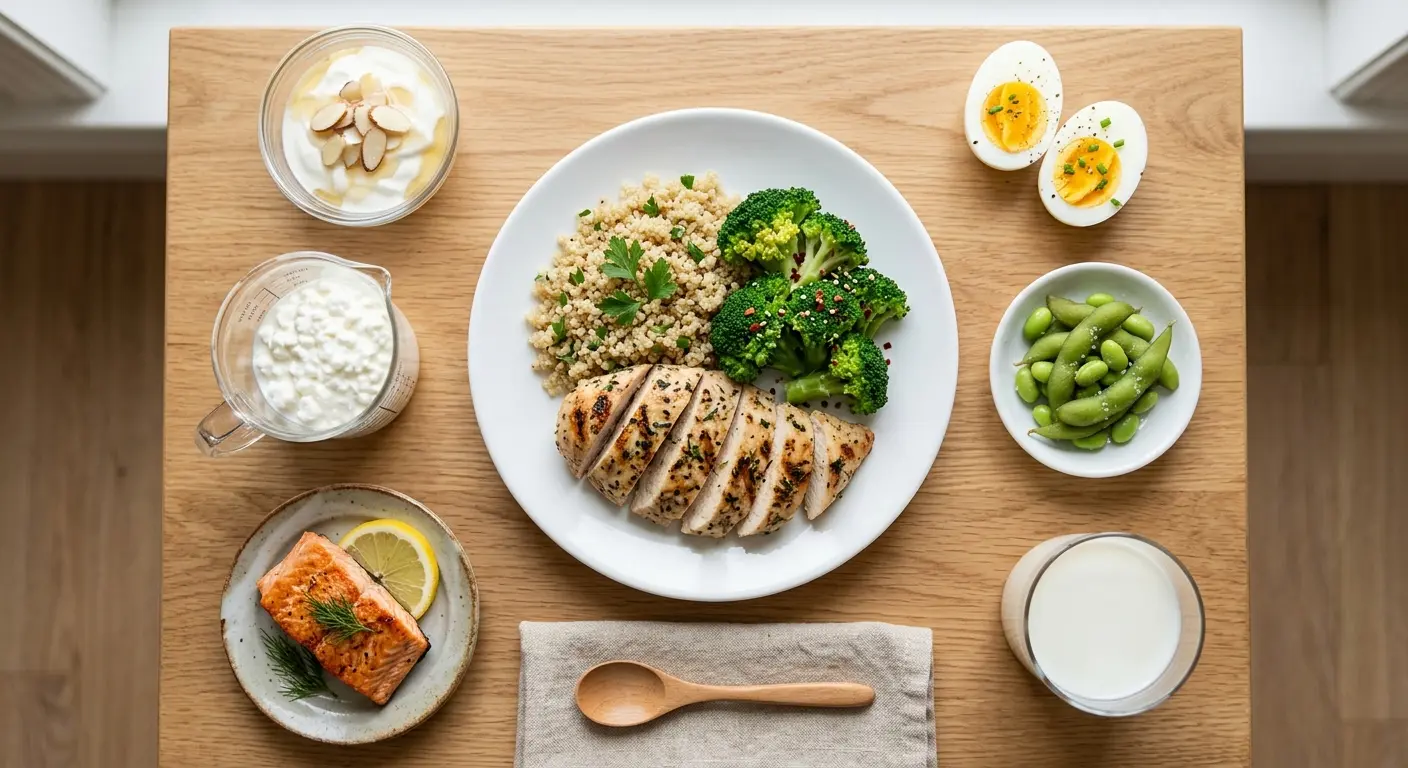
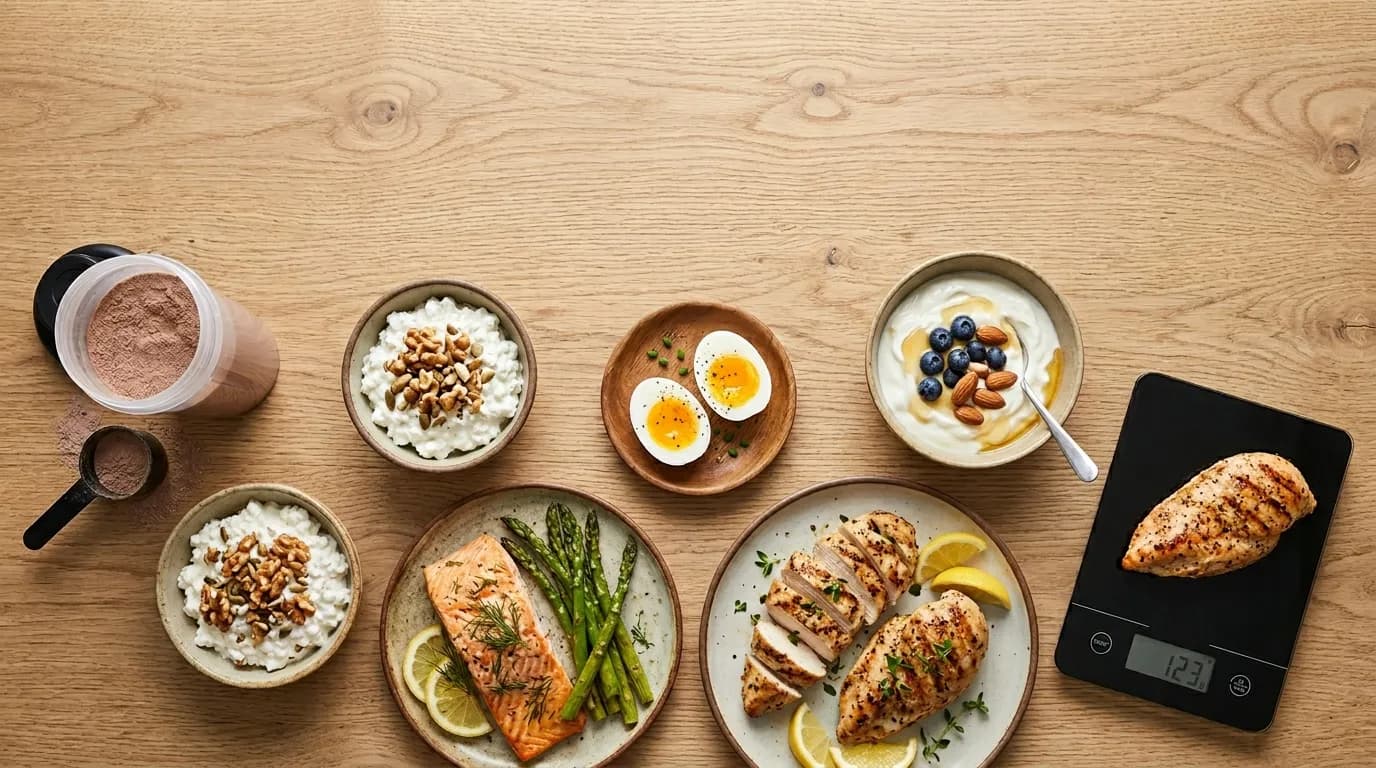
This post is going to do something different. Instead of giving you a list of 30 foods and calling all of them "amazing," I'm going to rank protein sources by what actually matters for weight loss — protein per calorie, satiety, cost, and convenience — and tell you which ones win each category.
Spoiler: chicken breast doesn't win any of them.
Why "Best Protein Source" Is the Wrong Question
Here's the framing problem. When someone asks "what's the best protein source," they think they're asking a single question with a single answer. They're not. They're actually asking four different questions at once:
- Which protein gives me the most protein per calorie? (Cutting matters most)
- Which protein keeps me fullest the longest? (Satiety matters most)
- Which protein is cheapest? (Budget matters most)
- Which protein takes the least time to prepare? (Convenience matters most)
These are different questions with different answers. A protein that wins the first category might lose the second. A protein that's cheap might be a pain to cook. A protein that's filling might be expensive.
When you frame it as one question — "what's the best?" — you end up with answers that are mediocre at everything and excellent at nothing. That's basically what chicken breast is. Decent on every metric, exceptional on none.
The right approach: figure out which category matters most for your situation right now, then pick the protein that wins that category. You'll get better results than someone defaulting to chicken because that's what fitness Instagram told them to eat.
For background on how protein fits into your overall calorie strategy, see our guide on how to eat more protein and our calorie counting vs. macro counting comparison.
Category 1 — Best Protein Per Calorie (For Aggressive Cutting)
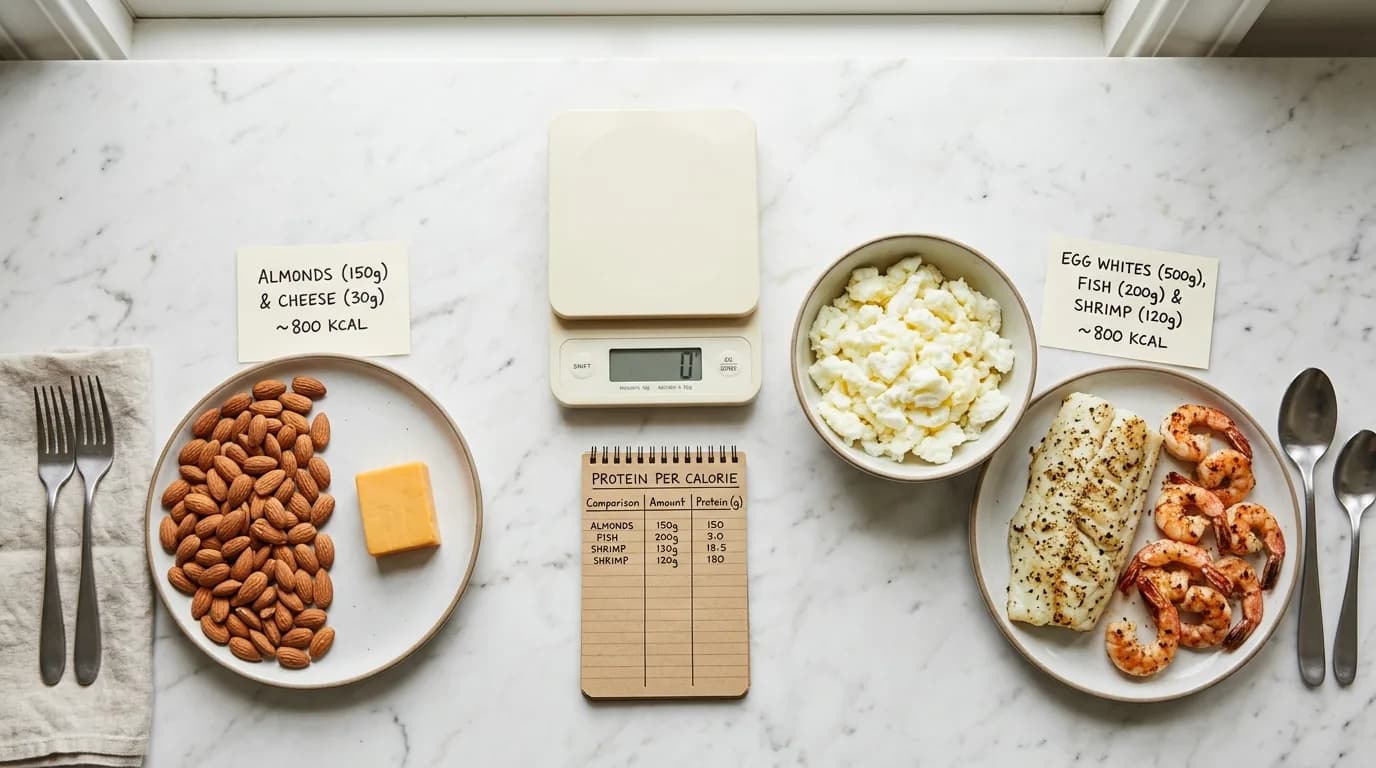
If you're trying to maximize protein while minimizing calories — say, you're in the last few weeks of a cut, or you've hit a plateau and need to tighten up — these are the proteins that give you the most amino acids per calorie consumed.
The Honest Ranking
| Protein Source | Serving | Protein | Calories | Protein per 100 cal |
|---|---|---|---|---|
| Egg whites | 100g | 11g | 52 | 21g |
| Whey isolate | 30g (1 scoop) | 24g | 100 | 24g* |
| Cod, baked | 150g | 31g | 140 | 22g |
| Tuna, canned in water | 1 can (142g) | 39g | 179 | 22g |
| Shrimp, cooked | 150g | 33g | 149 | 22g |
| Tilapia | 150g | 34g | 163 | 21g |
| Chicken breast | 150g | 46g | 248 | 19g |
| Greek yogurt, nonfat | 200g | 24g | 130 | 18g |
| Cottage cheese, low-fat | 1 cup | 24g | 183 | 13g |
*Whey isolate has the highest theoretical protein-per-calorie ratio, but it's a supplement, not a meal.
The Winners (And Why)
Egg whites are the actual winner here. Almost pure protein with minimal fat or carbs. The reason most articles don't put them at the top is that they don't make for an inspiring blog post — "eat boring egg whites" doesn't sell. But the math is the math.
White fish (cod, tilapia, shrimp) are nearly as good and have the advantage of being a complete meal. A 150g portion of cod is satisfying in a way 100g of egg whites isn't.
Tuna in water is the convenience winner of this category. Open a can, dump it on a salad, you've got 39g of protein for 179 calories. Total prep time: 30 seconds.
Chicken breast shows up at #7 here, behind several proteins that nobody talks about. It's not bad — it's just nowhere near the top.
When This Category Matters Most
If you're a smaller person trying to lose weight (calorie targets under 1,500/day), these proteins are essential because every calorie counts. They're also useful during the final weeks of an aggressive cut, when you need maximum protein in a tight calorie budget. For more on this, see our guide to foods high in protein and low in calories and our calories in food reference for a full breakdown of how foods stack up.
Category 2 — Best Proteins for Satiety (Staying Full)
Protein per calorie isn't the whole story. Some proteins keep you fuller for longer because of how slowly your body digests them, the volume they take up in your stomach, or the food matrix they come in. Eat 25g of protein from one source and you might be hungry in 90 minutes. Eat the same 25g from a different source and you're not hungry until your next meal.
This category matters more than most articles admit. If you're hungry all the time, you're going to fail your diet — the protein per calorie ratio doesn't matter if you can't sustain the eating pattern.
The Real Satiety Winners
Cottage cheese is the most underrated protein source in nutrition. A cup contains 24g of protein at 180 calories. But what makes it elite for satiety is the casein content — casein is a slow-digesting protein that releases amino acids over 4–6 hours. You stay full longer than you'd predict from the calorie count alone.
Greek yogurt uses a similar mechanism. The thick texture, the fat content (in full-fat versions), and the protein-to-volume ratio combine to produce strong satiety signaling. You feel like you ate something substantial because you did.
Lean beef and lamb rank high here because of the fat content. A 150g portion of 90% lean ground beef has 35g of protein and stays in your stomach for hours. This is also why some "lean protein only" diets fail — without any fat, satiety drops significantly.
Eggs (whole, not just whites) are surprisingly filling per calorie. Research suggests the combination of protein, fat, and choline in whole eggs produces stronger satiety than the equivalent calories from carbs or other proteins.
Cod and white fish drop here despite winning the previous category. The same low-fat property that makes them great for protein per calorie makes them less filling per gram.
When This Category Matters Most
If you're constantly hungry on your diet, you need to optimize for satiety, not just total protein. The fix is usually adding cottage cheese, Greek yogurt, or a small amount of fat to your protein meals. Most "I'm starving on this diet" complaints are actually satiety problems disguised as protein problems.
Category 3 — Best Proteins by Cost (Budget-Optimized)
The fitness internet rarely talks about cost. It should. The "optimal" protein source you can't afford long-term is worse than a "good enough" protein you can sustain for years.
Real costs in 2026 (US average, will vary by location):
The Cheapest High-Quality Proteins
Whole eggs — about $0.20 per egg, 6g of protein each. That's about $0.03 per gram of protein. The cheapest complete animal protein widely available. Almost universally affordable.
Canned tuna in water — roughly $1–1.50 per can with 39g of protein. About $0.03–0.04 per gram. Pantry-stable, no prep, available everywhere.
Cottage cheese — about $3–4 per pound containing 50g of protein. Roughly $0.06–0.08 per gram. Cheaper than chicken in most regions.
Greek yogurt (plain, store brand) — about $4–5 per kg containing 100g of protein. Roughly $0.04–0.05 per gram. Wildly affordable when you skip the flavored versions.
Whole chicken — about $1.50–2 per pound. Roughly $0.04–0.05 per gram of protein. Cheaper than chicken breast specifically — buy whole birds and butcher them.
Whey protein concentrate — about $30–40 per kg containing about 800g of protein. Roughly $0.04–0.05 per gram. Notably cheaper than isolate per gram of protein.
The Expensive Proteins
Salmon — high quality but typically $0.15–0.25 per gram of protein. Worth it for the omega-3s, expensive on a pure protein basis.
Premium cuts of beef (sirloin, ribeye) — easily $0.20–0.30 per gram of protein.
Whey isolate vs concentrate — isolate is 50–100% more expensive per gram of protein with marginal benefits for most users. Concentrate is fine.
"Protein-marketed" foods (protein cookies, protein chips, protein cereals) — almost always the worst dollar-per-gram-of-protein ratios. Marketing tax.
The Honest Take
If money is tight and you want to hit 100g+ of protein daily, the cheapest realistic combination is: eggs, canned tuna, cottage cheese, plain Greek yogurt, and whole chicken. That's it. You can hit any reasonable protein target on under $5 per day with those five foods. For a complete shopping breakdown, see our high-protein low-calorie grocery list.
Category 4 — Best Proteins for Convenience
This is the category fitness culture pretends doesn't matter. It matters more than any other category for most people, because the protein you actually eat beats the optimal one you don't.
If your "perfect" diet involves prepping six chicken breasts on Sunday and you've never actually done that more than once, you don't have a chicken-breast diet. You have a takeout-and-stress-eating diet with chicken breast as fantasy.
The Convenience Winners
Whole eggs — 3 minutes from cracked to plate. Hard-boil a dozen on Sunday for a week of grab-and-go protein.
Canned tuna or salmon — open and eat. Zero cooking required. Store at room temperature.
Plain Greek yogurt — open container, eat from container if you want. Add fruit or nuts. Done.
Cottage cheese — same as Greek yogurt. Open and eat.
Pre-cooked rotisserie chicken — $5–8 at any grocery store, contains 80–100g of protein. Picks up in 30 seconds. Lasts 3 days in the fridge. The home cook's secret weapon.
Deli turkey or chicken — about 30g of protein per 100g serving. Slap it on bread, in a wrap, or eat plain. Watch for sodium.
Protein shakes — water + scoop = 24g protein in 30 seconds. Good as a supplement, not as your foundation.
The Inconvenient Proteins
Steak and lean beef — quality matters, cooking takes time, easy to overcook.
Fresh fish — short shelf life, smells, easy to mess up.
Dried beans (cooked from scratch) — overnight soak plus 1+ hour cook time. Use canned instead.
Chicken breast (despite everything) — easy to overcook, requires actual prep, gets boring within a week.
The Realistic Default
For someone with no time, no cooking skill, and a goal of just hitting 100g of protein per day, the foundation is: eggs, canned tuna, Greek yogurt, cottage cheese, and rotisserie chicken. Five foods. None require more than 5 minutes of "prep." Most people will hit any reasonable protein goal on this rotation alone.
This is what most experienced trackers actually eat. The chicken-breast-and-broccoli photos on Instagram are a different reality.
The "Best Overall" Question (If You Insist)
Some people just want one answer. Fine. Here's the honest one.
If you can only pick one protein source to anchor your entire diet around, whole eggs are the best overall choice. They win on:
- Cost (cheapest complete animal protein)
- Convenience (3-minute cook time, easy bulk prep)
- Bioavailability (eggs are the reference standard for protein quality scoring — they have a biological value of 100, the gold standard)
- Nutrient density (vitamin D, choline, B12, plus quality fat)
- Versatility (breakfast, lunch, snack, dinner — all work)
Eggs are not the most protein-dense (egg whites alone are higher) or the most satiating (cottage cheese wins) or the cheapest per absolute gram (whole chicken sometimes wins). But they win the most categories, lose none of them by much, and are stunningly easy to incorporate.
The "but cholesterol" argument from the 1990s has been largely overturned by modern research. For healthy adults without specific lipid disorders, dietary cholesterol from eggs has minimal impact on blood cholesterol. Eat eggs.
A Quick Note on Plant-Based Proteins
Plant proteins work for weight loss, but they require more thought than the omnivore options above. Two reasons:
Most plant proteins are incomplete. They don't contain all 9 essential amino acids in optimal ratios. According to Harvard Health, this isn't a dealbreaker — you just need to combine sources within a day (beans + grains, tofu + nuts, etc.) — but it requires more attention.
Bioavailability is lower. Animal proteins are 90–99% digestible. Plant proteins range from 60–90%. This means a plant-based eater needs to consume slightly more total protein to absorb the same amount.
The exceptions are soy (tofu, tempeh, edamame) and quinoa — both are complete proteins with high bioavailability. Soy in particular has a DIAAS score comparable to many animal proteins and gets unfairly maligned by fitness culture.
For a vegetarian or vegan eater optimizing for weight loss:
- Tofu is the closest plant equivalent to chicken — neutral, versatile, complete protein
- Tempeh is denser, more flavorful, and slightly higher in protein
- Edamame is a great snack-format protein
- Plant-based protein powders (pea, soy, blended formulas) fill nutritional gaps efficiently
A pure plant-based eater should aim for slightly higher total protein (1.4–1.8g per kg of body weight) to compensate for lower bioavailability.
The Proteins Most People Should Eat (Decision Cheat Sheet)
If you don't want to read this whole post and just want a recommendation:
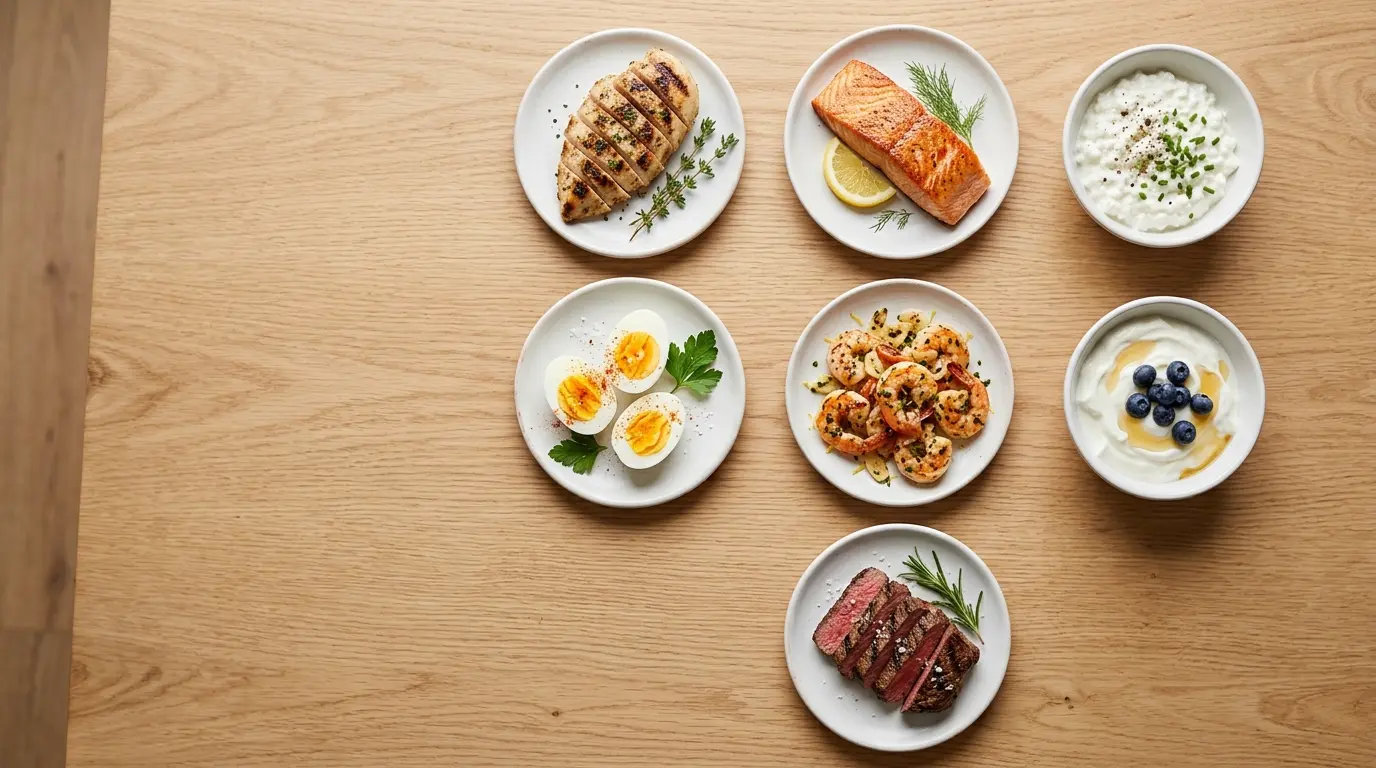
- For most people, most days: Eggs, Greek yogurt, cottage cheese, canned tuna, rotisserie chicken
- Optimizing protein per calorie hard: Add egg whites, cod, shrimp
- Trying to stay full all day: Cottage cheese with breakfast, Greek yogurt as a snack
- On a strict budget: Eggs, canned tuna, cottage cheese, plain Greek yogurt, whole chicken
- Vegetarian/vegan: Tofu, tempeh, edamame, Greek-style soy yogurt, plant protein powders
- Need post-workout protein: Whey isolate (fastest absorption)
- Need overnight protein: Cottage cheese before bed (slow-digesting casein)
If you're somehow eating only chicken breast — try literally any of these instead and watch your diet improve.
For a detailed look at how to build meals around these proteins, see our guide on high-protein meals under 500 calories and our how to count macros breakdown. If you want to understand how protein fits your total calorie picture, the TDEE calculator will tell you exactly how much you need.
Download CalorieCueFrequently Asked Questions
Is chicken breast actually bad?
No. It's perfectly fine protein. It's just not optimal on any specific metric. It's the Toyota Corolla of proteins — reliable, nothing-special, gets the job done. Nothing wrong with eating it. Plenty wrong with believing it's the only "good" option.
Why do all fitness influencers recommend chicken breast then?
Inertia and aesthetics. Chicken breast looks photogenic in meal prep containers. It became the visual symbol of "fitness eating" in the 90s and stuck. There's no nutritional science behind its dominance — just cultural momentum.
Is whey protein necessary?
No. Useful, especially post-workout, but not necessary. If you can hit your protein target with whole foods, you don't need supplements. Whey is mostly a convenience tool.
What about red meat?
Lean cuts of beef, lamb, and pork are excellent protein sources with high bioavailability. The "red meat is bad" framing usually applies to processed red meat (bacon, sausage, deli) or excessive amounts. A few servings per week of lean red meat are fine for most people.
Are protein bars and protein cookies legitimate sources?
Some are, most aren't. The good ones (think 20g+ protein, under 5g sugar) work as occasional convenience foods. The bad ones (10g protein, 25g sugar) are basically candy with marketing. Always check the label.
How much protein do I actually need for weight loss?
Roughly 0.7–1g per pound of body weight, or 1.6–2.2g per kg. For a complete walkthrough, see our guide on how to eat more protein.
Can I eat too much protein?
For healthy adults with normal kidney function, intake up to 2.2g per kg of body weight is well-tolerated and supported by research. People with chronic kidney disease should consult their doctor before increasing protein significantly.
The Bottom Line
The "best protein source" depends on what you're optimizing for, not on what fitness culture told you in the 90s.
If you're cutting calories aggressively, the answer is egg whites, white fish, and shrimp. If you're staying full all day, it's cottage cheese, Greek yogurt, and lean beef. If money is tight, it's eggs, canned tuna, and whole chicken. If you have no time, it's eggs, Greek yogurt, and rotisserie chicken.
If you can only pick one default protein for your entire life, pick whole eggs. They win the most categories.
Stop defaulting to chicken breast because Instagram told you to. Start picking proteins that match your actual situation. You'll get better results, save money, eat more interesting food, and stop being hungry all the time.
CalorieCue shows protein content alongside calories automatically when you snap a photo of your meal. If the friction of manual logging is what's kept you from hitting your protein target consistently, photo tracking solves that. Seven-day free trial, then paid — worth trying if you've been losing the protein game to logging fatigue.
Whichever protein you pick, hitting your daily target consistently matters more than the specific source. The optimal protein you don't eat doesn't beat the average one you do.
Download CalorieCue