On this page
- Canned tuna calories and protein per 100 g
- How many calories are in a can? Three real label examples
- Net weight vs drained weight: the easy mistake to avoid
- Calculate a portion from any label
- Drained tuna serving-size chart
- Water vs oil: what to log after draining
- Tuna salad calories: count the whole mixture
- Tuna's protein-to-calorie ratio
- Light tuna vs albacore: check more than protein
- Log your actual tuna meal
- Frequently asked questions
- How many calories and how much protein are in a can of tuna?
- How much protein is in 100 g of canned tuna?
- Do you weigh canned tuna before or after draining?
- Does draining oil-packed tuna remove all the calories from oil?
- Is a 5 oz can of tuna one serving?
- How do you count calories in tuna salad?
For canned tuna, the number to start with is the drained serving on your label—not the weight printed on the front of the can. Packing liquid, tuna type, and portion size all affect the calories and protein you log.
As a generic reference, the USDA entries used below give 86 calories and 19.4 g protein per 100 g of drained light tuna in water, and 198 calories and 29.1 g protein for drained light tuna in oil. Your particular can may differ substantially.
Here is how to find a useful number, understand the difference, and count a tuna meal without counting liquid you poured away.
Canned tuna calories and protein per 100 g
These values come from two specific USDA FoodData Central SR Legacy records, retrieved September 24, 2026: light tuna in water, drained solids, and light tuna in oil, drained solids.
| Per 100 g of drained light tuna | In water | In oil |
|---|---|---|
| Calories | 86 | 198 |
| Protein | 19.44 g | 29.13 g |
| Fat | 0.96 g | 8.21 g |
| Carbohydrate | 0 g | 0 g |
These are separate reference foods, not the same batch of tuna tested in two liquids. Differences in moisture and composition mean that the protein figures differ too. Oil does not add protein to fish. Do not read the table as a promise that buying oil-packed tuna will give you more protein per can.
Use a generic reference when you do not have a suitable product label. If your can supplies its own nutrition information, that is the better starting point for that product.
How many calories are in a can? Three real label examples
“One can of tuna” is not a standard nutrition unit. Even cans with the same front-of-pack weight can have different contents.
These StarKist 5 oz can examples use the same labeled 113 g drained serving, making the portion basis easy to compare:
| Product | Calories per drained can | Protein | Fat |
|---|---|---|---|
| Chunk light in water | 90 | 20 g | 0.5 g |
| Chunk light in oil | 160 | 20 g | 9 g |
| Solid white albacore in water | 110 | 26 g | 1 g |
Manufacturer nutrition panels checked September 24, 2026. These examples identify specific US products, not averages for every brand. Packaging and formulations can change; check the can you bought.
For the two chunk-light examples, choosing oil adds 70 calories per labeled drained can, with the same labeled protein. That is a product-specific comparison, not a fixed adjustment for every oil-packed tuna.
The manufacturer numbers also differ from the USDA references. Do not average them together or select whichever entry is lowest. Match the product and preparation.
Net weight vs drained weight: the easy mistake to avoid
The net weight includes the contents inside the container, including the packing liquid. A drained-food entry describes the fish after the liquid has been removed.
A 5 oz net weight is about 142 g, while the example labels above describe 113 g drained. Those numbers answer different questions. Neither is a universal conversion for all cans.
Use this sequence:
- Read the serving size. Look for words such as “drained,” “as packaged,” or “per can.”
- Check servings per container. A larger can may contain several labeled servings.
- Match your portion to that basis. Weigh drained fish for a drained entry; follow the label's stated basis for an undrained product.
- Count the amount eaten. Half a can, a whole can, and one serving are only interchangeable when the label and your portion make them so.
Put the empty bowl on the scale and zero it before adding the drained tuna. The bowl, empty tin, and discarded liquid do not belong in the fish weight.
If you eat the whole drained can, logging one labeled drained can is a practical estimate. If you weigh a portion, use its weight with the corresponding gram-based entry. You do not need both methods for the same portion.
Calculate a portion from any label
Portion grams ÷ labeled serving grams × calories or protein per serving
For a calculation example, suppose your label says 120 calories and 25 g protein per 100 g drained, and you eat 75 g:
- Calories: 75 ÷ 100 × 120 = 90
- Protein: 75 ÷ 100 × 25 = 18.75 g, or about 18.8 g
Those are illustrative label inputs, not a fourth product claim. Replace them with your own label. If you do not use a scale, divide a known labeled portion as consistently as you can; our guide to counting without a food scale explains practical estimates.
Drained tuna serving-size chart
When the package information is unavailable, these calculated portions use the USDA reference foods above. The ounces refer to drained fish on your plate, not the can's net weight.
| Drained portion | Water: calories | Water: protein | Oil: calories | Oil: protein |
|---|---|---|---|---|
| 3 oz ≈ 85 g | 73 | 16.5 g | 168 | 24.8 g |
| 100 g | 86 | 19.4 g | 198 | 29.1 g |
| 4 oz ≈ 113 g | 97 | 22.0 g | 224 | 32.9 g |
| 150 g | 129 | 29.2 g | 297 | 43.7 g |
Calculated using the displayed gram weights. Calories are rounded to whole numbers and protein to one decimal place. These are lookup amounts, not recommended portions. The 113 g row is a generic weight calculation; it does not replace the branded-can values above.
For the rest of your meal, see our calories in food list.
Water vs oil: what to log after draining
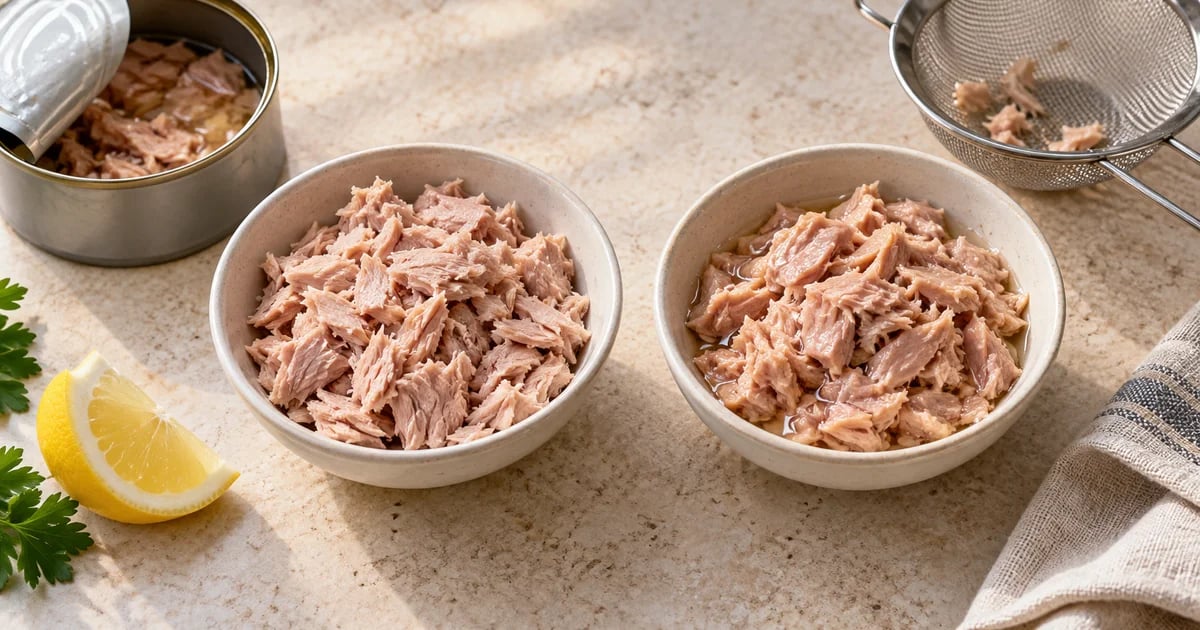
If you drain oil-packed tuna, choose an entry that says oil-packed, drained. Draining does not turn it into water-packed tuna.
Also avoid counting the oil twice. A drained oil-packed entry already describes the drained product with its remaining fat. Do not add the entire original packing liquid on top when you threw that liquid away.
If you use some of the poured-off oil in a dressing, count that amount separately. If you eat all the contents undrained, look for nutrition information that covers that preparation; a drained entry alone will miss the consumed liquid. Do not assume the difference between net weight and drained weight is pure oil.
| What you ate | Matching logging approach |
|---|---|
| Tuna in water, drained | Exact drained product label or matching generic entry |
| Tuna in oil, drained | Drained oil-packed entry |
| Drained tuna plus some reserved packing oil | Drained tuna plus the separately used oil estimate |
| A flavored pouch or ready-made tuna salad | Its own product label, including the sauce |
| Homemade tuna salad | Tuna plus the ingredients you mixed in |
The useful choice is the one you enjoy and can account for. Water-packed tuna leaves more room for a separately chosen dressing; oil-packed tuna may already supply the flavor and texture you want.
Tuna salad calories: count the whole mixture
Plain tuna and tuna salad are different foods to log. Mayonnaise, dressing, beans, pasta, or cheese change the finished mixture, even when the tuna itself stays the same.
Here is a worked arithmetic example with assumed label values:
| Ingredient | Example calories |
|---|---|
| Drained tuna, amount used | 120 |
| Mayonnaise, measured portion | 90 |
| Chopped vegetables, amount used | 20 |
| Whole batch | 230 |
If the finished mixture weighs 200 g, a 100 g portion is half the batch: 115 calories. A 60 g portion is 60 ÷ 200 × 230 = 69 calories. Stir well so the ingredients are distributed as evenly as practical.
Use your actual ingredient values and final weight; these figures are not a recipe's tested nutrition. Bread, crackers, rice, and drinks are additional items. For larger batches, the homemade-food calorie guide includes the full recipe method and calculator.
Tuna's protein-to-calorie ratio
To compare entries on the same basis, use:
Protein grams ÷ calories × 100 = grams of protein per 100 calories
The USDA water-packed reference gives about 22.6 g protein per 100 calories; the oil-packed reference gives about 14.7 g. This explains how a food can have more protein per 100 grams but less protein per 100 calories. The denominator changes the question.
For your own product, calculate from its label. For tuna salad, calculate from the complete mixture. Our protein-per-calorie guide explains how to use the ratio alongside your total intake. It does not measure a food's overall nutritional value or decide how often to eat it.
Light tuna vs albacore: check more than protein
Mercury guidance is a separate consideration from calories. The FDA/EPA fish advice places canned light tuna, including skipjack, in “Best Choices” and albacore/white tuna in “Good Choices.”
That guidance specifically addresses people who might become or are pregnant or breastfeeding, and children ages 1–11. For pregnancy and breastfeeding, it advises two to three weekly servings from Best Choices or one from Good Choices; its adult serving is 4 oz. Children have smaller age-based portions and separate guidance. Consult the linked chart for the relevant category rather than treating a nutrition label's serving as a universal frequency recommendation.
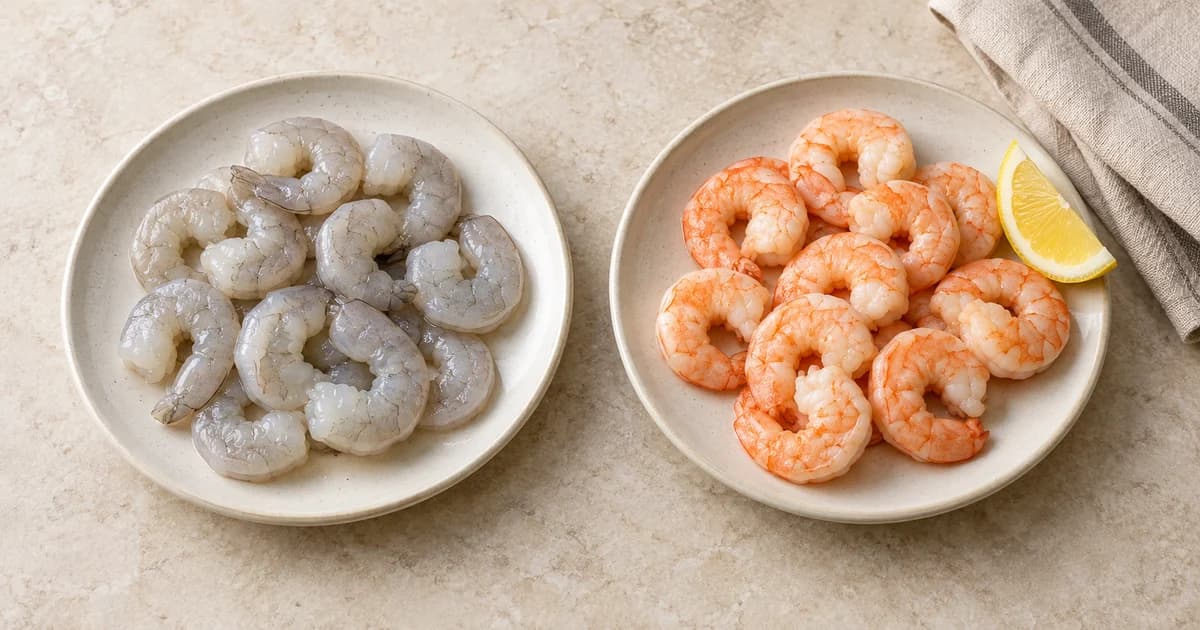
Build variety into your protein rotation. Our shrimp serving guide covers another seafood option; the high-protein grocery list includes other foods to choose from.
Log your actual tuna meal
Before saving the meal, check product, drained portion, and additions. Those three details are more useful than memorizing a single calorie number for all tuna.
With CalorieCue, you can start a meal log from a photo and review the estimate before saving. Check the tuna's preparation and amount, then adjust for dressing, oil, and sides. A photo cannot reliably establish the packing liquid or how much mayonnaise is mixed in; use the label and what you know about the meal.
Download CalorieCueFrequently asked questions
How many calories and how much protein are in a can of tuna?
Check the specific can and serving count. In the StarKist 5 oz label examples above, drained chunk light tuna has 90 calories and 20 g protein in water, or 160 calories and 20 g protein in oil. Each label describes a 113 g drained serving. Other products differ.
How much protein is in 100 g of canned tuna?
The USDA reference entries used here contain 19.44 g protein per 100 g of drained light tuna in water and 29.13 g per 100 g of drained light tuna in oil. These are separate reference foods; use your product's label when available.
Do you weigh canned tuna before or after draining?
Match the label or database entry. If it specifies drained tuna or drained solids, weigh the edible fish after draining. Do not enter the can's net weight as drained fish weight.
Does draining oil-packed tuna remove all the calories from oil?
No. Use a drained oil-packed entry when that matches your food. Do not switch to a water-packed entry after draining, or add the entire packing oil again when it was discarded.
Is a 5 oz can of tuna one serving?
It can be, but the label decides. The 5 oz cans compared here list one 113 g drained serving. Other packages may contain multiple servings or use a different drained weight.
How do you count calories in tuna salad?
Add the tuna and all other ingredients, including mayonnaise or dressing. Divide the finished mixture into equal servings, or calculate a portion from its share of the final weight. Log bread, crackers, and sides separately.