On this page
- What is a good protein-to-calorie ratio?
- Calculate the Ratio From Any Label
- Why Protein Per Calorie Beats Total Protein
- How to Read the Ratio
- The Highest Protein Per Calorie Foods (Ranked)
- Tier 1 — Elite (0.20+ g/cal)
- Tier 2 — Excellent (0.13–0.19 g/cal)
- Tier 3 — Decent (0.08–0.12 g/cal)
- Tier 4 — Protein Imposters (below 0.07 g/cal)
- The "High Protein" Marketing Trap
- How to Use This in Real Life
- A Note on Plant-Based Protein Efficiency
- Frequently Asked Questions
- What is a good protein-to-calorie ratio?
- How do you calculate protein per calorie?
- Is protein per calorie more important than total protein?
- Why isn't chicken breast the highest protein per calorie food?
- Are eggs a good protein source or not?
- Should I stop eating nuts and cheese?
- Does cooking change the protein per calorie ratio?
- What's the single best protein per calorie food?
- The Bottom Line
Protein per calorie is the efficiency metric for hitting your protein goal — here's what a good ratio looks like and the foods that rank highest.
Updated September 2026.
Here's the mistake almost every "high protein foods" list makes: it ranks foods by total grams of protein per serving. The serving total matters, but it does not show the calorie cost of that protein.
A food with 30 grams of protein and 500 calories is worse for a cut than a food with 25 grams of protein and 150 calories. The second one gives you nearly as much protein for less than a third of the calories — which leaves room in your daily budget for everything else you need to eat, and keeps you fuller per calorie spent.
The metric that actually matters is protein per calorie. How many grams of protein do you get for each calorie you spend? That ratio is the single most useful number for anyone cutting calories, doing a fat-loss phase, or just trying to stay lean without being hungry all the time.
This post ranks foods by that ratio using USDA FoodData Central data. It also exposes the foods that are marketed as "high protein" but quietly fail the ratio test — and there are more of them than you'd think.
What is a good protein-to-calorie ratio?
A good protein-to-calorie ratio is roughly 0.15 g of protein per calorie or higher — about 15 grams of protein per 100 calories. The leanest proteins (egg whites, white fish, shrimp, whey isolate) reach 0.20+ g/cal, where about 80% of their calories come from protein. A fast rule of thumb: a food is high protein per calorie when it gives you about 1 gram of protein per 10 calories (0.10 g/cal) or better. These are editorial comparison bands, not official nutrient-claim definitions or a measure of overall food quality.
Here are the highest-ranking foods. Protein per 100 calories is just the ratio expressed differently — shrimp's 0.24 g/cal is 24 grams of protein per 100 calories.
| Food | Protein per 100 cal | Protein (g) | Calories |
|---|---|---|---|
| Whey protein isolate (30g scoop) | 25g | 27g | 110 |
| Shrimp (cooked, 100g) | 24g | 24g | 99 |
| Light tuna, canned in water, drained (100g) | 22.6g | 19.44g | 86 |
| Cod / white fish (100g) | 22g | 23g | 105 |
| Egg whites (100g) | 21g | 11g | 52 |
| Tilapia (100g) | 20g | 26g | 128 |
| Turkey breast (cooked, 100g) | 20g | 29g | 147 |
| Chicken breast (cooked, 100g) | 19g | 31g | 165 |
| Nonfat Greek yogurt (100g) | 17g | 10g | 59 |
| Cottage cheese, 1% (100g) | 17g | 12g | 72 |
| Lean ground turkey, 93% (100g) | 16g | 27g | 170 |
| Top sirloin, lean (100g) | 15g | 27g | 183 |
For the full ranking — including the decent and "imposter" tiers that fail the test — see the complete breakdown below.
Calculate the Ratio From Any Label
Use protein and calories for the same serving. A serving with 25 g protein and 116 calories gives:
- 25 ÷ 116 = 0.216 g per calorie.
- 0.216 × 100 = 21.6 g protein per 100 calories.
- Using the general 4 kcal/g factor, about 25 × 4 ÷ 116 × 100 = 86% of its energy is from protein.
The third figure is an energy percentage, not the same unit as grams per calorie. Label rounding and preparation affect the result. See calories per gram for the energy calculation.
Protein-Per-Calorie Calculator
Enter any food's protein and calories to see how protein-dense it really is — and how it ranks.
Excellent. This is a lean, protein-dense food — exactly what you want anchoring a meal.
How it ranks against common foods
Grams of protein per 100 calories — higher is more protein-dense.
A "good" protein-to-calorie ratio means more of a food's calories come from protein. As a rule of thumb, aim for foods where protein makes up at least a third of the calories (≈9 g per 100 cal or more). Protein has 4 calories per gram. Reference values are approximate and vary by cut, brand, and preparation.
Why Protein Per Calorie Beats Total Protein
Let me make the case concretely, because this reframes how you should think about food.
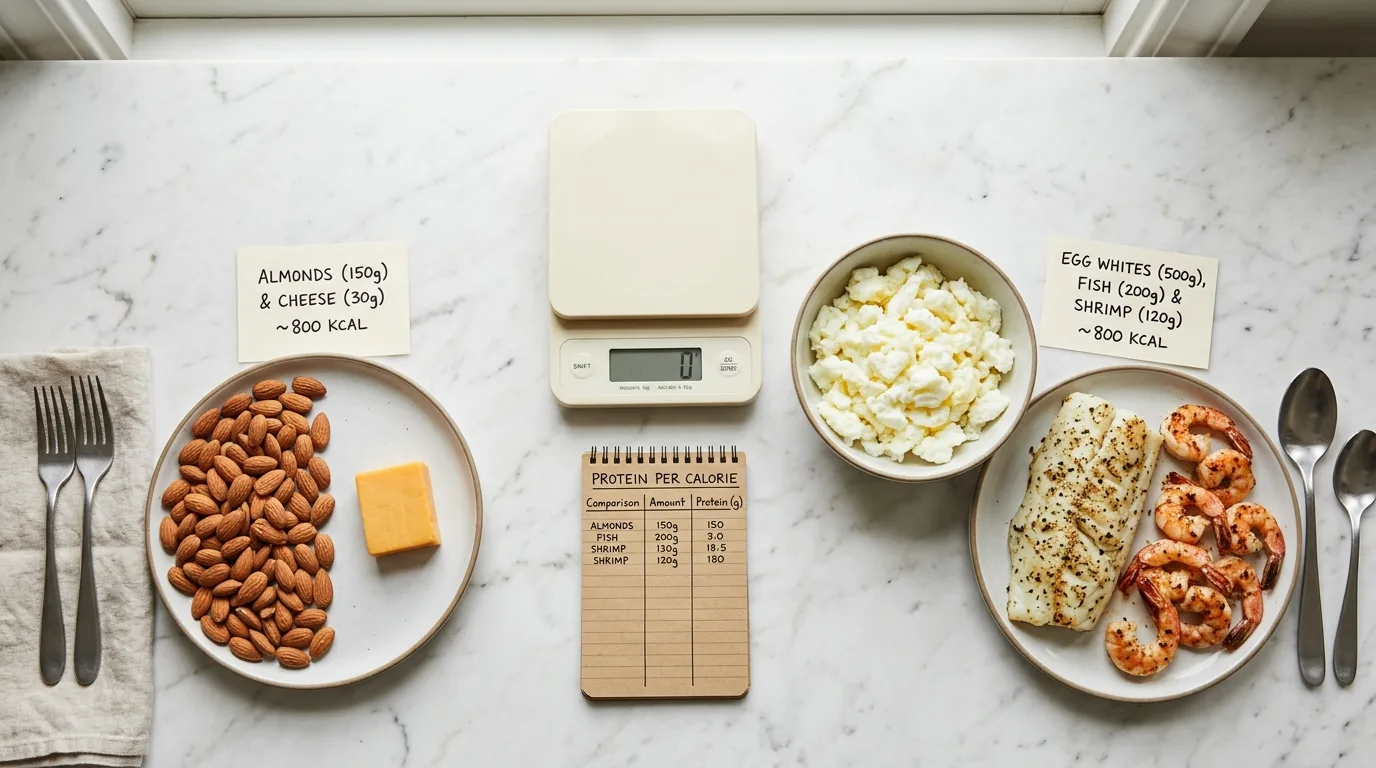
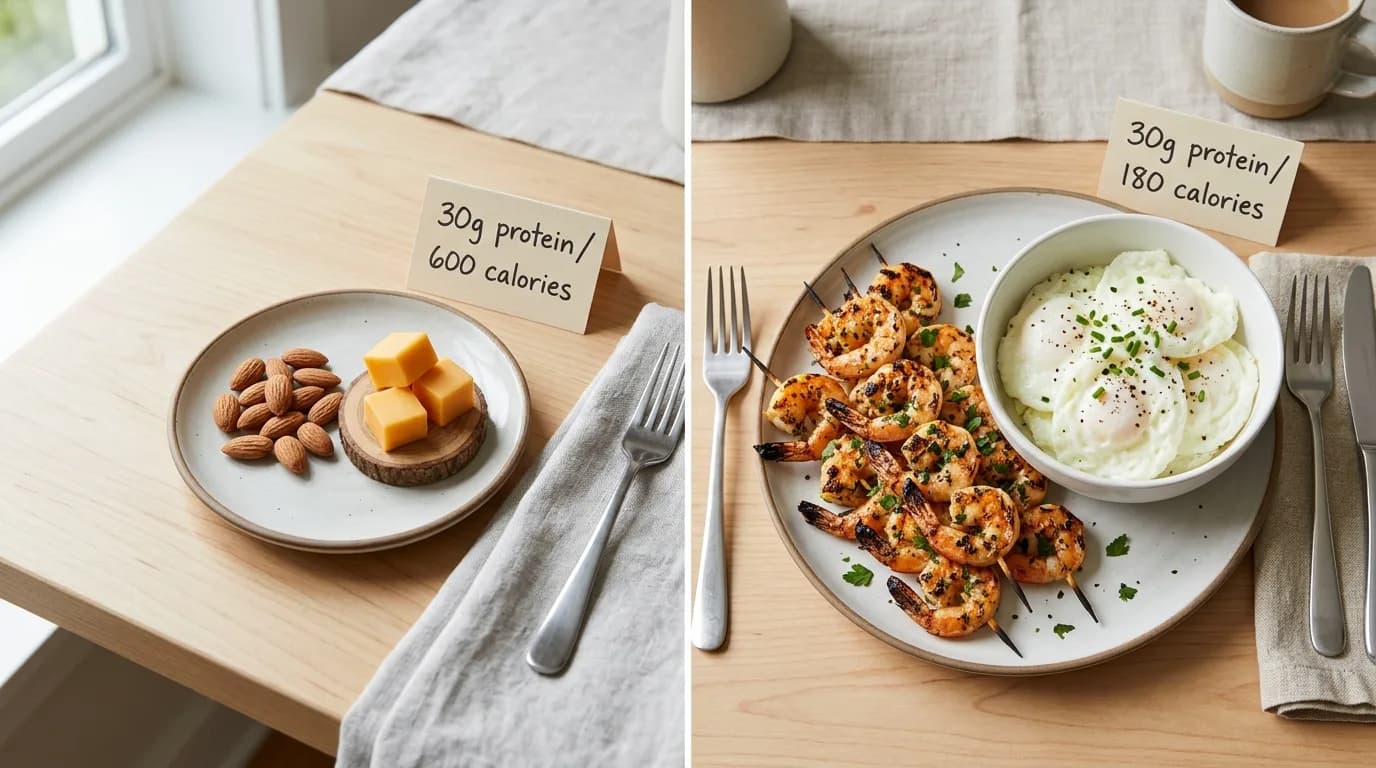
Imagine you have a 1,600-calorie daily target (if you don't know yours, run the numbers with a TDEE calculator) and you want to hit 130 grams of protein. You have two ways to get 30 grams of protein into a meal:
Option A: A handful of almonds and some cheese. Roughly 30 grams of protein. But also roughly 600 calories, most of it fat. You've spent 37% of your day's calories and you're not even full — nuts and cheese are calorie-dense but not especially filling.
Option B: A large portion of grilled shrimp and a side of egg whites. Roughly 30 grams of protein for about 180 calories. You've spent 11% of your day's budget, you have 420 calories left over compared to Option A, and you're more satisfied because the higher water and protein content of these foods fills you up.
Same protein. Wildly different calorie cost. Option B is what protein-per-calorie thinking gets you — more protein, more food volume, more fullness, fewer calories.
When you're not in a deficit, this matters less. You have calories to spare, so a few inefficient protein choices don't hurt. But the moment you're cutting calories, every inefficient gram of protein costs you — either in calories you can't afford or in hunger you can't sustain. For more on this tradeoff, see the full list of foods high in protein and low in calories.
How to Read the Ratio
Protein per calorie is simple to calculate: grams of protein divided by total calories.
Pure protein provides 4 calories per gram, but protein-rich foods also contain water and may include fat or carbohydrates. That is why 25 grams of chicken is not the same as 25 grams of pure protein.
- 0.20+ g/cal: Elite. Almost pure protein. (Egg whites, white fish, protein isolates.)
- 0.13–0.19 g/cal: Excellent. The workhorses of a cut. (Chicken breast, Greek yogurt, cottage cheese, lean turkey.)
- 0.08–0.12 g/cal: Decent. Useful but watch portions. (Whole eggs, tofu, lean beef.)
- 0.04–0.07 g/cal: Poor. These are not protein foods, whatever the label says. (Nuts, cheese, nut butters.)
- Below 0.04 g/cal: Trace. Don't count these toward your protein target. (Most grains, vegetables, fruit.)
A quick mental shortcut: if more than half a food's calories come from fat or carbs, its protein-per-calorie ratio is probably mediocre at best. Protein-dense foods are, almost by definition, low in fat and carbs.
The Highest Protein Per Calorie Foods (Ranked)
All values from USDA FoodData Central, per 100 grams unless noted. Ranked by protein-to-calorie ratio.
Tier 1 — Elite (0.20+ g/cal)
| Food | Protein | Calories | Protein per calorie |
|---|---|---|---|
| Egg whites | 11g | 52 | 0.21 g/cal |
| Cod (baked) | 23g | 105 | 0.22 g/cal |
| Shrimp (cooked) | 24g | 99 | 0.24 g/cal |
| Light tuna (canned in water, drained) | 19.44g | 86 | 0.226 g/cal |
| Tilapia | 26g | 128 | 0.20 g/cal |
| Whey protein isolate | 27g (per 30g scoop) | 110 | 0.25 g/cal |
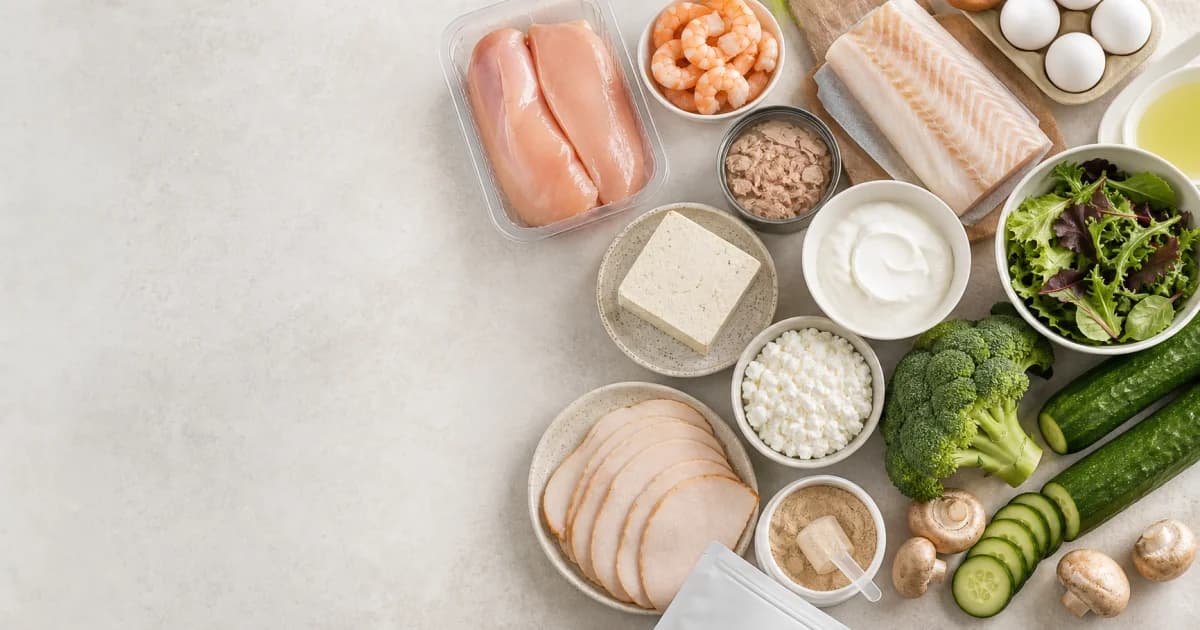
These are the foods to lean on hardest during an aggressive cut. White fish and shrimp are the standouts because they're complete meals, not supplements. Egg whites are nearly pure protein but boring on their own — best mixed into meals.
Tier 2 — Excellent (0.13–0.19 g/cal)
| Food | Protein | Calories | Protein per calorie |
|---|---|---|---|
| Chicken breast (cooked) | 31g | 165 | 0.19 g/cal |
| Turkey breast (cooked) | 29g | 147 | 0.20 g/cal |
| Nonfat Greek yogurt | 10g | 59 | 0.17 g/cal |
| Low-fat (1%) cottage cheese | 12g | 72 | 0.17 g/cal |
| Cottage cheese (2%) | 12.5g | 97 | 0.13 g/cal |
| Lean (93%) ground turkey | 27g | 170 | 0.16 g/cal |
| Top sirloin (lean) | 27g | 183 | 0.15 g/cal |
This is where most of your everyday protein should come from. These foods are the workhorses — affordable, versatile, filling, and efficient. Chicken breast lands here (not in the elite tier), which surprises people who assume it's the king of protein. It's very good. It's not the best per calorie.
Tier 3 — Decent (0.08–0.12 g/cal)
| Food | Protein | Calories | Protein per calorie |
|---|---|---|---|
| Whole eggs, hard-boiled | 13g | 155 | 0.08 g/cal |
| Firm tofu | 15g | 129 | 0.12 g/cal |
| Lean (90%) ground beef | 26g | 217 | 0.12 g/cal |
| Edamame | 11g | 121 | 0.09 g/cal |
| Salmon | 25g | 208 | 0.12 g/cal |
| Lentils (cooked) | 9g | 116 | 0.08 g/cal |
These foods are genuinely good for you — salmon's omega-3s, tofu's plant protein, lentils' fiber. But the ratio is dragged down by fat (salmon, beef) or carbs (lentils, edamame). Eat them for their other benefits, not as your primary protein-per-calorie play. Note that whole eggs land here, not in the elite tier — the yolk's fat drags the ratio down dramatically compared to egg whites. (Whole eggs are still great food. Just don't count on them for ratio efficiency.)
Tier 4 — Protein Imposters (below 0.07 g/cal)
| Food | Protein | Calories | Protein per calorie |
|---|---|---|---|
| Cheddar cheese | 25g | 403 | 0.06 g/cal |
| Almonds | 21g | 579 | 0.04 g/cal |
| Peanut butter | 25g | 588 | 0.04 g/cal |
| Whole milk | 3.2g | 61 | 0.05 g/cal |
| Bacon | 37g | 541 | 0.07 g/cal |
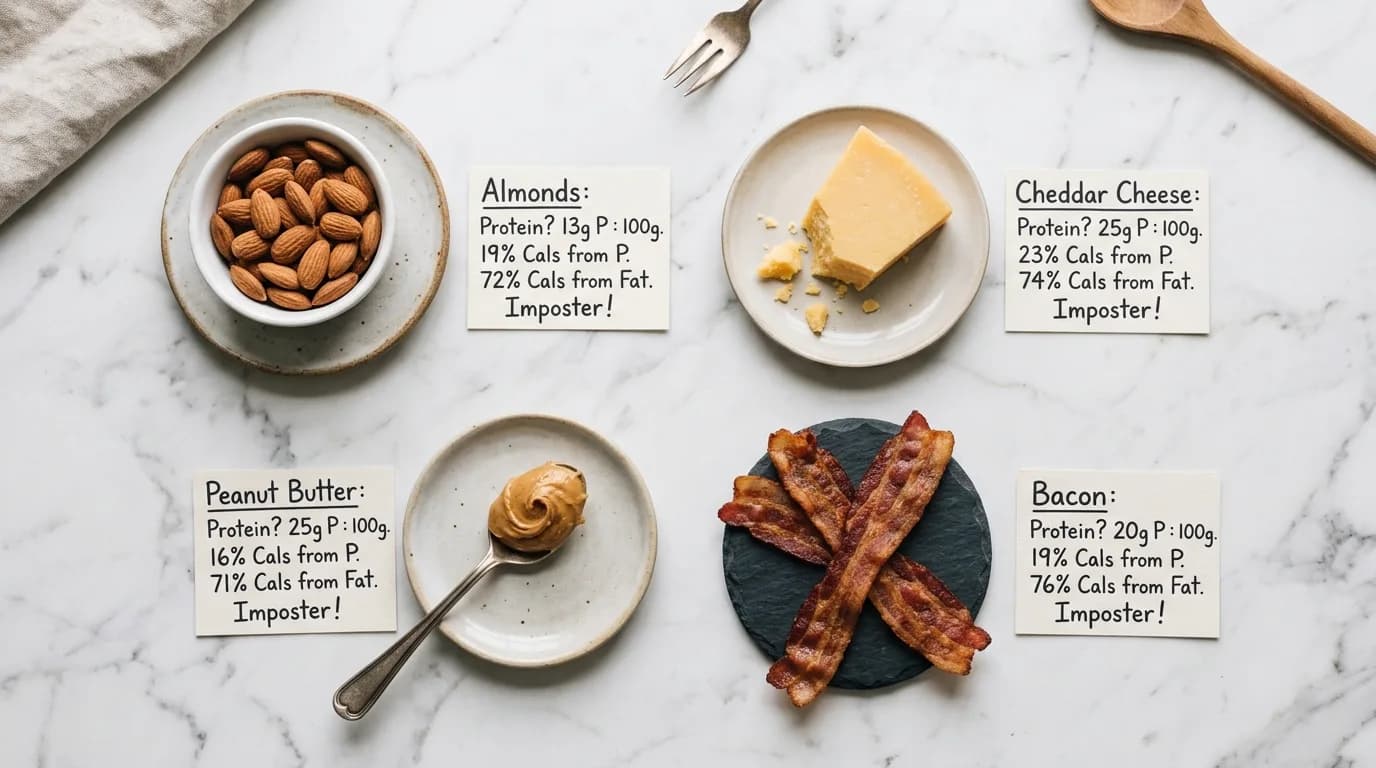
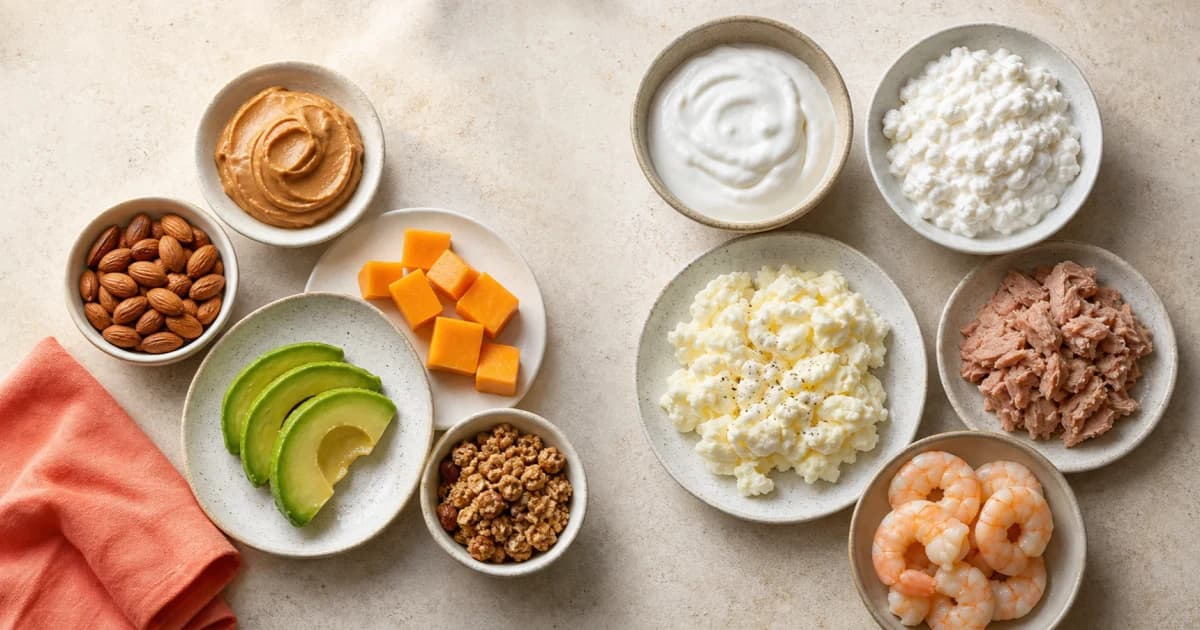
Here's where the marketing falls apart. Almonds get labeled "high protein" because 100 grams contains 21 grams of protein. But 100 grams of almonds is 579 calories — almost all of it fat. The ratio is 0.04 g/cal, five times worse than chicken breast.
Almonds contribute protein as well as fat and other nutrients. Count their protein toward your daily total; use the ratio to compare portions when calories are limited.
The same goes for cheese (a fat food with protein), peanut butter (a fat food with protein), and bacon (a fat-and-sodium food with protein). All fine in moderation. None are efficient protein sources.
If you want to turn that ratio into a specific food decision, use the interactive high-calorie, low-protein foods guide to compare the same calories or the same protein and test a practical swap.
The "High Protein" Marketing Trap
The reason this matters: food marketing exploits the gap between total protein and protein per calorie constantly.
A label can scream "12 GRAMS OF PROTEIN!" on a product that's 300 calories — a 0.04 ratio, which is terrible. But the number 12 sounds substantial, and most people don't do the division. Protein bars, protein granola, protein cookies, and "protein-enriched" snacks frequently fall into this trap. The protein is real, but it comes packaged with so much fat and sugar that the ratio is no better than candy.
A useful rule when shopping: divide the protein grams by the calories. If the result is below 0.10, the product is not an efficient protein source, no matter what the front of the package claims. If it's above 0.15, it's genuinely protein-dense.
This is also why whole-food protein beats most "protein-marketed" processed foods. A can of tuna (0.22 ratio) destroys almost any protein bar (typically 0.08–0.12) on efficiency. The tuna is also cheaper. For more on choosing protein sources by what actually matters, see our guide on the best sources of protein. Harvard Health's guide to high-protein foods makes a similar point about protein quality and weight management.
How to Use This in Real Life
You don't need to memorize a table. You need a few principles.
During an aggressive cut: Lean on Tier 1 and Tier 2 foods. White fish, shrimp, egg whites, chicken breast, Greek yogurt, cottage cheese. These let you hit high protein targets within a tight calorie budget.
During a moderate deficit or maintenance: Tiers 1–3 all work. You have more calorie room, so salmon, tofu, whole eggs, and lean beef become viable without wrecking your budget.
For your fats: Get them from Tier 4 foods deliberately — nuts, cheese, nut butters, olive oil. Just don't pretend they're contributing meaningfully to your protein target. They're your fat sources, eaten for satiety and nutrition, not protein efficiency.
When shopping for packaged foods: Do the division. Protein grams ÷ calories. Above 0.15 is genuinely protein-dense. Below 0.10 is less protein-dense, not automatically a poor food choice. Build your cart around the efficient end — our high-protein low-calorie grocery list is a ready-made version of exactly that.
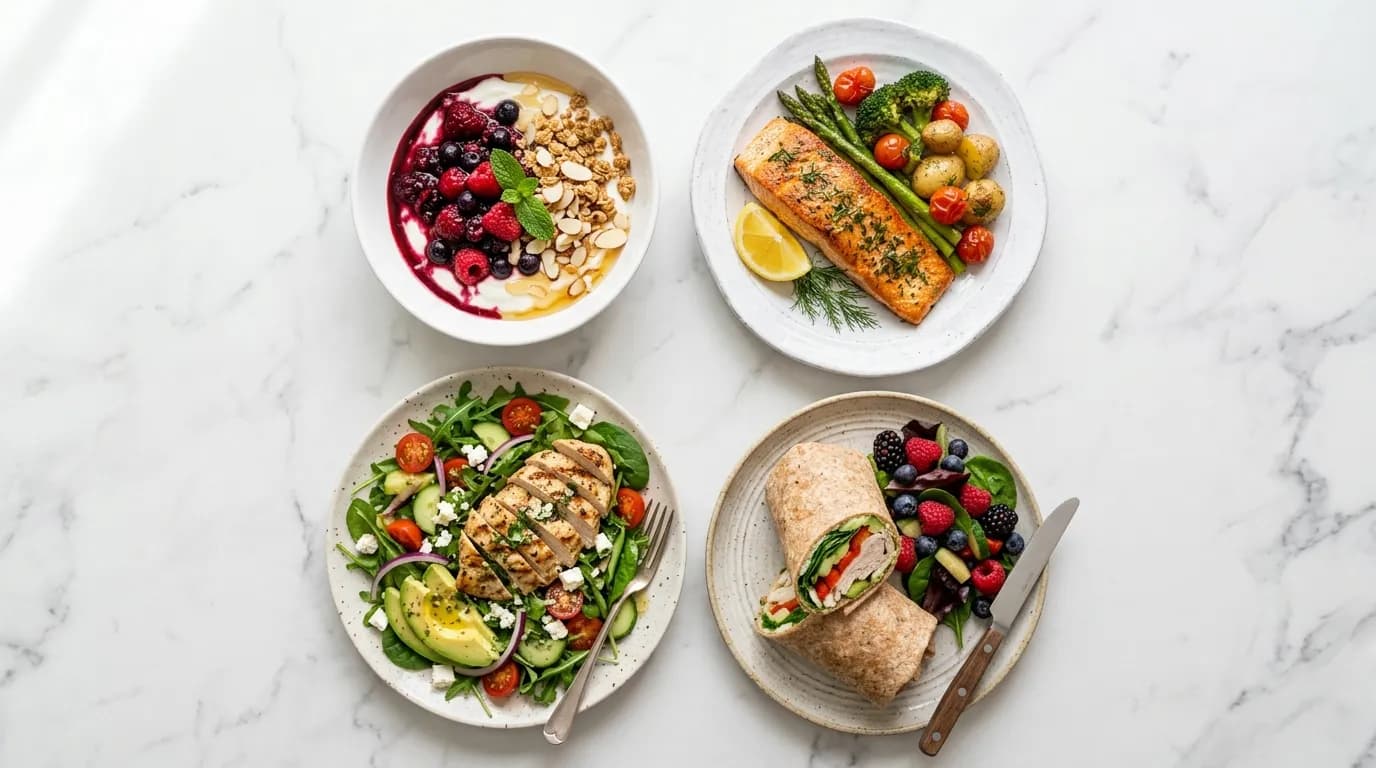
The practical upshot: build your protein around Tier 1 and 2 whole foods, use Tier 3 for variety and other nutrients, and count protein from Tier 4 as well, while allowing for its higher calorie cost. If you're consistently falling short of your target, our guide on how to eat more protein covers the easiest ways to close the gap, and if weighing food is the friction, here's how to track protein without weighing. For specific meals built on these principles, see high protein meals under 500 calories.
A Note on Plant-Based Protein Efficiency
Plant proteins face a structural challenge with the ratio. Most come packaged with significant carbs (legumes, grains) or fat (nuts, seeds), which lowers their protein-per-calorie efficiency compared to lean animal proteins.
The most efficient plant proteins:
- Tofu (firm): 0.12 g/cal — the best whole-food plant option
- Tempeh: ~0.11 g/cal — denser, more flavorful
- Edamame: 0.09 g/cal — good snack-format protein
- Seitan: ~0.16 g/cal — the highest plant ratio, wheat-based
- Pea/soy protein isolate: 0.18–0.20 g/cal — supplements that rival whey
Plant-based eaters can absolutely hit protein targets efficiently — they just need to lean on tofu, tempeh, seitan, and isolates rather than nuts, beans, and grains (which are better thought of as fat or carb sources that happen to contain some protein). For a full breakdown of plant options, see our best sources of protein guide.
Frequently Asked Questions
What is a good protein-to-calorie ratio?
A good ratio is about 0.15 g of protein per calorie or higher — roughly 15 g of protein per 100 calories. The leanest proteins (egg whites, white fish, shrimp, whey isolate) hit 0.20+ g/cal, where about 80% of the calories come from protein. A quick rule of thumb: a food is high protein per calorie when it gives you about 1 g of protein per 10 calories (0.10 g/cal) or better.
How do you calculate protein per calorie?
Divide the grams of protein by the total calories. For a per-100-calorie figure, multiply by 100: protein (g) ÷ calories × 100. Example: a can of tuna with 25 g of protein and 116 calories is 25 ÷ 116 = 0.22 g/cal, or about 22 g of protein per 100 calories. Above 0.15 g/cal is genuinely protein-dense; a lower ratio can still contribute useful protein and other nutrients.
Is protein per calorie more important than total protein?
Both matter. Your daily total tells you how much protein you eat; the ratio helps compare the calories that come with it. Use the ratio to choose portions and alternatives, not to ignore protein from lower-ratio foods. (New to tracking protein alongside the rest of your intake? Start with how to count macros, and see calorie counting vs macro counting to decide which approach fits your goal.)
Why isn't chicken breast the highest protein per calorie food?
It's excellent (0.19 g/cal) but not elite. White fish, shrimp, and egg whites beat it because they have even less fat per gram of protein. Chicken breast's small amount of fat is enough to keep it just out of the top tier. It's still one of the best practical choices — versatile, affordable, filling.
Are eggs a good protein source or not?
Whole eggs are good food but only a decent protein-per-calorie source (0.08 g/cal) because the yolk is high in fat. Egg whites alone are elite (0.21 g/cal). If you want maximum protein efficiency, use more whites and fewer yolks. If you want the nutrients in the yolk (choline, vitamins, healthy fats), eat whole eggs and accept the lower ratio.
For actual portions, see our egg calories and protein guide, including an interactive whole-egg versus egg-white comparison and the effect of cooking oil.
Should I stop eating nuts and cheese?
No. They're nutritious foods with healthy fats and other benefits. Count their protein toward your daily total, while recognizing that they also contribute substantial calories from fat. Eat them deliberately as fat sources, in portion-controlled amounts, and get your protein from efficient sources.
Does cooking change the protein per calorie ratio?
Slightly. Cooking removes water, concentrating both protein and calories per gram. The ratio stays roughly similar, but be consistent about whether you're using raw or cooked values when you track. For more on this, see our guide on how to count calories accurately.
What's the single best protein per calorie food?
Among whole foods, shrimp and white fish (cod, tilapia) top the list at roughly 0.22–0.24 g/cal. Egg whites are close behind and more affordable. Among supplements, whey or soy isolate hits 0.20–0.25 g/cal. If you had to pick one cheap, accessible everyday option: canned tuna in water.
The Bottom Line
Total protein per serving and protein per calorie answer different questions: how much protein you eat, and how efficiently a food supplies it within your calorie budget. Use both when planning meals.
The elite foods — egg whites, white fish, shrimp, tuna — give you 0.20+ grams of protein per calorie, which means maximum protein for minimum calorie cost. The workhorses — chicken breast, Greek yogurt, cottage cheese, lean turkey — sit in the 0.13–0.19 range and should form the backbone of most people's protein intake. And the imposters — almonds, cheese, peanut butter — are fine foods that are simply not efficient protein sources, no matter what the label implies.
The practical move: build your protein around Tier 1 and 2 foods, use the division trick (protein ÷ calories) when shopping, and count all dietary protein while choosing portions that fit your needs. You'll hit your protein goals on fewer calories and stay fuller doing it.
If you're tracking your food and want to see protein-per-calorie efficiency in real time, CalorieCue shows both protein and calories for every meal when you snap a photo — so you can see at a glance whether a meal is protein-dense or just calorie-dense. The ratio becomes obvious once you can see both numbers side by side. 7-day free trial, then paid.
The math is simple once you know which number to look at. Rank by the ratio, not the label.
Download CalorieCue