On this page
- How to Use This Grocery List
- The Best High-Protein Low-Calorie Foods to Buy First
- Meat and Poultry Aisle
- Seafood Aisle
- Eggs and Dairy Aisle
- Plant-Based Protein Aisle
- Frozen and Convenience Aisle
- Pantry and Snack Aisle
- Produce Aisle: Low-Calorie Volume Foods
- The 3-Part High-Protein Grocery Cart Formula
- 1. Buy Meal Proteins
- 2. Buy Snack Proteins
- 3. Buy Volume Foods
- 3 Sample Grocery Lists
- Budget High-Protein Cart
- No-Cook High-Protein Cart
- Plant-Based High-Protein Cart
- Protein Imposters to Watch
- How to Turn This Grocery List Into Meals
- Track the Groceries After They Become Meals
- Frequently Asked Questions
- What should I buy for a high-protein low-calorie diet?
- What grocery store foods have the most protein for the fewest calories?
- Are plant-based proteins good for a low-calorie diet?
- What are the best high-protein snacks to buy?
- Should I buy fresh or frozen protein foods?
- How much protein should each meal have for weight loss?
- The Bottom Line
The easiest way to eat more protein is not meal prep. It is not a perfect macro split. It is not buying a tub of protein powder and hoping it fixes your diet.
The easiest way is building a better grocery cart.
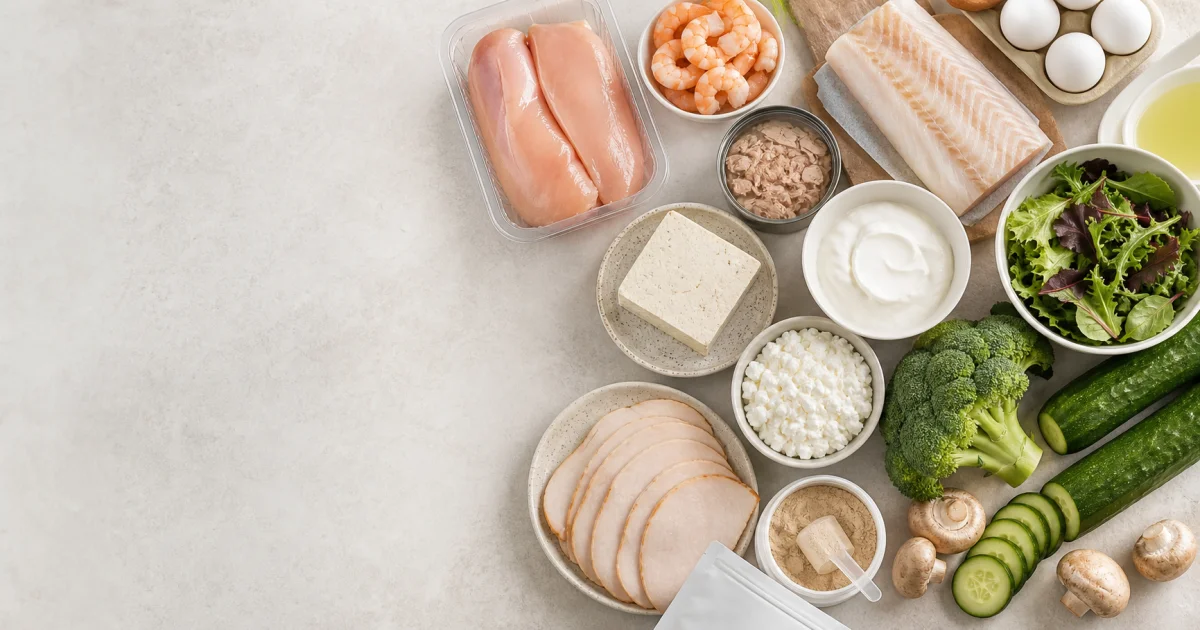
If your kitchen is full of bagels, cereal, chips, full-fat sauces, and "healthy" snacks with 4 grams of protein, hitting 100+ grams of protein while staying in a calorie deficit is going to feel miserable. If your kitchen is full of chicken breast, shrimp, tuna, Greek yogurt, cottage cheese, egg whites, tofu, edamame, and high-volume vegetables, the same target gets much easier.
This grocery list gives you 75 practical high-protein, low-calorie foods organized by aisle. Not just the theoretical "best" foods, but the ones you can actually find, buy, cook, snack on, and repeat.
For the ranked nutrition-science version, see our list of foods high in protein and low in calories. This post is the shopping version: what to put in your cart this week.
How to Use This Grocery List
The goal is not to buy all 75 foods. That would be expensive, chaotic, and unnecessary.
Use this list like a grocery-store decision guide:
- Pick 2 to 3 lean proteins for meals.
- Pick 1 to 2 easy proteins for snacks.
- Pick 1 backup protein that requires almost no cooking.
- Add high-volume vegetables so the meals feel bigger.
- Skip the "protein imposters" that are mostly fat, sugar, or marketing.
Most people trying to lose weight should aim for 25 to 40 grams of protein per meal. The International Society of Sports Nutrition recommends 1.4 to 2.0 grams of protein per kilogram of body weight per day for most exercising individuals, with higher intakes sometimes useful during calorie restriction. You do not need to obsess over that number, but you do need enough protein to stay full and protect muscle.
All nutrition numbers below are approximate. They are based on common serving sizes and values from USDA FoodData Central or typical label values. Brands, cooking methods, sauces, oil, and portion size can change the final calories quickly.
Use the table as a starting point, not a legal contract. A plain chicken breast and a chicken breast cooked in two tablespoons of oil are not the same meal. Scan labels, weigh portions when accuracy matters, and use CalorieCue when you want a quick estimate from the plate in front of you.
The Best High-Protein Low-Calorie Foods to Buy First
If you only want the short version, start here.
These are the best first-cart picks because they are high in protein, relatively low in calories, easy to use, and flexible across meals.
| Food | Serving | Calories | Protein | Why it belongs in your cart |
|---|---|---|---|---|
| Chicken breast | 100g cooked | 165 | 31g | Best all-purpose meal protein |
| Shrimp | 4 oz cooked | 120 | 24g | Very lean and cooks fast |
| Tuna in water | 1 can | 120 | 26g | No-cook backup protein |
| Cod or tilapia | 4 oz cooked | 100-110 | 23g | Almost pure lean protein |
| Egg whites | 1/2 cup | 60 | 13g | Easy breakfast protein boost |
| Nonfat Greek yogurt | 170g | 100 | 17g | Snack, breakfast, or sauce base |
| Low-fat cottage cheese | 1/2 cup | 90 | 13g | High-protein snack with no cooking |
| Turkey breast slices | 3 oz | 90 | 18g | Easy wraps, roll-ups, and salads |
| Extra-firm tofu | 100g | 80 | 10g | Flexible plant-based protein |
| Seitan | 100g | 140 | 22g | Highest-protein plant option |
| Edamame | 1/2 cup | 94 | 9g | Snack or bowl add-in |
| Whey or pea protein | 1 scoop | 120 | 24g | Best emergency protein |
Build most weeks around 5 to 7 foods from that list, then rotate the rest for variety.
Meat and Poultry Aisle
This is the highest-leverage aisle for most people because lean meat gives you a lot of protein without many carbs or added calories. The main rule: choose lean cuts, then keep the cooking method lean too.
| Food | Serving | Calories | Protein | Best use |
|---|---|---|---|---|
| Chicken breast | 100g cooked | 165 | 31g | Bowls, salads, wraps, meal prep |
| Chicken tenderloins | 100g cooked | 150 | 30g | Faster-cooking chicken option |
| Turkey breast slices | 3 oz | 90 | 18g | Roll-ups, sandwiches, snack plates |
| 99% lean ground turkey | 4 oz cooked | 120 | 26g | Tacos, bowls, chili |
| 93% lean ground turkey | 4 oz cooked | 170 | 22g | Burgers, pasta sauce, taco meat |
| Pork tenderloin | 4 oz cooked | 170 | 26g | Sheet-pan dinners |
| Lean sirloin steak | 4 oz cooked | 220 | 31g | Steak salad or rice bowl |
| 96% lean ground beef | 4 oz cooked | 150 | 24g | Burgers, bowls, lettuce wraps |
| Bison | 4 oz cooked | 150 | 24g | Lean burger or taco swap |
| Venison | 4 oz cooked | 160 | 30g | Very lean red meat option |
| Rotisserie chicken breast, skin removed | 3 oz | 140 | 25g | No-cook dinner shortcut |
| Lean turkey burger patty | 1 patty | 160 | 25g | Quick freezer-friendly meal |
| Canadian bacon | 3 slices | 60 | 12g | Breakfast protein add-on |
Best picks: chicken breast, turkey breast slices, 99% lean ground turkey, pork tenderloin, and rotisserie chicken breast with the skin removed.
Watch-outs: sausages, breaded chicken, regular bacon, salami, pepperoni, and most deli meats labeled "honey" or "maple" can add more fat, sugar, or sodium than you expect. They can still fit, but they are not the cleanest protein-per-calorie buys.
Seafood Aisle
Seafood is the hidden cheat code for high-protein, low-calorie eating. White fish, shrimp, crab, and tuna are extremely protein-dense. Fatty fish like salmon and sardines have more calories, but they bring omega-3 fats and are still worth keeping in rotation.
| Food | Serving | Calories | Protein | Best use |
|---|---|---|---|---|
| Shrimp | 4 oz cooked | 120 | 24g | Stir-fries, tacos, salads |
| Tuna canned in water | 1 can | 120 | 26g | Tuna bowls, lettuce cups, sandwiches |
| Tuna pouch | 1 pouch | 70 | 17g | Desk snack or travel backup |
| Cod | 4 oz cooked | 100 | 23g | Fish tacos, sheet-pan dinners |
| Tilapia | 4 oz cooked | 110 | 23g | Budget-friendly white fish |
| Scallops | 4 oz cooked | 110 | 20g | Fast skillet protein |
| Crab meat | 3 oz | 80 | 17g | Salads, omelets, wraps |
| Salmon | 4 oz cooked | 230 | 25g | Dinner protein with healthy fats |
| Canned salmon | 3 oz | 120 | 17g | Salmon patties, salads |
| Sardines in water | 1 can | 150 | 18g | Snack plate or toast topping |
Best picks: shrimp, tuna in water, cod, tilapia, and crab meat.
Use salmon and sardines differently. They are not the lowest-calorie protein options, but they are nutrient-dense and satisfying. If you are building a lower-calorie dinner, pair them with vegetables instead of adding a large portion of rice, oil, nuts, or creamy sauce.
MedlinePlus's summary of the 2025-2030 Dietary Guidelines lists meat, poultry, seafood, beans and peas, eggs, soy products, nuts, nut butters, and seeds as protein foods, and recommends choosing lean options when possible. You can read the overview at MedlinePlus.gov.
Eggs and Dairy Aisle
This aisle is where high-protein eating becomes easy. Greek yogurt, cottage cheese, egg whites, and skyr can turn breakfast and snacks from protein-poor to protein-rich without much cooking.
| Food | Serving | Calories | Protein | Best use |
|---|---|---|---|---|
| Liquid egg whites | 1/2 cup | 60 | 13g | Omelets, scrambles, oatmeal add-in |
| Whole eggs | 2 large | 140 | 12g | Breakfast, salads, snack plates |
| Nonfat Greek yogurt | 170g | 100 | 17g | Breakfast, snack, sauce base |
| Low-fat Greek yogurt | 170g | 130 | 17g | Creamier snack option |
| Skyr | 150g | 110 | 17g | Thick yogurt-style breakfast |
| Low-fat cottage cheese | 1/2 cup | 90 | 13g | Snack, toast topping, bowl base |
| Fat-free cottage cheese | 1/2 cup | 80 | 13g | Lowest-calorie cottage cheese option |
| Low-fat string cheese | 1 stick | 80 | 7g | Portable snack |
| Part-skim mozzarella | 1 oz | 72 | 7g | Omelets, bowls, wraps |
| Low-fat ricotta | 1/2 cup | 170 | 14g | Toast, pasta, pancakes |
| Skim milk | 1 cup | 83 | 8g | Smoothies, oatmeal |
| Low-fat kefir | 1 cup | 110 | 10g | Smoothies or drinkable snack |
| Ultra-filtered skim milk | 1 cup | 80 | 13g | Higher-protein milk swap |
Best picks: egg whites, nonfat Greek yogurt, cottage cheese, skyr, and ultra-filtered skim milk.
The biggest breakfast upgrade is simple: replace a low-protein breakfast with Greek yogurt, cottage cheese, eggs, or egg whites. If you struggle to hit protein by dinner, the problem usually started at breakfast. Our guide on how to eat more protein breaks down that front-loading strategy in more detail.
Plant-Based Protein Aisle
Plant-based protein works for weight loss, but the math is different. Beans, lentils, and chickpeas are nutritious, filling, and high in fiber, but they also bring more carbs and calories than lean meat, fish, egg whites, or Greek yogurt.
That does not make them bad. It just means you need to choose your role for each food.
| Food | Serving | Calories | Protein | Best use |
|---|---|---|---|---|
| Extra-firm tofu | 100g | 80 | 10g | Stir-fries, bowls, scrambles |
| Tempeh | 100g | 190 | 20g | Sandwiches, bowls, air fryer |
| Seitan | 100g | 140 | 22g | Highest-protein plant meal base |
| Shelled edamame | 1/2 cup | 94 | 9g | Snacks, bowls, salads |
| Lentils | 1/2 cup cooked | 115 | 9g | Soups, bowls, salads |
| Black beans | 1/2 cup cooked | 114 | 8g | Bowls, tacos, chili |
| Chickpeas | 1/2 cup cooked | 135 | 7g | Salads, snacks, curries |
| Split peas | 1/2 cup cooked | 116 | 8g | Soup base |
| Lupini beans | 1/2 cup | 100 | 13g | High-protein snack |
| Soy crumbles | 1/2 cup | 80 | 12g | Taco meat or pasta sauce swap |
| High-protein veggie burger | 1 patty | 120 | 15g | Fast plant-based meal |
| Pea protein powder | 1 scoop | 120 | 24g | Smoothies, oatmeal |
Best picks: seitan, tofu, edamame, soy crumbles, lupini beans, and pea protein powder.
Beans and lentils are better thought of as "protein plus carb" foods. They are excellent for fullness and fiber, but if you need 35 grams of protein in one low-calorie meal, tofu, seitan, soy crumbles, or protein powder will usually get you there faster.
Frozen and Convenience Aisle
This aisle matters because consistency breaks when cooking becomes too hard. Frozen proteins are not "less healthy" by default. In many cases, they are the reason you can make a high-protein meal instead of ordering takeout.
| Food | Serving | Calories | Protein | Best use |
|---|---|---|---|---|
| Frozen shrimp | 4 oz cooked | 120 | 24g | 10-minute stir-fry |
| Frozen white fish fillets | 4 oz cooked | 100 | 23g | Sheet-pan dinner |
| Frozen grilled chicken strips | 3 oz | 110 | 20g | Salads, wraps, bowls |
| Frozen turkey meatballs | 4 meatballs | 180 | 20g | Pasta, bowls, snack plate |
| Frozen edamame | 1/2 cup | 94 | 9g | Snack or side |
| Egg white bites | 2 pieces | 170 | 12g | Fast breakfast |
| Cauliflower rice | 1 cup | 25 | 2g | Low-calorie bowl base |
| Steam-in-bag broccoli | 1 cup | 55 | 4g | High-volume side |
| High-protein frozen entree | 1 meal | 300-450 | 20-35g | Emergency meal |
Best picks: frozen shrimp, frozen white fish, frozen grilled chicken strips, frozen edamame, and steam-in-bag vegetables.
The rule with frozen meals: check the protein before the calories. A 320-calorie frozen meal with 11 grams of protein is not a real high-protein meal. Look for at least 20 grams of protein, and ideally 25 to 35 grams.
Pantry and Snack Aisle
These are your backup proteins. They are not always as filling as whole-food meals, but they save the day when you are busy, traveling, or short on cooked food.
| Food | Serving | Calories | Protein | Best use |
|---|---|---|---|---|
| Whey protein powder | 1 scoop | 120 | 24g | Fastest protein gap-filler |
| Ready-to-drink protein shake | 1 bottle | 150 | 30g | Travel or workday backup |
| Bone broth | 1 cup | 40 | 9g | Soup base or warm snack |
| Turkey jerky | 1 oz | 70 | 11g | Portable snack |
| Lean beef jerky | 1 oz | 80 | 10g | Portable snack |
| Canned chicken breast | 3 oz | 90 | 19g | No-cook salads or wraps |
| Protein bar | 1 bar | 180-220 | 15-20g | Emergency snack |
| Peanut butter powder | 2 tbsp | 60 | 6g | Yogurt, smoothies, oatmeal |
| Protein pasta | 2 oz dry | 190 | 10g | Higher-protein pasta night |
| Chickpea pasta | 2 oz dry | 190 | 11g | Pasta with extra fiber |
| Roasted edamame | 1/4 cup | 130 | 13g | Crunchy snack |
| Roasted chickpeas | 1/4 cup | 120 | 6g | Crunchy snack |
Best picks: whey or pea protein, ready-to-drink protein shakes, canned chicken, tuna packets, turkey jerky, roasted edamame, and peanut butter powder.
Be picky with protein bars. Some are basically candy bars with protein added. A decent rule: at least 15 grams of protein, under 220 calories, and not so much sugar alcohol that your stomach hates you later.
For more snack ideas, see our healthy snacks for weight loss guide.
Produce Aisle: Low-Calorie Volume Foods
These are not protein foods. That matters.
Spinach, broccoli, zucchini, mushrooms, cucumbers, and salad greens do not solve your protein target by themselves. What they do is make high-protein meals feel bigger, more colorful, and more satisfying without adding many calories.
| Food | Serving | Calories | Protein | Best use |
|---|---|---|---|---|
| Spinach | 3 cups raw | 20 | 2g | Omelets, salads, bowls |
| Romaine or mixed greens | 3 cups | 24 | 2g | Salad base |
| Broccoli | 1 cup cooked | 55 | 4g | Side dish or bowl filler |
| Zucchini | 1 medium | 33 | 2g | Stir-fries, noodles, sheet pans |
| Mushrooms | 1 cup | 15 | 2g | Omelets, tacos, bowls |
| Cucumber | 1 cup | 16 | 1g | Snack plates, salads |
Best picks: spinach, broccoli, zucchini, mushrooms, and romaine.
This is where volume eating becomes useful. A bowl with 150g chicken, half a cup of rice, and two cups of vegetables feels completely different from the same chicken and rice alone. The calories barely change, but the meal becomes much easier to stick with.
The 3-Part High-Protein Grocery Cart Formula
If you want a repeatable shopping system, use this.
1. Buy Meal Proteins
Pick 2 to 3:
- Chicken breast or tenderloins
- Shrimp or white fish
- 99% lean ground turkey
- Tofu, seitan, or soy crumbles
- Eggs or egg whites
These become your lunches and dinners.
2. Buy Snack Proteins
Pick 2:
- Greek yogurt
- Cottage cheese
- String cheese
- Turkey jerky
- Protein shake
- Roasted edamame
- Tuna pouch
These keep you from reaching for zero-protein snacks when you are hungry between meals.
3. Buy Volume Foods
Pick 3 to 5:
- Broccoli
- Spinach
- Romaine
- Zucchini
- Mushrooms
- Cucumbers
- Cauliflower rice
- Frozen stir-fry vegetables
These make the meals feel like meals.
Most people do not need more discipline. They need fewer bad defaults. If your easiest available foods are high in protein, your diet gets easier without a motivational speech.
3 Sample Grocery Lists
Use these as templates, then swap based on taste, budget, and schedule.
Budget High-Protein Cart
- Eggs
- Liquid egg whites
- Canned tuna in water
- 93% lean ground turkey
- Chicken breast family pack
- Low-fat cottage cheese
- Nonfat Greek yogurt tub
- Lentils
- Black beans
- Frozen broccoli
- Frozen spinach
- Rice or potatoes for meal carbs
Best for: someone who cooks most meals and wants the lowest cost per gram of protein.
No-Cook High-Protein Cart
- Rotisserie chicken breast
- Turkey breast slices
- Tuna pouches
- Canned chicken
- Greek yogurt cups
- Cottage cheese cups
- String cheese
- Ready-to-drink protein shakes
- Turkey jerky
- Bagged salad
- Cucumbers
- Steam-in-bag vegetables
Best for: busy weeks, office lunches, travel weeks, or anyone who quits when cooking gets complicated.
Plant-Based High-Protein Cart
- Extra-firm tofu
- Seitan
- Tempeh
- Soy crumbles
- Edamame
- Lupini beans
- Lentils
- Black beans
- Pea protein powder
- High-protein veggie burgers
- Chickpea pasta
- Frozen vegetables
Best for: vegetarians, vegans, or anyone trying to eat more plant-based meals without letting protein drop.
Protein Imposters to Watch
Some foods have a health halo because they contain protein, but they are not efficient protein sources when calories are limited.
That does not mean you can never eat them. It means you should not rely on them to hit your protein target.
| Food | Why it is tricky | Better use |
|---|---|---|
| Peanut butter | Mostly fat, not protein | Flavor add-on, not protein source |
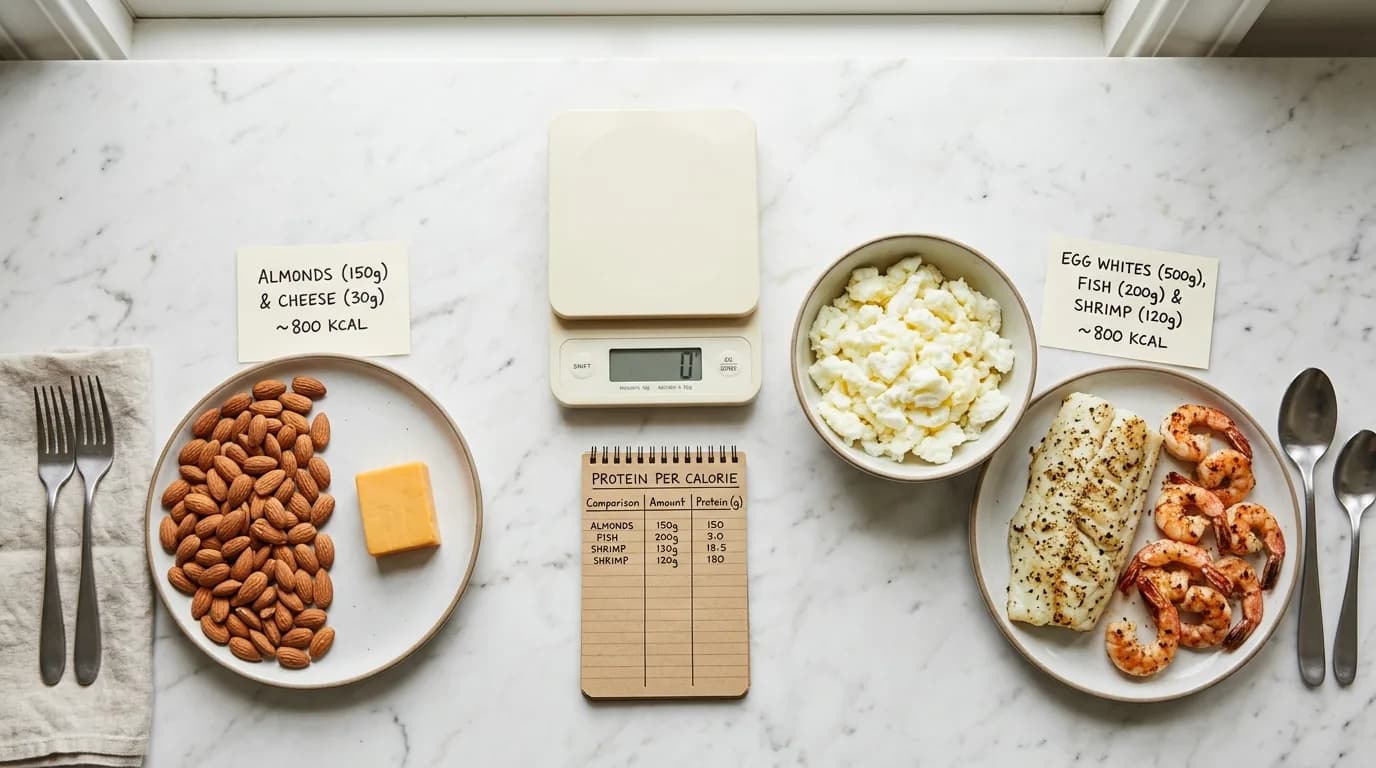
| Almonds and nuts | Healthy but calorie-dense | Measured topping or snack |
| Granola | Often high sugar and calories | Small topping on Greek yogurt |
| Hummus | Nutritious, but modest protein | Dip or flavor add-on |
| Regular cheese | Protein plus a lot of fat | Use small portions |
| Protein cookies | Often dessert with protein added | Treat, not daily staple |
| Smoothies from shops | Can hide 400-800 calories | Build your own or verify |
The mistake is not eating these foods. The mistake is counting them as your main protein.
Two tablespoons of peanut butter has about 7 grams of protein for roughly 190 calories. That is not a protein source. That is a fat source with some protein attached. Compare that with Greek yogurt, tuna, shrimp, egg whites, chicken breast, or seitan, and the difference is obvious.
How to Turn This Grocery List Into Meals
Use this basic plate formula:
- Protein base: 25 to 40 grams protein
- Volume base: 1 to 3 cups vegetables
- Carb if needed: rice, potato, tortilla, beans, fruit, or pasta
- Fat for flavor: measured oil, avocado, cheese, nuts, or dressing
Examples:
- Chicken breast + broccoli + rice + salsa
- Shrimp + cauliflower rice + stir-fry vegetables + soy sauce
- Greek yogurt + berries + peanut butter powder
- Turkey slices + string cheese + cucumber + fruit
- Tofu + zucchini + mushrooms + rice
- Tuna + romaine + chickpeas + Greek yogurt dressing
If your goal is weight loss, keep the protein high and measure the calorie-dense extras. Oil, dressing, cheese, nuts, avocado, and sauces are not bad, but they can erase a calorie deficit quickly.
For calorie targets, start with the TDEE calculator. For a step-by-step deficit setup, read how to calculate your calorie deficit.
Track the Groceries After They Become Meals
The grocery list gets you 80% of the way there. The last 20% is portion size.
Chicken breast is lean. Chicken breast cooked in oil, topped with cheese, and served over a large scoop of rice is still a higher-calorie meal. Greek yogurt is lean. Greek yogurt with granola, honey, peanut butter, and chocolate chips can turn into dessert quickly.
That is where tracking helps. You do not need to track forever, and you do not need to turn every meal into math. But while you are learning your portions, tracking gives you feedback.
CalorieCue makes that easier: snap a photo of your meal, get an estimated calorie and macro breakdown, and see whether your "high-protein meal" actually fits your target.
Download CalorieCueFrequently Asked Questions
What should I buy for a high-protein low-calorie diet?
Start with lean proteins like chicken breast, turkey breast, tuna, shrimp, cod, egg whites, Greek yogurt, cottage cheese, tofu, seitan, and edamame. Then add high-volume vegetables like broccoli, spinach, zucchini, mushrooms, and salad greens so your meals feel bigger without adding many calories.
What grocery store foods have the most protein for the fewest calories?
The highest protein-per-calorie grocery foods are usually shrimp, tuna in water, cod, tilapia, egg whites, nonfat Greek yogurt, chicken breast, turkey breast, seitan, and whey or pea protein powder. These foods give you roughly 15 to 25 grams of protein for every 100 calories.
Are plant-based proteins good for a low-calorie diet?
Yes, but you need to choose carefully. Tofu, seitan, edamame, soy crumbles, lupini beans, and pea protein powder are the easiest plant-based options for high protein with moderate calories. Beans and lentils are healthy, but they bring more carbs and calories along with the protein.
What are the best high-protein snacks to buy?
The easiest high-protein snacks are Greek yogurt cups, cottage cheese, string cheese, turkey jerky, lean beef jerky, tuna packets, ready-to-drink protein shakes, protein bars, roasted edamame, and peanut butter powder. Choose snacks with at least 10 grams of protein and under 200 calories when possible.
Should I buy fresh or frozen protein foods?
Both work. Fresh proteins are great if you cook often, while frozen shrimp, frozen fish fillets, frozen grilled chicken strips, frozen edamame, and turkey meatballs are easier for busy weeks. Frozen options can make high-protein meals more consistent because they do not spoil as quickly.
How much protein should each meal have for weight loss?
A practical target is 25 to 40 grams of protein per meal, spread across 3 to 4 meals per day. That gives most people enough protein to stay full, protect muscle during a calorie deficit, and avoid trying to cram all their protein into dinner.
The Bottom Line
High-protein eating gets easier when the grocery cart is built for it.
You do not need 75 new foods. You need a repeatable short list: a few lean meal proteins, a few easy snack proteins, a backup protein for busy days, and enough low-calorie volume foods to make the meals satisfying.
Start with chicken breast, shrimp, tuna, Greek yogurt, cottage cheese, egg whites, tofu or seitan, edamame, and frozen vegetables. Then rotate based on taste. The best grocery list is not the most perfect one. It is the one you can keep buying, cooking, and eating.
If you want the deeper ranking by protein density, read High Protein Low Calorie Foods: 40 Foods Ranked by Protein Density. If you want complete meal ideas, use High Protein Meals Under 500 Calories.
And when you want to know whether your actual plate matches the plan, snap it with CalorieCue.
Download CalorieCue