On this page
- Proteins
- Carbs & Grains
- Fats & Oils (Where the Sneaky Calories Hide)
- Vegetables (Eat Freely)
- Common "Cheat" Foods
- Healthy Snacks (Smart Choices)
- Skip the Googling — Just Scan It
- Frequently Asked Questions
- How accurate are calorie counts on food labels?
- Do I need to weigh food to count calories accurately?
- What are the most calorie-dense common foods?
- What are the lowest calorie foods I can eat freely?
- Does cooking method change the calorie count?
- Know Your Food, Know Your Calories
How many calories are in an avocado? It depends — are you eating a quarter or the whole thing?
Most people have no idea how many calories are in the foods they eat every day. That knowledge gap is the number one reason people under- or overestimate their intake, according to research from the National Institutes of Health. You can't manage what you can't measure.
This cheat sheet covers 50+ common foods organized by category with standard portion sizes and calorie counts — all sourced from the USDA FoodData Central database. Bookmark this page for quick reference, or skip the Googling entirely and scan your meals with CalorieCue.
Proteins
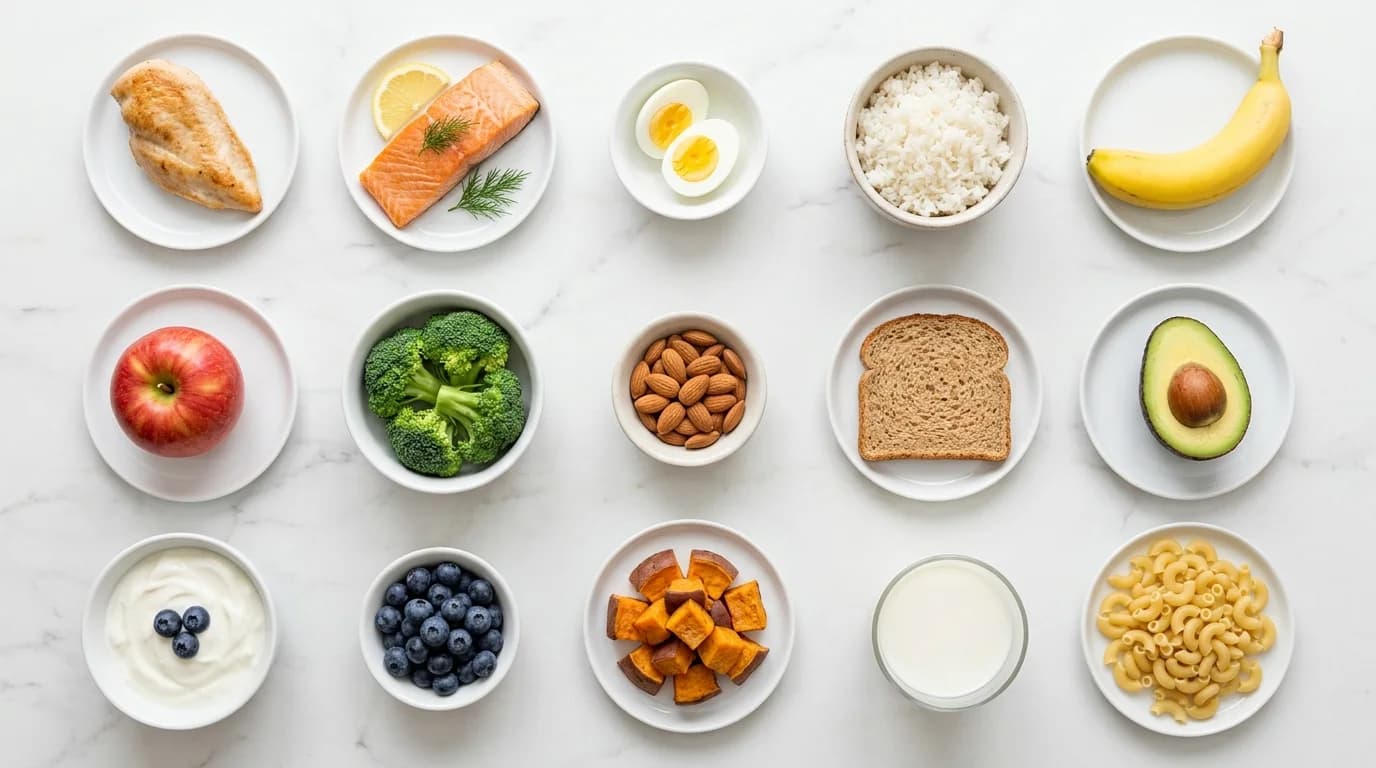
Protein is the most important macronutrient for body composition — it preserves muscle, keeps you full, and has the highest thermic effect of food (your body burns 20–30% of protein calories just digesting it). Here's what common protein sources look like calorie-wise:
| Food | Portion | Calories | Protein |
|---|---|---|---|
| Chicken breast (grilled) | 100g / 3.5 oz | 165 | 31g |
| Salmon (baked) | 100g / 3.5 oz | 208 | 20g |
| Eggs (whole) | 1 large | 70 | 6g |
| Egg whites | 1 large | 17 | 4g |
| Ground beef (90% lean) | 100g | 176 | 20g |
| Shrimp | 100g | 85 | 20g |
| Tofu (firm) | 100g | 76 | 8g |
| Greek yogurt (nonfat) | 1 cup | 100 | 18g |
| Cottage cheese (low-fat) | 1 cup | 160 | 28g |
| Turkey breast (deli) | 100g | 104 | 18g |
Surprise fact: A chicken thigh with skin has nearly double the calories of a skinless breast — 229 cal vs. 165 cal per 100g. The skin alone adds roughly 40–50 calories per piece. If you're tracking closely, this swap makes a real difference.
Not sure how much protein you actually need? Our macros breakdown guide walks you through calculating your ideal protein, carb, and fat targets.
Carbs & Grains
Carbs aren't the enemy — but portion sizes matter more here than almost any other category. The difference between a measured portion and a "normal" serving can be hundreds of calories.
| Food | Portion | Calories | Notes |
|---|---|---|---|
| White rice (cooked) | 1 cup | 206 | Most people eat 1.5–2 cups |
| Brown rice (cooked) | 1 cup | 216 | Minimal calorie difference vs. white |
| Pasta (cooked) | 1 cup | 220 | A restaurant portion is usually 2–3 cups |
| Bread (whole wheat) | 1 slice | 80 | |
| Oats (cooked) | 1 cup | 150 | Very filling for the calories |
| Quinoa (cooked) | 1 cup | 222 | |
| Sweet potato | 1 medium | 103 | |
| Banana | 1 medium | 105 | |
| Apple | 1 medium | 95 |
Surprise fact: A single restaurant pasta serving is usually 3 cups — that's 660 calories before any sauce or oil. Research from the Journal of the American Dietetic Association found that restaurant portions are on average 2–3 times larger than standard serving sizes. Knowing the per-cup number is only useful if you know how many cups you're actually eating. For help with real-world portions, check our portion control guide.
The calorie difference between white and brown rice? Just 10 calories per cup. Choose whichever you enjoy more and will eat consistently — the best carb source is the one that fits your daily calorie target.
Fats & Oils (Where the Sneaky Calories Hide)
Fat has 9 calories per gram — more than double the 4 calories per gram in protein and carbs. That's not a reason to avoid fats (they're essential for hormone production and nutrient absorption), but it does mean small amounts carry big calorie loads. This is where most people's tracking goes off the rails.
| Food | Portion | Calories | Notes |
|---|---|---|---|
| Olive oil | 1 tbsp | 119 | Most people pour 2–3 tbsp without measuring |
| Butter | 1 tbsp | 102 | |
| Avocado | 1 whole | 240 | Half = 120 cal |
| Peanut butter | 2 tbsp | 190 | A true 2 tbsp is smaller than you think |
| Almonds | 1 oz (23 nuts) | 164 | |
| Cheese (cheddar) | 1 oz | 113 | |
| Coconut oil | 1 tbsp | 121 | |
| Mayo | 1 tbsp | 94 | |
| Ranch dressing | 2 tbsp | 140 |
The #1 hidden calorie source in home cooking: That "drizzle" of olive oil is probably 2–3 tablespoons = 240–360 calories. A study from the International Journal of Obesity found that cooking oils and added fats were among the most frequently untracked calorie sources. This alone can eliminate an entire calorie deficit without you realizing it.
This is exactly why tracking your meals — even roughly — makes such a difference. You don't need to be perfect, but you do need to be aware.
Vegetables (Eat Freely)
If there's one category where you barely need to think about calories, it's non-starchy vegetables. These are your best friend for volume eating — filling your plate and your stomach without filling your calorie budget.
| Food | Portion | Calories |
|---|---|---|
| Spinach (raw) | 1 cup | 7 |
| Broccoli | 1 cup | 55 |
| Cucumber | 1 cup | 16 |
| Bell peppers | 1 cup | 30 |
| Mushrooms | 1 cup | 15 |
| Zucchini | 1 cup | 20 |
| Cauliflower | 1 cup | 27 |
| Tomatoes | 1 medium | 22 |
| Carrots | 1 medium | 25 |
Perspective check: You'd need to eat 30 cups of spinach to match the calories in 2 tablespoons of peanut butter. This is why volume eating works — you can eat massive quantities of vegetables and barely dent your calorie budget. For more low-calorie, high-volume food ideas, check out our volume eating guide.
Vegetables are also the foundation of the best foods for weight loss — not because of any magic fat-burning property, but simply because they let you eat more food on fewer calories.
Common "Cheat" Foods
No food is off-limits — but these are the ones that add up fastest if you're not paying attention. The "Reality Check" column shows what most people actually eat.
| Food | Portion | Calories | Reality Check |
|---|---|---|---|
| Pizza (cheese) | 1 slice | 285 | Most people eat 2–3 slices = 570–855 cal |
| Burger (fast food) | 1 regular | 350–550 | Add fries + drink = 1,000–1,400 cal total |
| French fries | Medium serving | 365 | |
| Ice cream | 1/2 cup | 137 | A typical bowl is 1–1.5 cups = 274–411 cal |
| Beer | 12 oz | 150 | |
| Wine | 5 oz glass | 125 | |
| Margarita | 8 oz | 275 | |
| Latte (whole milk) | 16 oz | 190 | Black coffee = 5 cal |
| Starbucks Frappuccino | 16 oz | 380 |
Liquid calories are invisible. Two margaritas with dinner add 550 calories — that's an entire meal's worth of calories in liquid form. Research from the American Journal of Clinical Nutrition shows that liquid calories don't trigger the same satiety signals as solid food, so your body barely registers them. This is also why that daily Frappuccino habit (380 cal) adds up to over 2,600 extra calories per week.
These foods aren't "bad" — they're just calorically dense. The key is knowing what you're actually consuming, not cutting them out entirely. For more strategies on navigating restaurant meals and social eating, read our guide on how to track calories eating out.
Healthy Snacks (Smart Choices)
Snacking can either support your goals or quietly sabotage them — it depends entirely on what you pick. Here are some options that keep calories reasonable while actually keeping you satisfied:
| Food | Portion | Calories | Why It Works |
|---|---|---|---|
| Apple + 1 tbsp peanut butter | 1 medium + 1 tbsp | 190 | Fiber + fat = stays filling |
| Hard-boiled eggs | 2 large | 140 | High protein, portable |
| Baby carrots + hummus | 1 cup + 2 tbsp | 95 | Volume + flavor |
| String cheese | 1 stick | 80 | Convenient protein |
| Beef jerky | 1 oz | 80 | 10g protein per serving |
| Mixed berries | 1 cup | 70 | High volume, natural sweetness |
| Air-popped popcorn | 3 cups | 93 | Surprisingly low cal for the volume |
For a deeper dive into smart snacking, check out our healthy snacks for weight loss guide.
Skip the Googling — Just Scan It
This cheat sheet covers 50+ foods — but there are thousands more. You can't memorize them all, and Googling "calories in [food]" every time you eat is tedious and imprecise (Google results often don't match your actual portion size).
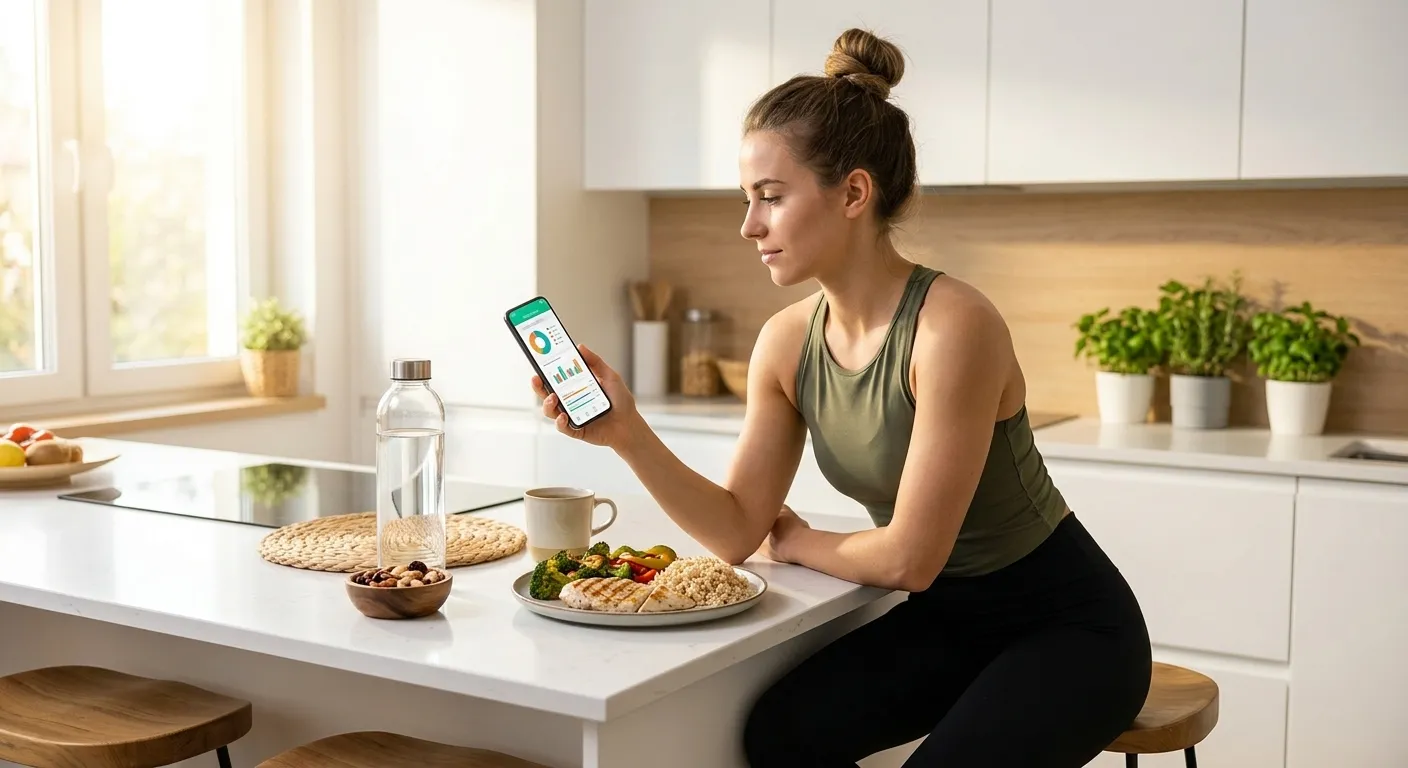
That's the problem CalorieCue solves. Instead of typing and searching, you just point your camera at your plate and tap. CalorieCue's AI identifies your food and gives you a full calorie and macro breakdown in seconds.
It works for:
- Home cooking — including mixed dishes and recipes
- Restaurant meals — where portions vary wildly
- Packaged foods — scan the barcode or the food itself
- Everything in between — snacks, drinks, meal prep containers
The workflow is simple: open the app, point your camera at your meal, tap, and see your full breakdown. No food scales, no manual searching, no guesswork. Learn more about how the technology works in our guide on how AI food scanning works.
Stop Googling calories. Start scanning. Download CalorieCue free on the App Store.
Frequently Asked Questions
How accurate are calorie counts on food labels?
FDA regulations allow food labels to be off by up to 20% from the stated calorie count. A study published in the Journal of the American Dietetic Association found that frozen meals and restaurant foods averaged 8% more calories than labeled, with some items exceeding labels by over 50%. For packaged foods, labels are generally reliable enough. For restaurant meals and prepared foods, actual calories can vary significantly based on portion size, preparation method, and who's cooking — which is why scanning your actual meal with CalorieCue gives you a more realistic estimate than relying on a menu.
Do I need to weigh food to count calories accurately?
It helps — especially for calorie-dense foods like nuts, oils, cheese, and peanut butter, where small volume differences create big calorie differences. But many people get excellent results using standard portion references: a deck of cards for 3 oz of meat, a tennis ball for a medium fruit, a thumb tip for 1 tablespoon of fat, and a fist for 1 cup of carbs. AI-powered food scanning with CalorieCue can also estimate portions from photos, which splits the difference between kitchen-scale precision and total guesswork.
What are the most calorie-dense common foods?
Oils and fats top the list at around 120 calories per tablespoon — including olive oil, coconut oil, and butter. Nuts and nut butters follow at 160–190 calories per ounce or 2-tablespoon serving. Cheese ranges from 100–120 calories per ounce. Among prepared foods, fast food burgers (350–550 cal), pizza (285 cal/slice), and blended coffee drinks (380 cal for a 16 oz Frappuccino) are the most calorie-dense items people eat regularly. The common thread: fat contains 9 calories per gram versus 4 for protein and carbs, so high-fat foods are always the most calorie-dense.
What are the lowest calorie foods I can eat freely?
Most non-starchy vegetables are extremely low in calories. Spinach (7 cal/cup), cucumber (16 cal/cup), mushrooms (15 cal/cup), celery (6 cal/stalk), and zucchini (20 cal/cup) are among the lowest. You'd need to eat 30 cups of spinach to match the calories in 2 tablespoons of peanut butter. These high-volume, low-calorie foods are the foundation of volume eating — a strategy that helps you feel full on fewer total calories.
Does cooking method change the calorie count?
Yes — primarily through added fats. Grilling, baking, or steaming a chicken breast keeps it at roughly 165 calories per 100g. Pan-frying the same breast in 1 tablespoon of oil adds about 120 calories. Deep-frying adds even more as the food absorbs oil during cooking. A comparative study published in Food Science & Nutrition found that deep-fried foods had significantly higher fat content and energy value than oven-baked equivalents. The base food itself doesn't change dramatically, but the cooking medium — oil, butter, sauces — is where calories quietly multiply.
Know Your Food, Know Your Calories
Knowing what's in your food is the foundation of every weight management strategy — whether you're trying to lose weight, gain muscle, or simply eat more intentionally. This cheat sheet is a start, but scanning your actual meals with AI is faster and more practical for daily life.
The patterns are simple: proteins are your best friend for satiety and body composition, vegetables give you volume for almost zero calorie cost, and fats and oils are where calories hide in plain sight. Once you internalize these numbers, you'll make better food choices instinctively — no Googling required.
Ready to take the guesswork out of calorie tracking? Download CalorieCue and scan your next meal.
Download CalorieCue