On this page
- Why Calorie Tracking on GLP-1s Is Different
- The Real Goal: Protein First, Calories Second
- Calculating Your GLP-1 Calorie Target
- Your Protein Target on a GLP-1
- Best High-Protein Foods for GLP-1 Users
- Sample GLP-1 Meal Plans
- 1,200 Calorie Day (Small Appetite)
- 1,500 Calorie Day (Medium Appetite)
- 1,800 Calorie Day (Recovering Appetite)
- The Biggest Mistake GLP-1 Users Make
- Practical Tips for Hitting Protein on a Small Appetite
- How AI Photo Tracking Helps GLP-1 Users Specifically
- What to Do If You Plateau on GLP-1
- Life After GLP-1
- The Bottom Line
- Frequently Asked Questions
- How many calories should I eat on Ozempic?
- How much protein do I need on Wegovy?
- Will I lose muscle on Mounjaro?
- Do I need to track calories if I'm on a GLP-1?
- What's the best calorie tracker for Ozempic users?
- Can I drink alcohol on a GLP-1?
Calorie Tracking on Ozempic: How to Hit Protein Goals Without Losing Muscle (2026 Guide)
If you're on Ozempic, Wegovy, Mounjaro, or Zepbound, you already know the appetite suppression is real. What most people don't realize until it's too late: the way you track calories on a GLP-1 is fundamentally different from traditional dieting.
This isn't about willpower or hitting a daily number. It's about hitting your protein target on a shrunken appetite — because if you don't, you'll lose muscle along with fat, slow your metabolism, and end up worse off when you eventually stop the medication.
GLP-1 medications have gone from niche to mainstream fast. A KFF Health Tracking Poll on GLP-1 adoption found that roughly 1 in 8 U.S. adults report having taken one of these drugs — which means a huge number of people are walking into the same nutritional trap without anyone warning them about it.
In this guide, you'll learn:
- Why GLP-1 users need to track differently than dieters
- The exact protein target for your bodyweight (and why most people undershoot it)
- How to calculate your calorie deficit while on Ozempic, Wegovy, or Mounjaro
- A sample meal plan for 1,200, 1,500, and 1,800 calorie days
- The biggest mistake we see GLP-1 users make with tracking
- How to use AI photo tracking to make this effortless
Let's get into it.
Why Calorie Tracking on GLP-1s Is Different
A traditional diet asks you to eat less than your body burns. A GLP-1 medication does the eating-less part for you — automatically. Most users report eating around 21% fewer calories without trying.
That the drugs work is no longer in question. A WHO-commissioned Cochrane systematic review of semaglutide — the drug in Ozempic and Wegovy — the kind of evidence health authorities lean on — found it produces clinically meaningful, sustained weight loss across trials, and the FDA has continued to expand approvals — including Wegovy's approval to reduce the risk of serious heart problems in adults with obesity. The medication side of the equation is settled science.
This sounds like a dream. And it kind of is. But it creates a hidden problem: when you eat less of everything, you also eat less protein. Most people on Ozempic naturally drift to a protein intake well below what their body needs to preserve muscle.
The science here is well established. When you lose weight in a calorie deficit, your body pulls energy from two places: fat stores and muscle tissue. The ratio depends on three things:
- How much protein you eat
- Whether you do resistance training
- How fast you're losing weight
GLP-1 users tend to lose weight fast, eat little protein, and often skip resistance training because they feel low energy on the medication. That's a perfect recipe for losing significant muscle along with fat.
The fix isn't complicated. But it requires precision — and that's where calorie tracking comes in.
The Real Goal: Protein First, Calories Second
For most dieters, calorie count is the headline metric. For GLP-1 users, protein is the headline metric and calories are the constraint.
Here's the order of priority for tracking on a GLP-1:
- Hit your protein target (non-negotiable)
- Stay within your calorie ceiling (usually easy — appetite does the work)
- Get enough fiber (helps with constipation, a common GLP-1 side effect)
- Hydrate (also helps with side effects)
Most apps and articles get this order wrong. They obsess over calories — which on a GLP-1 isn't the problem.
Calculating Your GLP-1 Calorie Target
Even though GLP-1s reduce your appetite, you still want a target so you don't undereat dangerously. Severe undereating accelerates muscle loss and slows your metabolism long-term.
Step 1: Calculate your maintenance calories (TDEE). Use a TDEE calculator to find the calories your body burns daily based on age, weight, height, and activity level. If you want the underlying math and worked examples, our calorie deficit formula walks through the Mifflin–St Jeor equation step by step.
Step 2: Apply a modest deficit. On a GLP-1, you don't need an aggressive deficit. The medication does the suppression. A 300–500 calorie daily deficit below maintenance is plenty. For a fuller breakdown of where your number should land, see how many calories should I eat per day.
Step 3: Set a floor — never go below it.
| Bodyweight | Minimum Daily Calories |
|---|---|
| 130–150 lb | 1,200 cal |
| 151–180 lb | 1,400 cal |
| 181–220 lb | 1,600 cal |
| 221+ lb | 1,800 cal |
Below these floors, muscle loss accelerates sharply. If your appetite drops you below these numbers naturally, you need to be strategic about protein density — every bite has to count.
Your Protein Target on a GLP-1
The general weight-loss recommendation is 0.7–1.0g of protein per pound of bodyweight. On a GLP-1, aim for the upper end — 0.8–1.0g per lb. That's consistent with the higher protein intakes endorsed by the American College of Sports Medicine's protein guidelines for people who are losing weight while trying to hold onto lean mass.
Quick math:
| Your Bodyweight | Daily Protein Target |
|---|---|
| 130 lb | 104–130g |
| 150 lb | 120–150g |
| 180 lb | 144–180g |
| 220 lb | 176–220g |
That's a lot of protein. On a normal appetite, it's manageable. On a GLP-1, hitting 130g of protein when you can barely finish a meal is the central challenge.
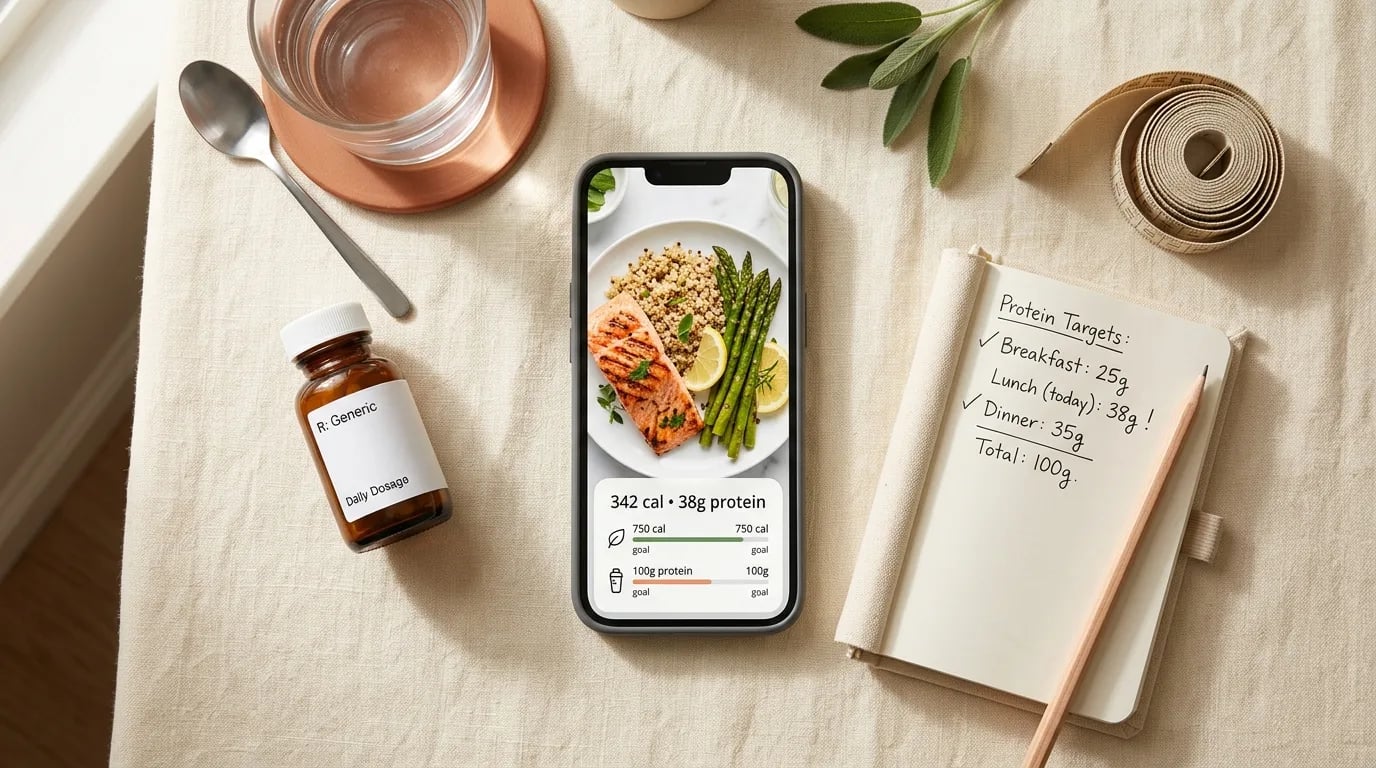
This is where photo tracking changes everything — because you can verify in 3 seconds whether the small plate in front of you actually contains the protein you need, or whether you need to add a Greek yogurt.
Best High-Protein Foods for GLP-1 Users
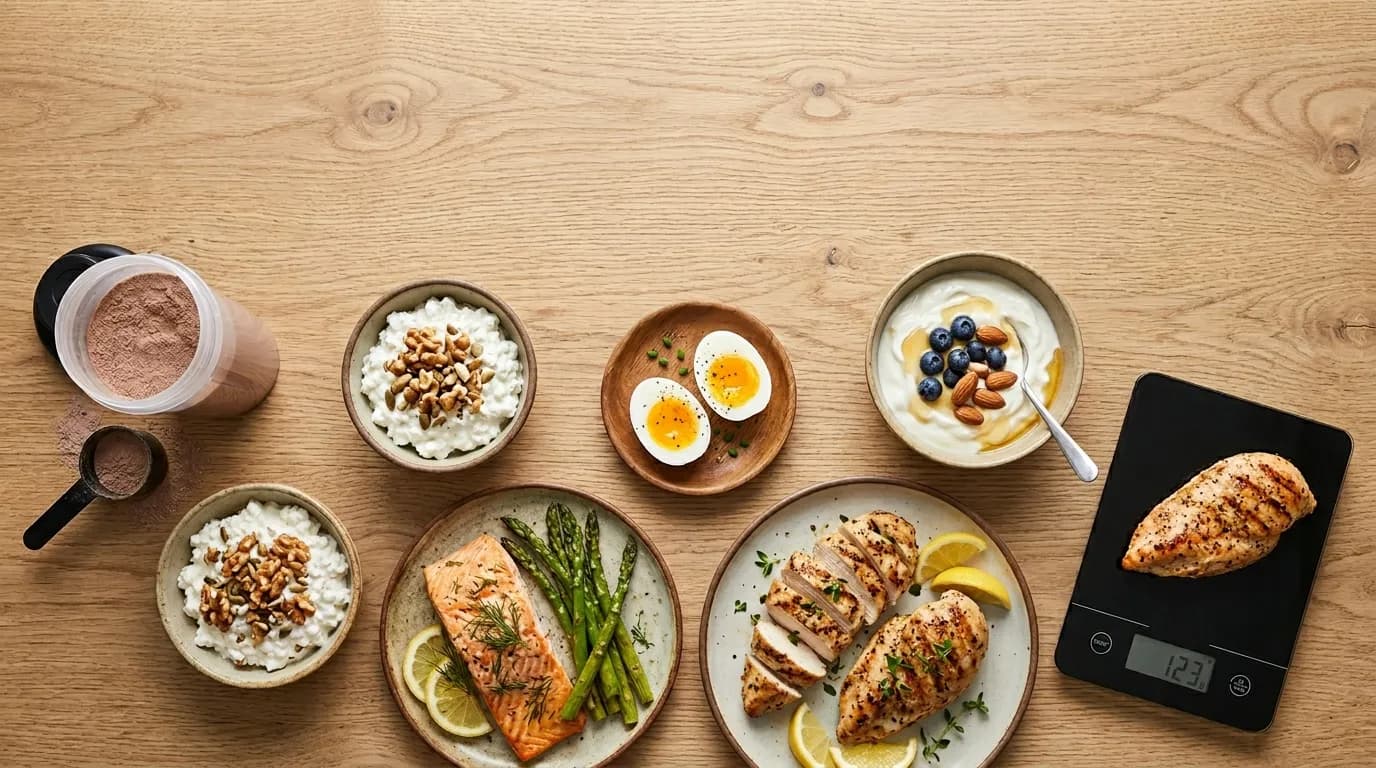
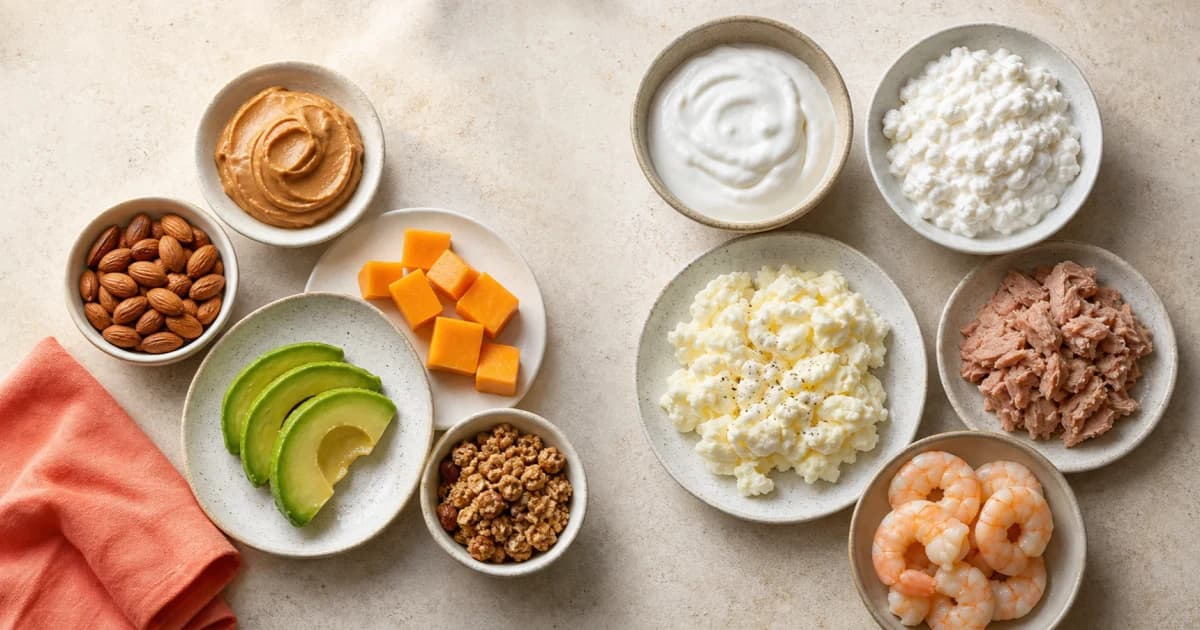
Not all protein sources work equally well when your appetite is small. You want high protein density — the most grams of protein per ounce of food.
Top picks:
- Greek yogurt (plain, 0% fat): 17g protein per 6oz cup — easy to eat when nothing else sounds good
- Cottage cheese: 14g protein per ½ cup — fits in tiny meals
- Egg whites: 11g protein per ½ cup — easy to add to anything
- Chicken breast (grilled): 26g per 3oz — gold standard
- Tuna (canned in water): 22g per 3oz — no cooking required
- Whey protein shake: 25g per scoop — when you can't eat solid food
- Tofu (firm): 10g per 3oz — for plant-based users
- Cod, tilapia, or other white fish: 20g per 3oz — gentle on the stomach
For more options, see our list of high protein low calorie foods and the best sources of protein for weight loss.
Sample GLP-1 Meal Plans
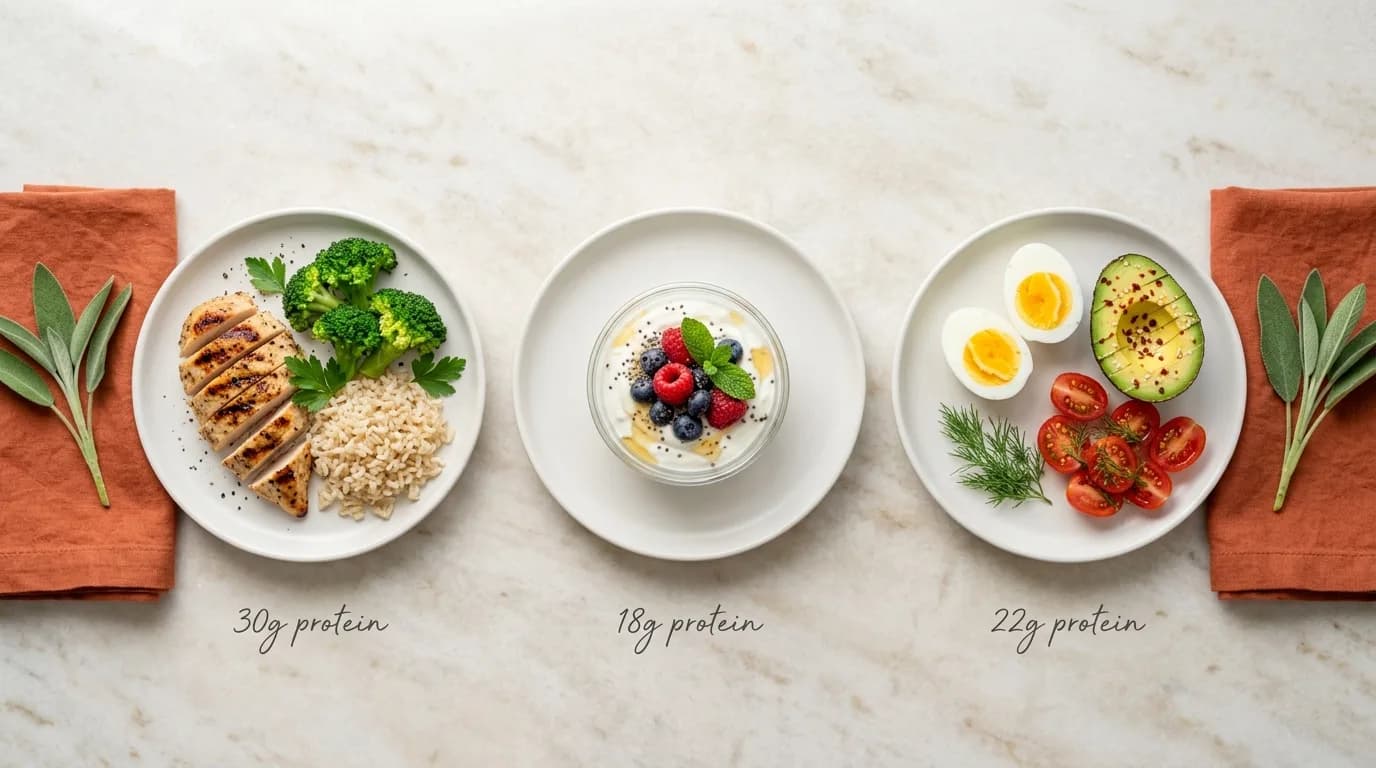
1,200 Calorie Day (Small Appetite)
Breakfast (300 cal, 30g protein):
- 1 cup plain Greek yogurt (130 cal, 17g protein)
- ½ cup berries (40 cal)
- 1 scoop whey protein stirred in (120 cal, 25g protein) — optional if appetite is very small
Lunch (350 cal, 35g protein):
- 3 oz grilled chicken breast (140 cal, 26g protein)
- 1 cup steamed broccoli (55 cal)
- ½ cup quinoa (110 cal, 4g protein)
- 1 tsp olive oil
Dinner (400 cal, 40g protein):
- 4 oz baked salmon (235 cal, 26g protein)
- 1 cup roasted asparagus (40 cal)
- ½ small sweet potato (60 cal)
- Drizzle of tahini
Snack (150 cal, 14g protein):
- ½ cup cottage cheese with cinnamon
Total: ~1,200 cal, 119g protein ✓
1,500 Calorie Day (Medium Appetite)
Add to the 1,200 plan:
- 1 hard-boiled egg + ½ avocado at breakfast
- An extra ounce of protein at lunch and dinner
1,800 Calorie Day (Recovering Appetite)
Add to the 1,500 plan:
- A protein-rich afternoon snack (Greek yogurt parfait or tuna on crackers)
- A larger portion of complex carbs at dinner
For more inspiration, see our high protein meals under 500 calories.
The Biggest Mistake GLP-1 Users Make
We see this constantly: people on GLP-1s assume that "eating less" automatically means they're doing it right. They stop tracking entirely because the appetite suppression feels like enough.
Three months later, the scale is down — but so is muscle mass, energy, and hair density. Blood work shows protein insufficiency. The weight that came off is harder to keep off after stopping the medication, because the metabolism has slowed.
Tracking on a GLP-1 isn't about restriction. It's about insurance. You're making sure that the calories you do eat are nutrient-dense and protein-rich enough to preserve the body you want.
Practical Tips for Hitting Protein on a Small Appetite
- Front-load protein at breakfast. Appetite is usually best in the morning. Aim for 30–40g of protein before noon.
- Eat protein FIRST at every meal. Before rice, before vegetables. If you fill up, at least it's on protein.
- Keep liquid protein available. Greek yogurt drinks, protein shakes, and broth-based soups are your backup plan when solid food feels heavy.
- Snack strategically. A small handful of edamame, a string cheese, or a hard-boiled egg adds 6–10g of protein each.
- Photo log everything. On a GLP-1, you can't trust your perception of "I ate enough." Track it.
For more strategies, see our guide on how to eat more protein.
How AI Photo Tracking Helps GLP-1 Users Specifically
Traditional calorie trackers were built for people with normal appetites who eat regular-sized portions. On a GLP-1, you might eat 4 bites of dinner and call it done. Logging that manually in a database app is brutal — you'd have to search "grilled salmon, ¼ portion" and estimate ounces.
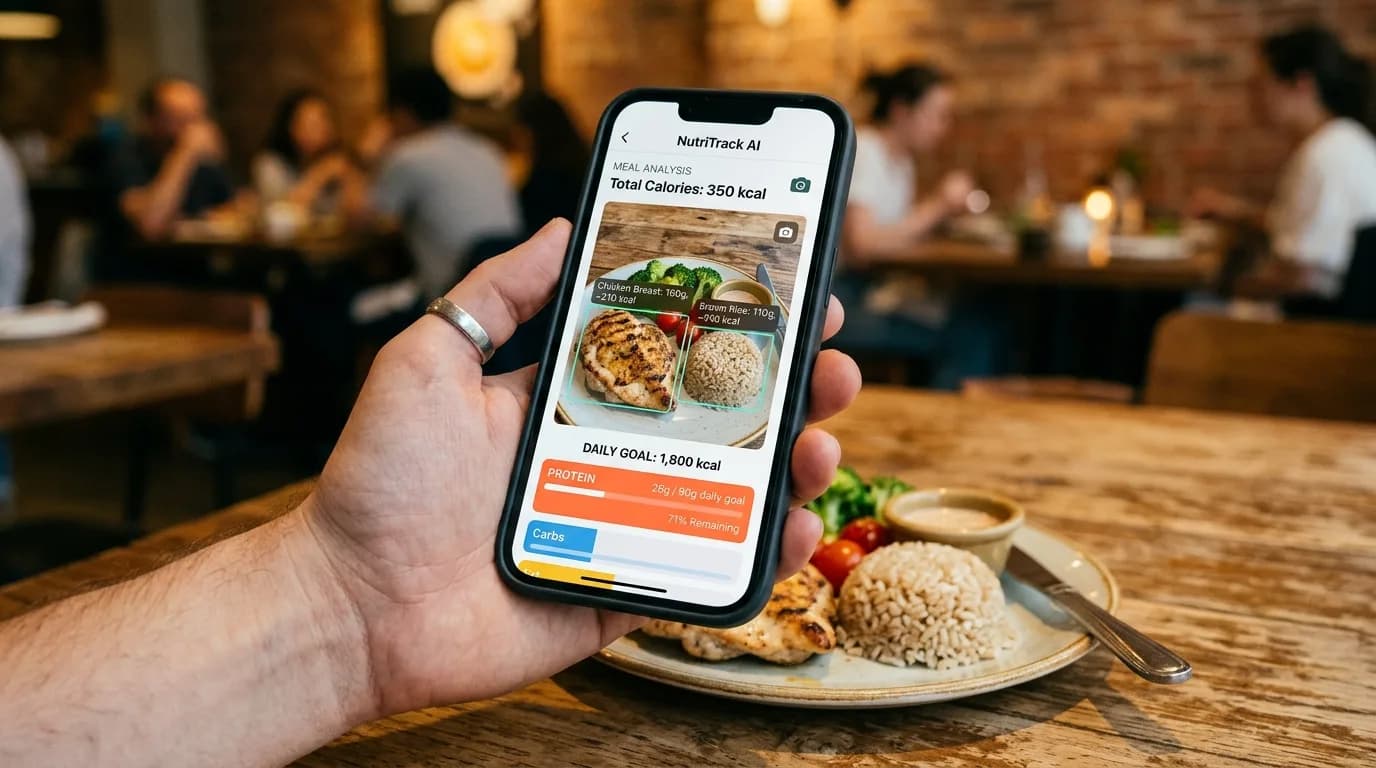
The logging friction matters more than people think. Research published in the Journal of Medical Internet Research on tracking adherence consistently links sustained self-monitoring with better weight outcomes — and the apps people actually stick with are the ones that make each log fast. On a tiny GLP-1 appetite, a 90-second manual entry per meal is exactly the kind of friction that ends a tracking habit by week two.
CalorieCue's photo tracking solves this:
- Snap a photo of whatever you're eating, in whatever weird portion size your appetite allowed
- AI estimates calories and protein in under 3 seconds
- You see your protein progress against your daily target at a glance
- No database searches, no portion math
For GLP-1 users, that 3-second log is the difference between actually tracking and giving up.
What to Do If You Plateau on GLP-1
GLP-1 plateaus are different from traditional dieting plateaus. Most often, the plateau happens because:
- Your body adapted to the dose (your doctor may increase it)
- You're undereating to the point of metabolic adaptation
- You're losing muscle, which lowers your daily calorie burn
The fix is often to eat more, not less — specifically, more protein. If you've been averaging 80g of protein and you bump it to 130g, you'll often see fat loss resume even at higher total calories.
For a full diagnostic, see our guide on the weight loss plateau.
Life After GLP-1
Eventually, you'll stop the medication — either because you've hit your goal, the side effects are too much, or insurance changes coverage. The science here is clear: people who don't have a tracking habit regain most of the weight within 1–2 years.
The people who maintain their results have one thing in common: they used the GLP-1 period to build habits, not just lose weight. Tracking is one of those habits.
If you've spent 6–12 months photo-logging your meals while on a GLP-1, you'll have an intuitive sense of what 130g of protein looks like on a plate. That intuition is the asset. The medication was just the lever.
For more on this transition, see our guide on how to maintain weight loss.
The Bottom Line
If you're on a GLP-1 medication in 2026, calorie tracking isn't about restriction — it's about precision.
Your appetite is doing the calorie-deficit work for you. Your job is to make sure that the smaller volume of food you're eating contains:
- ✓ Enough protein to preserve muscle (0.8–1.0g per lb bodyweight)
- ✓ Enough fiber to manage side effects
- ✓ Enough water to stay hydrated
- ✓ Enough total calories to avoid metabolic damage
Photo tracking makes this nearly effortless. You eat what your appetite allows, snap a picture, and adjust based on what's missing. CalorieCue was built for exactly this use case — a 3-second photo log that surfaces protein alongside calories. Seven-day free trial, then paid.
Medical disclaimer: This article is for informational purposes only and is not medical advice. Always consult your prescribing physician before making changes to your nutrition or medication routine.
Frequently Asked Questions
How many calories should I eat on Ozempic?
Most users should target 300–500 calories below their maintenance (TDEE), with a hard floor of about 1,200 calories for women and 1,500 for men to prevent muscle loss and metabolic adaptation. Because the medication suppresses appetite automatically, the bigger risk is undereating, not overeating — the floor matters more than the ceiling.
How much protein do I need on Wegovy?
Aim for 0.8–1.0g of protein per pound of bodyweight daily. A 150 lb person should target 120–150g of protein. This is the upper end of the general weight-loss recommendation, and on a GLP-1 you want the upper end specifically because rapid weight loss on a small appetite puts muscle at higher risk.
Will I lose muscle on Mounjaro?
You can — and many users do. The fix is hitting your protein target daily and doing resistance training 2–3x per week. Without those two things, a meaningful share of the weight you lose can come from muscle rather than fat, which slows your metabolism and makes regain more likely after you stop.
Do I need to track calories if I'm on a GLP-1?
Tracking isn't strictly required for weight loss — the medication handles the deficit. But it's strongly recommended for protein adequacy, which is the difference between losing fat and losing muscle. On a GLP-1, you're tracking to make sure the small amount you eat is dense enough, not to restrict yourself further.
What's the best calorie tracker for Ozempic users?
Any tracker that shows protein progress against a daily target will work. We built CalorieCue's photo tracking specifically for small portions and quick logging, which fits the GLP-1 lifestyle well — you snap a photo of whatever (and however little) you ate and see calories and protein in a few seconds.
Can I drink alcohol on a GLP-1?
Most users find alcohol tolerance significantly reduced and side effects like nausea and sleep disruption more pronounced. If you do drink, log it — it counts toward your calorie ceiling and provides zero protein, which makes hitting your protein target on an already-small appetite even harder.
Download CalorieCue