On this page
- Quick Answer
- What Actually Matters in a Calorie Tracker (Most Reviews Get This Wrong)
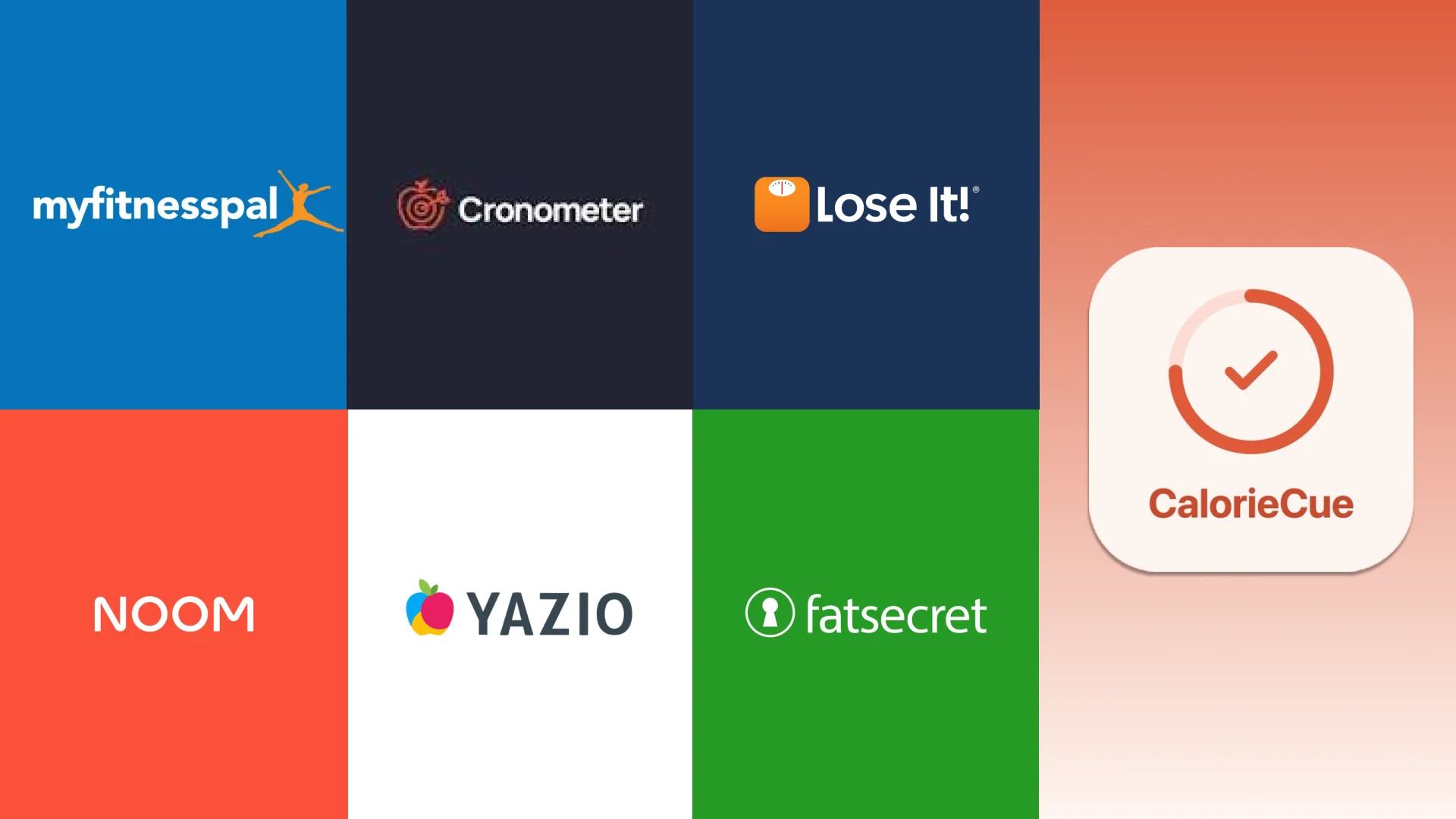
- The 7 Best Calorie Tracker Apps in 2026
- 1. MyFitnessPal — Best for Database Size
- 2. Cronometer — Best for Accuracy & Micronutrients
- 3. Lose It! — Best for Simplicity
- 4. CalorieCue — Best for Speed (AI Photo Scanning)
- 5. Yazio — Best for Meal Plans + Fasting
- 6. Noom — Best for Behavior Change
- 7. FatSecret — Best Free Option
- Quick Comparison Table
- How to Choose the Right App for You
- Frequently Asked Questions
- The Bottom Line
There are over 50 calorie tracking apps on the App Store. Most of them will waste your time. Here's how to pick one that actually sticks.
If you're looking for the best AI calorie tracker, don't start with the longest feature list. Start with the logging workflow: can you snap a photo, get a reasonable calorie and macro estimate, edit it quickly, and move on with your day? The app that makes photo logging fast enough to use consistently will beat the app with the prettiest dashboard you abandon after a week.
Quick Answer
The best AI calorie tracker app is the one you will use daily: prioritize fast photo logging, verified nutrition data, simple editing, barcode scanning, and a clean calorie-and-macro view over feature bloat. CalorieCue is strongest for fast AI photo logging, Cronometer wins on verified nutrition data, MyFitnessPal wins on database size, and FatSecret is the best no-cost option.
Most "best calorie app" articles are written by publishers who've never tracked a calorie in their life — or by the apps themselves. They rank apps based on feature lists and press releases, not on what it actually feels like to use them daily for weeks.
This comparison is different.
Full transparency — I built CalorieCue, so I'll include it in this comparison. But I'll be honest about where every app shines and where it falls short, including mine.
I've used every app on this list. I've logged hundreds of meals across all of them. And the conclusion I keep coming back to is this: the best calorie tracker isn't the one with the most features — it's the one you'll still be using a month from now.
What Actually Matters in a Calorie Tracker (Most Reviews Get This Wrong)
Before comparing apps, let's talk about what actually determines whether you'll stick with one. After years of building and using these tools, four things matter above everything else:
-
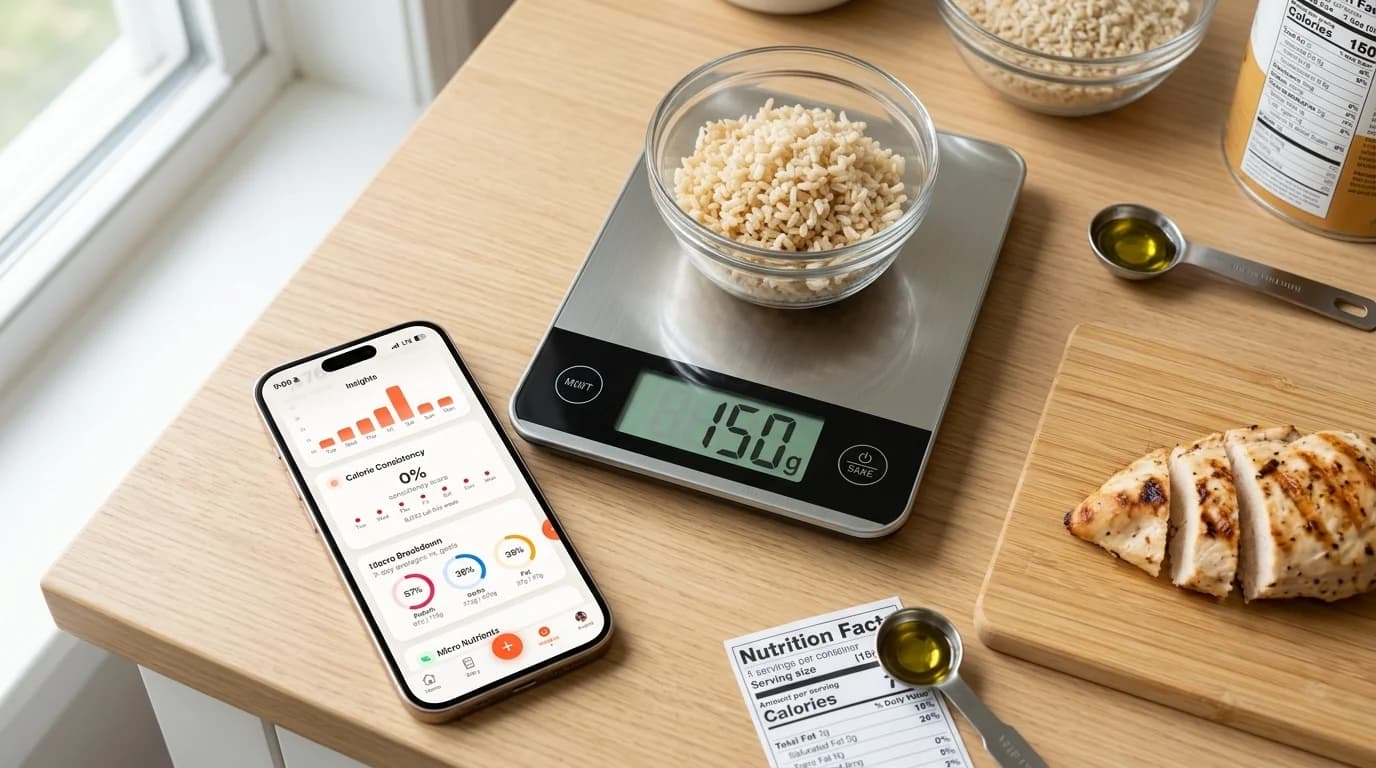
Logging speed — If it takes more than 15 seconds per meal, you'll quit. This is the single biggest predictor of long-term tracking adherence. This is where AI photo logging matters: snapping a meal, checking the estimate, and moving on is easier to repeat than search-scroll-confirm logging. Research shows that calorie counting works — but only if you actually do it consistently.
-
Accuracy workflow — A massive database full of wrong entries is worse than a small accurate one. If your "grilled chicken breast" entry is off by 150 calories, you're building your entire plan on bad data. The best apps either verify entries, cross-check estimates, or make corrections easy.
-
Simplicity — Features you never use just create clutter. Most people need: food log, calorie total, macro breakdown. Everything else is a bonus — or a distraction.
-
The "Did I Log Today?" factor — Does the app make tracking so effortless you barely notice you're doing it? Or does it feel like homework?
What doesn't matter as much as you think: social features, gamification badges, built-in recipe databases, and "community challenges." These sound good in an App Store listing but rarely keep anyone tracking past week two.
Now, the apps.
The 7 Best Calorie Tracker Apps in 2026
1. MyFitnessPal — Best for Database Size
MyFitnessPal is the incumbent. It's been around since 2005 and has the largest food database of any calorie tracker — over 14 million items — plus integrations with virtually every fitness tracker, smartwatch, and health app on the market.
Key features:
- 14M+ food database with barcode scanning
- Integrates with Garmin, Apple Watch, Fitbit, Strava, and dozens more
- Macro and micronutrient tracking
- Recipe importer and meal builder
- Community forums and social features
Pros:
- The database is massive — you can find almost anything
- If you use multiple fitness devices, MFP connects to all of them
- Detailed nutrition breakdowns beyond just calories
Cons:
- The database is crowdsourced, which means accuracy varies wildly — the same food often has 5+ entries with different calorie counts
- The free version has been gutted over the years — barcode scanning, food insights, and macro goals now require premium
- The interface is cluttered with ads and upsells on the free tier
- Logging is slow: search → scroll through duplicates → verify → confirm
Best for: Experienced trackers who want maximum integrations and don't mind verifying database entries.
Price: Free (very limited) / $19.99/mo or $79.99/yr
2. Cronometer — Best for Accuracy & Micronutrients
If data accuracy is your top priority, Cronometer is the gold standard. Unlike crowdsourced databases, Cronometer uses verified data from the NCCDB and USDA, covering 84 individual nutrients per food item.
Key features:
- Verified, lab-sourced nutritional data
- Tracks 84 nutrients including vitamins, minerals, and amino acids
- Detailed macro and micronutrient dashboards
- Supports custom recipes and foods
- Oracle AI nutrition assistant
Pros:
- The most accurate food database of any consumer app — entries are verified, not crowdsourced
- Incredible micronutrient detail if you care about vitamin and mineral intake
- Clean data you can actually trust for planning
Cons:
- The interface feels clinical and can be overwhelming for beginners
- No AI photo scanning — all logging is manual search-and-select
- Smaller database than MyFitnessPal, so obscure or restaurant foods may be missing
- Manual entry is slower than apps with AI-assisted logging
Best for: Data-driven users, athletes, people tracking specific nutrients or managing medical dietary needs.
Price: Free (full-featured) / Gold $49.99/yr
3. Lose It! — Best for Simplicity
Lose It! does one thing well: it makes calorie tracking approachable for people who've never done it before. The interface is clean, the onboarding is smooth, and the learning curve is almost nonexistent.
Key features:
- Clean, intuitive interface
- Barcode scanning
- Photo food scanning (premium only)
- Flexible calorie budget system
- Snap-It meal logging with image recognition (premium)
Pros:
- The easiest calorie tracker to learn — you can be logging within 60 seconds of downloading
- Flexible calorie budgets that adjust based on your activity and goals
- The design is modern and uncluttered
Cons:
- Photo scanning — arguably the most useful feature — is locked behind the premium paywall
- The food database is less comprehensive and less accurate than Cronometer
- Limited micronutrient tracking on the free tier
- Social features feel tacked on
Best for: Beginners who want something dead simple to start tracking today.
Price: Free (basic) / Premium $39.99/yr
4. CalorieCue — Best for Speed (AI Photo Scanning)
CalorieCue is built around one idea: calorie tracking should take seconds, not minutes. Snap a photo of your meal and get an instant calorie and macro estimate — no searching through databases, no typing food names, no scrolling through duplicate entries.
Key features:
- AI-powered photo food scanning — snap and log in seconds
- Instant calorie and macro breakdowns from photos
- Clean, minimal interface with no clutter
- 7-day free trial with full access
- Designed specifically for people who've quit tracking because it's too tedious
Pros:
- The fastest logging experience of any calorie tracker — photo-to-log in under 5 seconds
- The AI identifies foods from photos and estimates portions automatically
- The interface is deliberately minimal — no feature bloat, no social feeds, no gamification
- Understanding how AI food scanning works builds confidence in the technology
Cons:
- Newer app with a smaller community than established players
- iOS only (no Android version yet)
- The food database is still growing compared to MyFitnessPal's decade-old library
- Complex mixed dishes are harder for any AI to assess accurately
Best for: Anyone who's quit calorie tracking because it was too tedious — and anyone who values speed above all else.
Price: Free 7-day trial / $4.99/mo or $29.99/yr
Download CalorieCue5. Yazio — Best for Meal Plans + Fasting
Yazio blends calorie tracking with structured meal plans and built-in intermittent fasting timers. If you want an app that not only tracks what you eat but also tells you what to eat and when to eat, Yazio is the most complete option.
Key features:
- Calorie and macro tracking with 4M+ food database
- Pre-built meal plans and recipe suggestions
- Integrated intermittent fasting timer
- AI food recognition
- Visual progress charts and body measurements
Pros:
- The meal planning integration is genuinely useful if you struggle with "what should I eat?"
- Fasting timer is well-designed and saves you from needing a separate app
- Recipe suggestions are practical and include calorie breakdowns
- Good visual progress tracking
Cons:
- The best features — meal plans, detailed insights, advanced tracking — are locked behind Pro
- AI food recognition accuracy is inconsistent
- The free tier is very limited and pushes upgrades aggressively
- Can feel overwhelming with all the features if you just want simple tracking
Best for: People who want "tell me what to eat" alongside tracking, and those who combine calorie counting with intermittent fasting.
Price: Free (limited) / Pro $6.99/mo or $44.99/yr
6. Noom — Best for Behavior Change
Noom takes a fundamentally different approach. Instead of just tracking calories, it tries to change your relationship with food through psychology-based coaching, color-coded food categories, and daily lessons on eating behavior.
Key features:
- Color-coded food system (green, yellow, red) based on calorie density
- Daily psychological lessons and quizzes
- 1-on-1 coaching (quality varies)
- Group support
- Basic calorie tracking
Pros:
- Addresses the why behind overeating, not just the what — useful if emotional eating is your main challenge
- The color system simplifies food choices without requiring precise counting
- Daily lessons build genuine nutritional awareness over time
Cons:
- Expensive — significantly more than any pure tracking app
- Coaching quality is inconsistent and often feels scripted
- The actual calorie tracking functionality is basic compared to dedicated trackers
- Long-term commitment required (plans are typically 4–12 months)
- Not great if you just want a straightforward food log
Best for: Emotional eaters who need mindset and behavioral support, not just a tracking tool.
Price: From $60/mo (varies by plan length)
7. FatSecret — Best Free Option
FatSecret proves you don't have to pay for solid calorie tracking. It offers a fully functional food diary, barcode scanning, meal planning, and community recipes — all without a paywall.
Key features:
- Completely free food diary and calorie tracker
- Barcode scanning
- Community-shared recipes and meal ideas
- Food and exercise diary
- Integration with fitness devices
Pros:
- Genuinely free — no "free tier" limitations or aggressive upgrade prompts
- Barcode scanning works well for packaged foods
- The community recipe section is surprisingly active and useful
- Gets the basics right: log food, see calories, track progress
Cons:
- The interface feels dated compared to newer apps
- No AI food scanning or photo logging
- Contains ads (the trade-off for being free)
- Database accuracy is crowdsourced and unverified
- Limited insights and analytics compared to premium competitors
Best for: Budget-conscious users who need reliable basic tracking without paying a subscription.
Price: Free (ad-supported) / Premium available for ad removal
Quick Comparison Table
| App | AI/photo logging | Database type | Accuracy workflow | Free tier | Best for | Monthly cost |
|---|---|---|---|---|---|---|
| MyFitnessPal | Premium only | Crowdsourced (14M+) | Verify duplicate entries manually | Limited | Integrations | $19.99/mo |
| Cronometer | No | Verified (1M+) | Strongest verified nutrition database | Full-featured | Accuracy | $4.17/mo |
| Lose It! | Premium only | Crowdsourced | Simple edits after search/photo scan | Basic | Simplicity | $3.33/mo |
| CalorieCue | Yes (free trial) | AI + verified | Photo estimate with editable calories and macros | 7-day trial | Speed | $4.99/mo |
| Yazio | Yes | Crowdsourced (4M+) | Review AI recognition and recipe estimates | Limited | Meal plans | $6.99/mo |
| Noom | No | Proprietary | Basic logging plus coaching context | None | Behavior change | ~$60/mo |
| FatSecret | No | Crowdsourced | Manual label/barcode checks | Full-featured | Budget | Free |
How to Choose the Right App for You
Still not sure? Here's a simple decision guide:
- Want speed above all else? → CalorieCue. Photo logging eliminates the search-scroll-confirm cycle entirely.
- Want maximum data accuracy and micronutrients? → Cronometer. Verified database, 84 nutrients tracked.
- Want the biggest database and device integrations? → MyFitnessPal. 14M+ foods, connects to everything.
- Want someone to tell you what to eat? → Yazio. Meal plans and fasting built in.
- Want free with no limits? → FatSecret. Fully featured, zero paywall.
- Need help with emotional eating? → Noom. Psychology-based coaching approach.
- Want the easiest onboarding? → Lose It!. Tracking in under 60 seconds.
Here's the real answer, though: the best app is the one you'll actually use consistently. Research confirms that tracking adherence — not tracking precision — is the strongest predictor of weight loss success. Download 2–3 free trials, use each for a few days, and keep the one that feels like the least amount of work.
If you're not sure what calorie target to aim for, use our free TDEE calculator to find your number before picking an app. Knowing your daily calorie needs makes any tracker more useful.
A common mistake is picking an app based on features you think you'll use — then never using them. Prioritize the app that makes basic daily logging feel effortless. You can always switch later if your needs evolve.
Frequently Asked Questions
Covered in detail above, but here are quick answers to the most common questions:
What is the best AI calorie tracker app? The best AI calorie tracker app is the one that makes logging fast enough to do every day. CalorieCue is best for speed and photo-based meal logging, Cronometer is best for verified nutrition data, MyFitnessPal is best for database size and integrations, and FatSecret is best if you need a fully free app.
What is the most accurate calorie tracking app? Cronometer, for database accuracy — its entries are verified against scientific databases, not crowdsourced. For AI photo-based accuracy, CalorieCue cross-references visual recognition with verified nutritional data.
Is MyFitnessPal still worth it in 2026? For power users who need integrations with every fitness device, yes. For everyone else, the gutted free tier, crowdsourced accuracy issues, and cluttered interface make newer alternatives worth considering.
What's the best free calorie counter app? FatSecret for fully free with no limits. Cronometer's free tier is also excellent if you want verified data.
Are AI calorie tracker apps accurate? AI calorie tracker apps are useful but not perfect. They're most accurate for clearly visible, single-item meals. Complex dishes, hidden oil, and unclear portions are harder for any AI. The real value is speed: a 3-second log you actually do beats a 2-minute log you skip.
Can an AI calorie tracker replace manual logging? For many everyday meals, yes. A good AI calorie tracker can identify foods from a photo, estimate portions, and create a calorie and macro entry you can edit. Manual logging is still useful for packaged foods, recipes, and meals where ingredients are hidden.
Can I track calories by just taking a photo of my food? Yes. CalorieCue is built entirely around this. MyFitnessPal and Lose It! offer it in premium tiers. Accuracy depends on food visibility and complexity.
How accurate are AI food scanners? Generally within 10–25% for clearly visible foods — comparable to the margin of error most people have when logging manually. Learn more about how AI food scanning works.
The Bottom Line
No single calorie tracking app is perfect for everyone. Each one on this list does something genuinely well — and each one has real trade-offs.
But here's what matters most: the #1 predictor of weight loss success isn't which app you use — it's whether you use it consistently. The app that makes logging feel effortless is the app that will actually help you reach your goals.
If you want to learn more about building sustainable tracking habits, our guides on tracking macros and your daily calorie needs are a good next step.
If speed and simplicity are what you care about, give CalorieCue a try — 7 days free, no commitment.
Download CalorieCue