On this page
- Why Meal Prep Works
- The Equipment You Actually Need
- Week 1: Start Simple
- Your First Prep Session
- The Week 1 Grocery List
- The Workflow
- Key Principles for Week 1
- Week 2: Add Breakfast
- Week 3: Introduce Variety
- The Mix-and-Match Method
- Sauce Is the Secret
- Week 4: Optimize Your System
- Time-Saving Tips
- Storage Guidelines
- Reheating Without Killing Texture
- Meal Prep for Different Goals
- Common Mistakes to Avoid
- Track It to Stay on Track
- Frequently Asked Questions
- How much time does meal prep actually take?
- Do I need special containers to meal prep?
- How long does meal-prepped food stay fresh?
- Can meal prep help with weight loss?
- What if I get bored eating the same meals?
- Should I count calories on my meal-prepped meals?
- Your First Session
Start meal prep with a few lunches, not every meal for the next seven days. The goal of this four-week plan is a repeatable cooking routine: choose food, prepare it, store it safely and use it before it goes to waste.
This is the beginner habit guide. If you already batch-cook and want the calorie arithmetic, use calorie-counting meal prep. For interchangeable daily menus, use the flexible diet plan.
Why Meal Prep Works
Having a meal ready can remove a practical obstacle on a busy day. It also lets you choose portions and ingredients before you are hungry.
A study of 40,554 French adults found associations between meal planning, food variety, diet quality and weight status. It was observational: it does not show that preparing lunches causes a fixed calorie saving or guarantees weight loss.
You can assess the benefit for yourself: compare how many prepared portions you actually eat, how much food is wasted and what you spend. For example, replacing a $12 purchased lunch with a $5 homemade lunch saves $7 that day under those prices. Your local costs will differ.
The Equipment You Actually Need
- Clean food-safe containers suited to refrigeration or freezing.
- A saucepan or rice cooker, a pan or baking tray, and basic utensils.
- A food thermometer for cooking and reheating safely.
- Labels or a marker to record preparation dates.
Check container instructions before microwaving. Glass and plastic can both be useful when designed for the intended use.
Week 1: Start Simple
Plan three refrigerated lunches plus two portions to freeze promptly, or cook again midweek. Do not keep five days of cooked food in the refrigerator just because it fits the workweek.
Your First Prep Session
Allow roughly 60–90 minutes. Choose one familiar protein, one grain and two vegetables. A simple example is chicken, brown rice, broccoli and sweet potato.
The Week 1 Grocery List
Write the portions you need before shopping. For five lunches, choose amounts based on the recipe and what you normally eat, then check what is already in the kitchen. Raw chicken weight is not the same as cooked edible weight; rice expands with cooking water.
For meal ideas with quantities and clearly labeled estimates, see high-protein meals under 500 calories. The calorie ceiling is a browsing aid, not a requirement for your lunch.
The Workflow
- Start the grain using the package instructions.
- Chop vegetables while it cooks. Keep raw meat and ready-to-eat food separate.
- Cook the protein and vegetables using a suitable recipe. Check doneness with a thermometer rather than relying on a fixed number of minutes.
- Divide the batch into portions. Measure oil and sauces if you are tracking them.
- Label each container and chill promptly. Freeze the portions intended for later in the week.
Key Principles for Week 1
Use food you already like, choose a realistic session size, and record what you would change next time. Finishing three useful lunches is better than preparing a large batch you do not want to eat.
Week 2: Add Breakfast
Choose one breakfast that fits your morning:
- Overnight oats: use your chosen oats, milk and toppings; check labels because ingredients vary.
- Yogurt and fruit: keep crunchy toppings separate until eating.
- Egg muffins: follow a recipe, cool and store appropriately, and freeze later portions.
- Smoothie packs: portion frozen fruit in advance and add your preferred liquid when blending.
Do not treat an unspecified scoop, handful or type of milk as an exact calorie amount. Our homemade-food calculation guide explains how to use the ingredients you actually bought.
Week 3: Introduce Variety
The Mix-and-Match Method
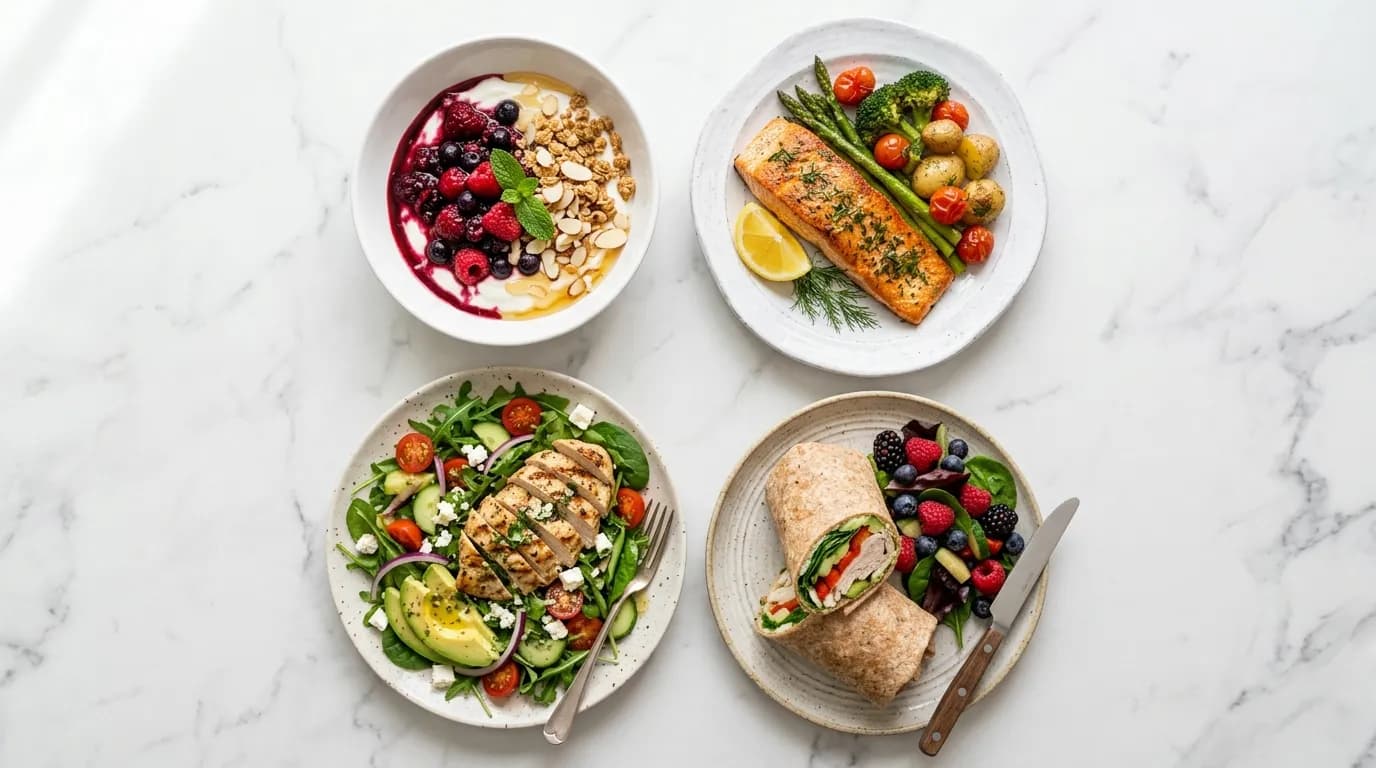
Keep a small set of components: one or two proteins, a grain, vegetables and a couple of sauces. A chicken-and-rice bowl can become a salad or wrap, but changing the container does not make the nutrition identical. Count the tortilla, dressing and extras when relevant.
Sauce Is the Secret
Keep sauces separate so you can vary flavor and texture. Taste before adding salt and use herbs, spices, citrus or vinegar as alternatives. Label the sauce and use the package or recipe storage guidance.
Week 4: Optimize Your System
Time-Saving Tips
Cook grains while preparing other ingredients, use frozen vegetables when convenient, and repeat a recipe before adding a more complicated one. Freeze spare portions early rather than waiting until they are near the end of their refrigerated life.
Storage Guidelines
The USDA leftover safety guidance recommends:
- Refrigerate perishable cooked food within two hours, or one hour above 90°F / 32°C.
- Use shallow containers and keep the refrigerator at 40°F / 4°C or below.
- Use refrigerated cooked leftovers within 3–4 days; freeze later portions promptly.
- Cook poultry and reheat leftovers to 165°F / 74°C, checked with a food thermometer.
Follow stricter food-specific guidance or package instructions when applicable. Smell alone cannot establish safety.
Reheating Without Killing Texture
Cover food appropriately, stir or turn it so heating is even, and check the temperature in more than one place. A splash of water can help rice, while an oven may suit roasted vegetables. Appliance power and portion size vary, so a fixed microwave time is not a safety check.
Meal Prep for Different Goals
Adjust portions to your appetite, activity and plan. You can add a grain, fruit or another snack when you need more food; you do not have to make every meal smaller to benefit from preparation. The daily-calorie guide explains how to interpret a target without treating it as an exact prescription.
Common Mistakes to Avoid
- Preparing more food than you can safely store or use.
- Forgetting that cooking oils and sauces are part of the recipe.
- Shopping for several new recipes before checking your pantry.
- Expecting meal prep alone to create a calorie deficit.
- Keeping all the week's cooked meals refrigerated instead of freezing later portions or cooking midweek.
Track It to Stay on Track
When tracking is useful, record the batch ingredients and allocate the amount you eat. Use the same raw/cooked basis as the nutrition entry. CalorieCue can estimate a meal from a photo; review the portion and hidden ingredients rather than assuming identical-looking containers have identical totals.
Frequently Asked Questions
How much time does meal prep actually take?
Reserve about 60–90 minutes for a simple first session, then adjust based on your kitchen and recipes. This is a planning allowance, not a guaranteed preparation time.
Do I need special containers to meal prep?
Use clean food-safe containers that suit your storage needs. Check the manufacturer instructions before microwaving or freezing. Start with what you already have rather than buying a complete set.
How long does meal-prepped food stay fresh?
USDA guidance generally allows cooked leftovers for 3–4 days in the refrigerator. Chill promptly and freeze portions you will not use within that window. Follow food-specific or package instructions when they are more restrictive.
Can meal prep help with weight loss?
It can make portions and regular meals easier to manage. An observational study linked meal planning with better diet quality and food variety, but it did not prove that meal prep causes a fixed calorie reduction or a particular amount of weight loss.
What if I get bored eating the same meals?
Prepare components rather than identical finished meals: a protein, grain, vegetables and two sauces. Change the combination while measuring additions separately if you track calories.
Should I count calories on my meal-prepped meals?
Only if that approach is useful for your goals. For a homemade batch, total the ingredients and divide by portions or cooked weight. A photo estimate is convenient, but still needs a check for oil, sauce and serving size.
Your First Session
Choose one lunch, write a short shopping list, and decide which portions to refrigerate and freeze. Repeat the process next week with one improvement based on what you actually ate.
Download CalorieCue