On this page
- The Three Hormones That Sleep Controls
- Ghrelin — Your Hunger Hormone
- Leptin — Your Fullness Hormone
- Cortisol — Your Stress Hormone
- Why the Same Diet Produces Different Results With Different Sleep
- The Behavior Layer — How Bad Sleep Wrecks Your Diet Day
- The Cortisol-Belly Fat Loop
- How Much Sleep Is Actually Enough?
- What Actually Works (The Sleep Playbook)
- Anchor Your Wake Time
- Last Meal 3 Hours Before Bed
- No Alcohol Within 4 Hours of Sleep
- Cool Room (65–68°F / 18–20°C)
- No Screens 30 Minutes Before Bed
- Caffeine Cutoff at 2 PM
- Get Morning Sunlight
- When Sleep Is the Hidden Reason You're Not Losing Weight
- Frequently Asked Questions
- Can I "catch up" on sleep on weekends?
- Does sleeping more burn more calories?
- What if I have insomnia?
- Does sleep matter more than diet?
- Do naps help?
- Should I take melatonin or sleep supplements?
- What about exercising in the evening — does it hurt sleep?
- The Bottom Line
How Sleep Affects Weight Loss (More Than You Think)
I want to start with the single most important fat loss study most people have never heard of.
In 2010, researchers at the University of Chicago ran a tightly controlled experiment, published in Annals of Internal Medicine. They took ten overweight adults, put them on identical calorie-restricted diets for two weeks, and measured their fat loss versus muscle loss. The only variable they changed between conditions was sleep — 8.5 hours in one condition, 5.5 hours in the other.
Both groups lost the same amount of weight on the scale.
But when researchers measured what kind of weight was lost: the 8.5-hour sleepers lost more than half their weight as fat. The 5.5-hour sleepers? Only one-quarter of their weight loss was fat. The rest was lean muscle mass. Same diet, same calorie deficit, same exercise — and the sleep-deprived dieters effectively dieted away their muscle while keeping more of their fat.
The lead researcher said it directly: "If your goal is to lose fat, skipping sleep is like poking sticks in your bicycle wheels."
This is not a wellness recommendation. This is the actual mechanism of fat loss — and most of it happens when you're unconscious.
This post is what nobody told you: that sleep isn't an optional add-on to your weight loss plan. It's the hormonal foundation everything else stands on. Cut sleep, and your perfect diet and perfect workout routine quietly fail in ways nobody can see.
The Three Hormones That Sleep Controls
Most people think weight loss is a calorie problem. It is — but only at the most surface level. Underneath the calorie math, your body runs on hormones, and three of them are directly controlled by how much you sleep.
Ghrelin — Your Hunger Hormone
Ghrelin is produced in your gut. Its job is simple: signal hunger to your brain when your body needs food. Research consistently shows that sleep deprivation increases ghrelin levels, even after a single night of poor sleep.
In practical terms: when you sleep 6 hours instead of 8, your body produces more hunger signals. You're not "imagining" being hungrier the day after a bad night's sleep. Your ghrelin is literally elevated, and it's pushing you to eat more — particularly calorie-dense, high-fat, high-sugar foods.
Stanford Lifestyle Medicine confirms this mechanism: sleep deprivation can lead to increased ghrelin and decreased leptin, resulting in an overall experience of constantly being hungry.
If you're trying to maintain a calorie deficit while sleeping poorly, you're fighting elevated ghrelin every single day. It's the hormonal equivalent of trying to walk up a downward escalator.
Leptin — Your Fullness Hormone
Leptin is the inverse of ghrelin. Produced by fat cells, leptin signals satiety to your brain — "you've eaten enough, you can stop." Adequate sleep keeps leptin levels appropriate. Sleep loss suppresses leptin production.
The combined effect of these two changes is brutal: not only are you hungrier (high ghrelin), but you also feel less satisfied when you do eat (low leptin). You eat more, and the eating doesn't make you full.
This is why people sleeping poorly tend to overeat even when they're consciously trying not to. Their satiety signaling is broken. Willpower has limits when biology is working against you — which is exactly why our guide on how to stop overeating focuses on changing the environment, not gritting your teeth harder.
Cortisol — Your Stress Hormone
Cortisol is your body's primary stress hormone. Short-term cortisol is fine — it's how your body responds to challenges. But chronically elevated cortisol from sleep deprivation produces several specific problems for weight loss:
- Increased belly fat storage. Cortisol preferentially directs fat storage to visceral (belly) fat — the most metabolically problematic kind.
- Insulin resistance. Elevated cortisol reduces insulin sensitivity, which makes your body more likely to store calories as fat rather than burn them.
- Muscle breakdown. Cortisol breaks down muscle protein, which is exactly the opposite of what you want during weight loss.
- Cravings for high-calorie comfort foods. Cortisol triggers cravings for the most calorie-dense foods specifically — sugar, fat, salt. The "stress eating" cycle.
If you're sleep-deprived, you have chronically elevated cortisol. You're storing fat preferentially in your belly, breaking down your muscle, and craving the worst foods. Then you wonder why your diet isn't working.
Why the Same Diet Produces Different Results With Different Sleep
The Nedeltcheva study (2010) is worth understanding in detail because it's one of the cleanest experimental demonstrations of how sleep affects body composition during weight loss.
The setup was rigorous: 10 overweight adults, randomly assigned to two conditions in a crossover design, meaning each participant did both conditions. They were on a moderate calorie restriction (about 1,450 calories per day for women, 1,800 for men) in both conditions. Activity levels were equivalent. The only systematic difference was sleep duration.
The results, after just 14 days:
| Outcome | 8.5 Hours Sleep | 5.5 Hours Sleep |
|---|---|---|
| Total weight lost | ~3 kg | ~3 kg |
| Fat mass lost | 1.4 kg (55% of total) | 0.6 kg (25% of total) |
| Lean mass lost | 1.5 kg (45% of total) | 2.4 kg (75% of total) |
| 24-hour ghrelin | Lower | Higher |
| Reported hunger | Manageable | Significantly elevated |
Think about what this means. Two dieters with identical calorie targets, identical food, identical exercise. One gets adequate sleep and loses primarily fat. The other doesn't sleep enough and loses primarily muscle.
The scale tells you they had the same result. The mirror, the body composition test, and the long-term weight maintenance trajectory tell you something completely different. The muscle the sleep-deprived dieter lost will lower their metabolism, set them up for regain, and produce the soft "skinny fat" body composition that most people are trying to avoid.
Same calorie deficit. Same workout. Completely different outcome. The variable was sleep.
For more on why your calorie deficit might not produce the results you expect, see our guide on why your calorie deficit isn't working.
The Behavior Layer — How Bad Sleep Wrecks Your Diet Day
The hormonal effects are the foundation, but there's a behavioral cascade on top of them that compounds the damage.
When you sleep poorly, your decision-making degrades. The prefrontal cortex — the part of your brain responsible for impulse control, planning, and resisting temptation — is the most affected brain region after sleep loss. Meanwhile, the reward centers of the brain become more sensitive to food cues, particularly calorie-dense ones.
The result is a predictable bad-sleep cascade:
- You wake up tired. Coffee becomes a sweetened latte (200+ extra calories).
- You skip the workout. Energy is too low, motivation is gone.
- You crave high-calorie food. Specifically sugar, fat, and refined carbs.
- Your prefrontal cortex is impaired. You make worse food choices, with less ability to override impulses.
- You snack more. Especially in the afternoon energy crash and the evening "I deserve this" moment.
- You drink more alcohol at night (often to relax or unwind from the stress).
- You sleep poorly again. And the cycle continues.
A single night of bad sleep can easily produce 300–500 extra calories the next day — none of them feeling like willpower failures. They feel like normal responses to fatigue. They are, biologically. But they wreck your deficit.
Multiply that across a week of 5–6 hours of sleep, and you've quietly added 2,000–3,500 calories to your week without changing anything about your "diet plan."
The Cortisol-Belly Fat Loop
One specific consequence deserves its own section: the role of sleep-deprived cortisol in belly fat.
Cortisol doesn't just signal fat storage — it preferentially signals visceral fat storage. This is the deep belly fat that wraps around your organs, distinct from the subcutaneous fat just under your skin. Visceral fat is the most metabolically dangerous kind, associated with diabetes, heart disease, and insulin resistance.
People with chronically elevated cortisol from poor sleep tend to accumulate disproportionately more belly fat, even when their total calorie intake hasn't changed dramatically. The fat distribution shifts toward the worst kind, and the body simultaneously loses lean mass.
This is why some people in their 30s and 40s notice their body composition shifting in ways their diet doesn't explain. "I'm eating the same as I always did, but suddenly my belly is getting bigger." The variable that changed might not be food. It might be sleep — kids, work stress, screens, alcohol — and the cortisol pattern that comes with it.
For more on belly fat specifically, see our guide on how to lose belly fat.
How Much Sleep Is Actually Enough?
The general recommendation is 7–9 hours for adults, but the research suggests sharper guidelines specifically for weight loss:
- Less than 6 hours per night chronically: Strongly associated with weight gain and resistance to weight loss. Hormonal disruption is significant.
- 6–7 hours: Suboptimal. You'll likely lose some weight but less than you should for your effort. Body composition will skew toward more muscle loss.
- 7–8 hours: The sweet spot for most adults. Hormones operate optimally. Calorie deficit produces expected results.
- 8–9 hours: Optimal for active people, people with high training loads, or anyone in a sustained calorie deficit. Maximizes recovery and fat preservation of muscle.
- More than 9 hours regularly: Can signal poor sleep quality (you need more time to get the same restorative effect) or an underlying issue. If you sleep 10 hours and still feel tired, see a doctor.
For weight loss specifically, 7.5 hours appears to be a meaningful threshold. The hormonal disruption studies consistently show steeper degradation below this point.
What Actually Works (The Sleep Playbook)
Knowing sleep matters isn't useful unless you can actually improve it. Here's the practical playbook for someone trying to use sleep as a fat loss tool.
Anchor Your Wake Time
This is the single most powerful sleep improvement. Wake up at the same time every day — including weekends — and your body's internal clock stabilizes. You'll naturally get sleepy at the same time each night. No discipline required; biology does the work.
Inconsistent wake times (sleeping in on weekends) is "social jetlag" — and research suggests it produces similar metabolic effects to actual jetlag, which is associated with weight gain.
Last Meal 3 Hours Before Bed
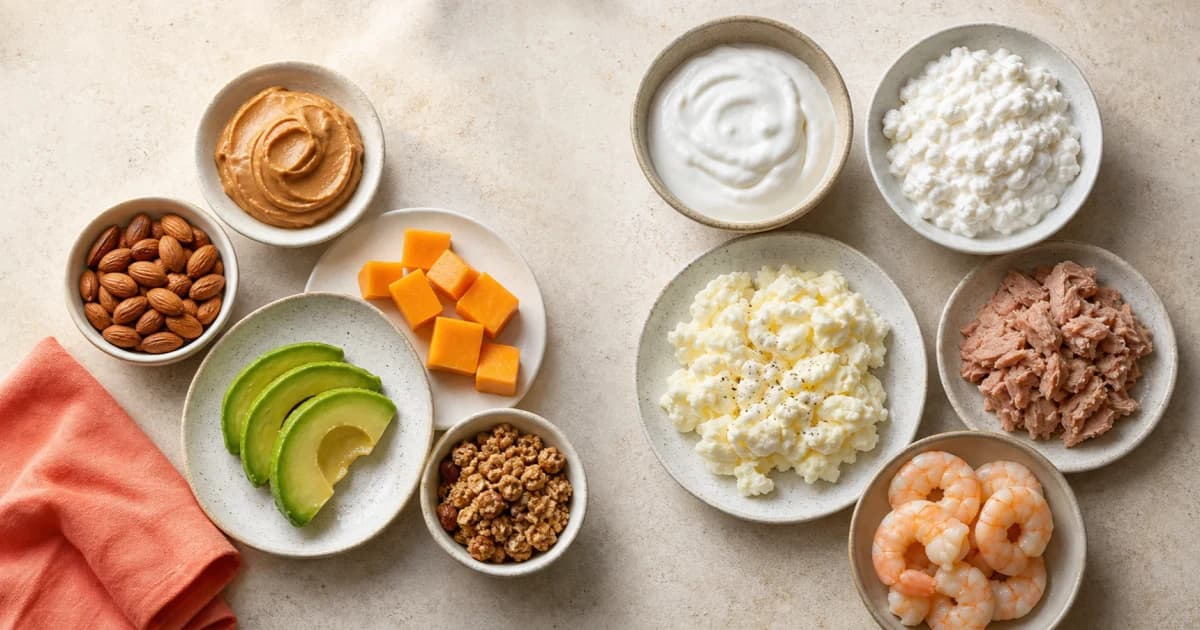
Late eating disrupts sleep in three ways: digestion competes with sleep recovery, blood sugar fluctuates overnight, and acid reflux affects sleep quality. Stop eating roughly 3 hours before you plan to sleep. If you're hungry close to bed, a small protein-only snack (Greek yogurt, cottage cheese) is the least disruptive option — and it doubles as an easy way to hit your protein target, which protects the muscle you're trying to keep.
No Alcohol Within 4 Hours of Sleep
Alcohol initially makes you drowsy, but it dramatically disrupts the second half of your sleep — particularly REM sleep, where most hormonal regulation happens. Even one drink can reduce sleep quality by 20–25%. You'll feel like you slept, but you didn't sleep well.
If you drink, do it earlier in the evening. By the time you're sleeping, the alcohol should be largely metabolized.
Cool Room (65–68°F / 18–20°C)
Body temperature drops slightly during sleep. A cool room facilitates this drop. Hot rooms produce fragmented, lower-quality sleep. This is the single easiest physical adjustment most people can make to improve sleep.
No Screens 30 Minutes Before Bed
Blue light from screens suppresses melatonin production. The dose-response curve isn't huge for a phone glance, but two hours of TikTok before bed measurably delays sleep onset and reduces sleep quality. The simple rule: stop screens 30 minutes before lights out. Read, talk, journal — anything that's not glowing.
Caffeine Cutoff at 2 PM
Caffeine has a half-life of 5–6 hours. A 3pm coffee still has meaningful caffeine in your system at 9pm. If your goal is to fall asleep by 11pm, cut caffeine by 2pm at the latest. People with sensitive caffeine metabolism should cut it earlier.
Get Morning Sunlight
10–15 minutes of natural morning sunlight (preferably within an hour of waking) sets your circadian rhythm strongly. Your body will produce melatonin appropriately ~14 hours later, making nighttime sleep easier. This is free and ridiculously effective.
When Sleep Is the Hidden Reason You're Not Losing Weight
If you're stuck on a plateau and you've already audited your calories and verified your deficit, sleep is the next thing to investigate. The signs that sleep is the hidden variable:
- You feel hungry constantly despite eating "enough"
- You crave sugar and refined carbs specifically, particularly in the afternoon and evening
- You're losing strength even though you're training
- Your body composition is shifting toward more belly fat without dietary changes
- You're irritable, tired, and unmotivated despite "doing everything right"
If three or more of these apply, your sleep is likely the bottleneck — not your willpower, your hormones in general, or your tracking accuracy. Fix the sleep, and the rest tends to fall into place.
For other reasons your deficit might be stalled, see our guide on how to break a weight loss plateau. And if you've already lost the weight, the same hormonal logic is why sleep is non-negotiable when you're trying to maintain weight loss.
Frequently Asked Questions
Can I "catch up" on sleep on weekends?
Partially, but not fully. Catch-up sleep can recover some cognitive function but doesn't fully reverse the hormonal effects of weeklong sleep deprivation. And weekend "social jetlag" (sleeping until noon Saturday after waking at 6 all week) produces its own metabolic disruption. Consistency beats catch-up.
Does sleeping more burn more calories?
Slightly. You burn roughly 50 calories per hour during sleep — less than awake activity. But the calories burned aren't the point. The point is the hormonal regulation that happens during sleep, which determines what kind of weight you lose (fat vs muscle) and how hungry you'll be the next day.
What if I have insomnia?
Real insomnia (especially chronic) is a medical issue, not a willpower problem. The recommendations in this post help with mild sleep degradation, not insomnia. If you regularly take more than 30 minutes to fall asleep, wake up multiple times, or can't sleep more than 5 hours, see a sleep specialist or your doctor.
Does sleep matter more than diet?
No. Diet creates the calorie deficit that drives weight loss. Sleep determines what type of weight you lose (fat vs muscle), how hungry you'll be while doing it, and whether you'll stick with the diet long-term. Both matter; they're not interchangeable. Without a deficit, you can't lose weight. Without sleep, your deficit produces worse results.
Do naps help?
Yes, with caveats. A 20–30 minute nap can recover some alertness and reduce cortisol. Longer naps (60+ minutes) tend to interfere with nighttime sleep. A short afternoon nap won't fully replace a bad night, but it can help cap the damage.
Should I take melatonin or sleep supplements?
Generally not. Melatonin can help with jet lag or specific shift work scenarios, but for chronic poor sleep, behavioral changes work better and have no side effects. Most over-the-counter sleep supplements (magnesium, etc.) have weak evidence and can mask underlying issues better addressed by improving sleep hygiene.
What about exercising in the evening — does it hurt sleep?
Mixed evidence. For most people, moderate exercise even 1–2 hours before bed doesn't significantly impair sleep. Intense exercise (heavy weight training, hard cardio) within 1 hour of bed can elevate cortisol enough to disrupt sleep onset. If you train in the evening and have trouble sleeping, move training earlier or lower the intensity.
The Bottom Line
Sleep is not a wellness recommendation. It's the hormonal foundation that determines whether your weight loss efforts produce fat loss or muscle loss.
The Nedeltcheva study proved this experimentally in 2010: same diet, same calories, same exercise. Sleep-deprived dieters lost 55% less fat and 60% more muscle than well-rested dieters. The scale told a deceiving story. The actual outcome was vastly different.
The mechanism is clear: sleep regulates ghrelin (hunger), leptin (fullness), and cortisol (stress and belly fat storage). Sleep deprivation throws all three in the wrong direction, then layers behavioral effects on top — worse food choices, lower energy, more cravings, more drinking. Your perfect diet plan slowly falls apart, not because you're weak, but because biology is dragging it down.
If you're stuck on a plateau and you've already verified your calorie tracking, sleep is the next thing to fix. Not in a vague "get more rest" way — in a specific way. Anchor your wake time. Last meal 3 hours before bed. Cool room. No screens 30 minutes before sleep. No alcohol within 4 hours. Caffeine cutoff at 2pm. Get morning sunlight.
These aren't optimization tweaks. They're the foundation. Without them, the rest of your effort underperforms.
If you're already tracking your food carefully and want to add sleep into the equation, the principle is the same: monitor what you can't see. Start by knowing your real numbers — run the TDEE calculator to set an honest deficit, then track against it. CalorieCue handles the food side — instant calorie and macro tracking from a photo. Pair it with consistent sleep, and you've covered the two variables that determine whether your weight loss actually produces the body composition you want. 7-day free trial, then paid.
Most weight loss content treats sleep as an afterthought. The research treats it as foundational. Treat it the way the research does. The math gets easier when your hormones are working with you instead of against you.
Download CalorieCue